
How Normal Am I: What the AI Face Test Shows and Safer Ways to Try Face Analysis
- 1. What How Normal Am I Actually Tests
- 2. How to Try an AI Face Test More Safely
- 3. What the Results Mean and What They Do Not Mean
- 4. Useful Tools for Face Analysis, Creative Portraits, and AI Experiments
- 5. Better Ways to Use Face Analysis Content
- 6. Common Mistakes to Avoid
- 7. FAQ About How Normal Am I and AI Face Tests
How Normal Am I is best understood as an interactive look at how face-detection systems can judge a face, not as a serious measure of your value, beauty, health, or personality. The experience is memorable because it turns invisible AI assumptions into something you can see: a camera looks at your face, the system estimates traits, and the result asks you to think about what "normal" even means.

That makes the topic useful for two kinds of readers. Some people want to try the documentary-style test and understand what happens. Others want a lighter, more creative workflow: generate portraits, edit a face-safe image, or turn a still portrait into a short AI video with tools such as GoEnhance AI. Both paths are valid, as long as you treat face analysis as an experiment rather than a verdict.
1. What How Normal Am I Actually Tests
The original How Normal Am I experience uses your camera to show how algorithms may estimate things from a face. Depending on the flow, it can discuss traits such as apparent age, expression, beauty scoring, body-related guesses, and whether the system considers your result close to an average.
The important point is not the score itself. The point is seeing how quickly software can turn a face into categories. A number can feel official, but it is still produced by a model, a dataset, and a set of assumptions.
Use the result as a prompt for questions:
- What did the system claim it could infer from my face?
- Did it explain what data was used?
- Did it ask for camera permission clearly?
- Did the result feel useful, entertaining, uncomfortable, or misleading?
- Would I want this kind of judgment used in dating, hiring, insurance, school, or public spaces?
If those questions feel bigger than the test, that is the point. Face analysis can be playful in a controlled demo, but the same ideas can become sensitive when used in real decisions.
2. How to Try an AI Face Test More Safely
Before you use any face test, slow down for one minute. A face photo is personal data. Even when a tool is made for entertainment, you should still check how it handles uploads, camera access, and result sharing.

Follow this safer workflow:
- Open the tool on its official website, not from a random reposted link.
- Read the camera or upload permission message before clicking start.
- Use good lighting and one clear face if you want a cleaner technical result.
- Avoid uploading someone else's face without permission.
- Do not share the result publicly if it includes a face photo, a score, or personal details you may regret sharing later.
- Treat the output as an example of algorithmic judgment, not as factual proof.
For the How Normal Am I documentary experience specifically, use a browser that supports camera access, allow the camera only when you are ready, and close the page when finished. If you are using another beauty-score or face-shape tool, check whether it uses photo upload, webcam capture, or both.
3. What the Results Mean and What They Do Not Mean
Face-analysis tools can identify patterns in images. They may detect landmarks around the eyes, nose, mouth, jawline, or face outline. From there, they can estimate categories, compare proportions, or produce a score.
That does not mean the tool understands you.
An AI face score can be affected by lighting, camera angle, expression, makeup, glasses, hairstyle, skin tone, dataset bias, compression quality, and how the model was trained. Two photos of the same person can lead to different results. A low or high score is not a stable personal truth.
Use these results in the right frame:
| Result Type | Reasonable Use | Caution |
|---|---|---|
| Beauty or attractiveness score | Entertainment, social curiosity, content idea testing | Do not treat it as self-worth or objective truth |
| Face shape detection | Hairstyle, glasses, or styling inspiration | Check manually if the result seems off |
| Expression detection | Learning how computer vision labels images | Expressions are culturally and contextually complex |
| Age or body-related estimates | Understanding how models make guesses | These can be inaccurate and sensitive |
| "Normal" score | Reflection on algorithmic judgment | The concept of normal is not neutral |
The healthiest way to read a result is: "This is what one system guessed from one image under one set of conditions."
4. Useful Tools for Face Analysis, Creative Portraits, and AI Experiments
These tools serve different goals. Some are meant for reflection, some for beauty-score curiosity, and some for creative image or video workflows. GoEnhance AI is the best first option when you want to turn the topic into original visual content instead of asking an algorithm to judge whether a face is normal.
1. GoEnhance AI
GoEnhance AI is useful when your goal is creative production: making fictional portraits, building visual concepts around face technology, or turning a still image into a short video. It is not a "how normal am I" scoring tool, which is a strength if you want face-related content without ranking a real person's appearance.
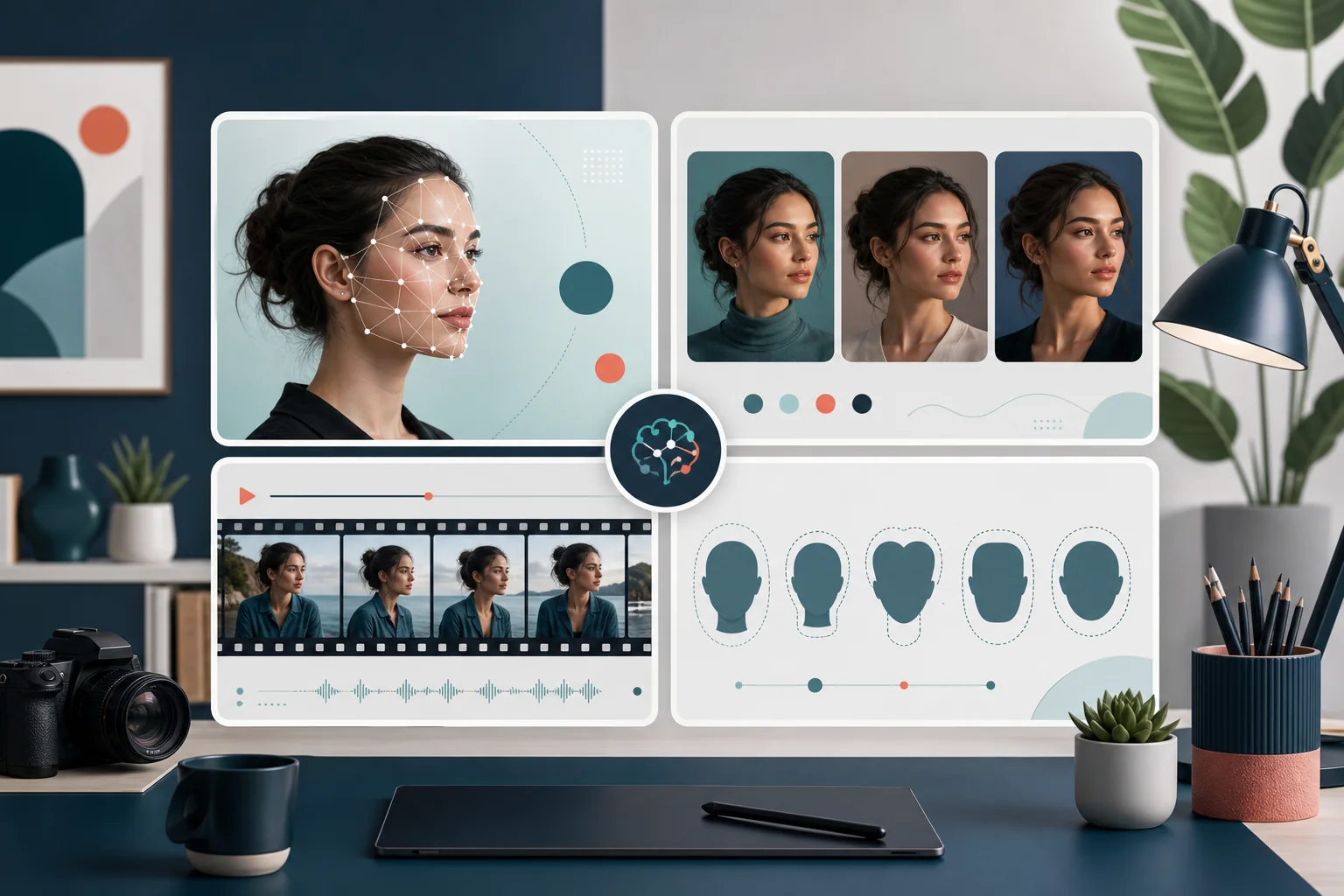
Method 1: Generate a fictional portrait concept. Use the AI Image Generator to create a fictional person or editorial visual about face detection, privacy, beauty scores, or algorithmic judgment. Describe the subject, setting, mood, and face-landmark concept. Keep it fictional so you are not judging a real person's face.
Method 2: Turn a portrait concept into video. Use image to video after you have a still image. Upload the image, write a short motion prompt, and generate a few versions. This works well for explainers, blog visuals, or social clips about AI face analysis.
Method 3: Create a safer meme or character variation. If your content angle is playful, use GoEnhance to create a stylized fictional face or permission-safe visual, then edit it into a meme, reaction image, or short animation. This avoids reusing real faces from random examples.
Best for: creators, marketers, and bloggers who want original visuals around AI face topics.
Things to keep in mind: GoEnhance is for creation and transformation, not for medical, psychological, or identity judgment. Keep prompts focused, avoid real people without permission, and review outputs before publishing.
2. How Normal Am I
How Normal Am I is the documentary-style experience behind the question. It is useful because it makes algorithmic face judgment feel concrete and a little uncomfortable in a deliberate way.
Best for: understanding how AI face scoring can feel from the user's side.
Things to keep in mind: use it as an educational experience. Do not treat the result as a serious rating of your appearance or identity.
3. FaceShapeAI
FaceShapeAI focuses on face-shape detection, which is a narrower and more practical use case than general beauty scoring. It can help people think about hairstyles, glasses, and styling references.
Best for: finding a face-shape estimate from one clear photo.
Things to keep in mind: face shape can change depending on angle, hair, lens distortion, and lighting. Use the result as styling guidance, not a fixed identity label.
4. PrettyScale
PrettyScale is a straightforward face beauty test that gives a score from a photo or webcam input. It fits the curiosity side of the topic more than the critical documentary side.
Best for: quick entertainment and understanding how simple face-proportion scoring tools present results.
Things to keep in mind: beauty scores are especially sensitive. If a result makes you feel worse about yourself, close the page and do not give the number more authority than it deserves.
5. Better Ways to Use Face Analysis Content
If you are writing, making videos, or building social posts around this topic, the strongest angle is not "find out if you are normal." A better angle is helping people understand how AI judgment works and where its limits are.

Good content ideas include:
- Compare how different tools describe the same face photo.
- Explain why lighting and camera angle change face-analysis results.
- Create fictional portraits to show how an AI might label different expressions.
- Turn a still portrait into a short explainer video about consent and privacy.
- Make a checklist for deciding whether a face-analysis app is worth trusting.
This approach is more useful for readers and safer for publishing. It avoids humiliating real people, avoids copying tool screenshots, and gives the article a clearer purpose.
6. Common Mistakes to Avoid
The biggest mistake is treating a face-analysis result like a fact. These tools often present numbers with confidence, but the number is only as good as the model and the photo.
Avoid these problems:
- Do not upload another person's face without consent.
- Do not use face scores to judge hiring, dating, education, health, or personality.
- Do not compare friends publicly for entertainment.
- Do not assume one result will stay the same across different photos.
- Do not ignore privacy messages just because a tool looks fun.
- Do not copy screenshots from another platform when making your own article visuals.
For SEO content, use original diagrams, fictional portraits, or abstract AI visuals instead. That keeps the article cleaner and reduces copyright and privacy risk.
7. FAQ About How Normal Am I and AI Face Tests
Is How Normal Am I a real beauty test?
It is better described as an interactive documentary about AI face judgment. It may show beauty-related or normality-style scoring, but the deeper purpose is to make you question how these systems work.
Is a face attractiveness score accurate?
Not in any life-defining way. A score can change with lighting, angle, expression, dataset bias, and model design. Treat it as entertainment or a technical demo.
Is it safe to upload my face to AI tools?
It depends on the tool. Read the privacy policy, check whether the tool stores uploads, and avoid sharing face photos or results publicly unless you are comfortable with that exposure.
Can I use GoEnhance AI to test how normal I am?
No. GoEnhance AI is better for creating and transforming visuals, such as fictional portraits, AI images, face-related concepts, and image-to-video clips. It is not a normality or beauty-scoring test.
What is the best use of AI face analysis?
The safest uses are educational, creative, or low-stakes: learning how computer vision labels faces, exploring styling ideas, or making original visuals. Avoid using face analysis for serious personal judgments.

