goenhance logo

SkyReels V4

SkyReels V4 is a multimodal video model designed for creators who need more than silent clips. It can jointly generate video and audio, follow complex text and reference inputs, and handle generation, extension, editing, and inpainting within one unified system. For teams chasing cinematic results, SkyReels V4 stands out as a practical step toward high-resolution AI filmmaking.

Try SkyReels V4

How To Use SkyReels V4?

01

Describe the Scene or Upload References

You can begin with a detailed prompt, a character image, a source video, or audio guidance. SkyReels V4 is built to understand richer inputs than a basic one-line generation workflow.

02

Choose the Creative Direction

Set the target style, scene continuity, motion intensity, or editing goal. You can use it for fresh generation, scene extension, partial replacement, or controlled repair work.

03

Generate, Refine, and Review Sync

Create the clip, then review motion, visual continuity, and audio alignment together. This is where SkyReels V4 becomes especially useful for story-driven content rather than one-off visual experiments.

Key Features of SkyReels V4

Multimodal Text-to-Video With Native Audio

SkyReels V4 is not just another silent video model. It is built to jointly generate picture and sound, which makes it far more useful for dialogue scenes, performance-driven clips, and cinematic storytelling. If a reader wants the broader workflow context, they can compare it with a standard AI video generator experience or jump into text to video use cases before exploring how SkyReels V4 pushes further with synchronized audio.
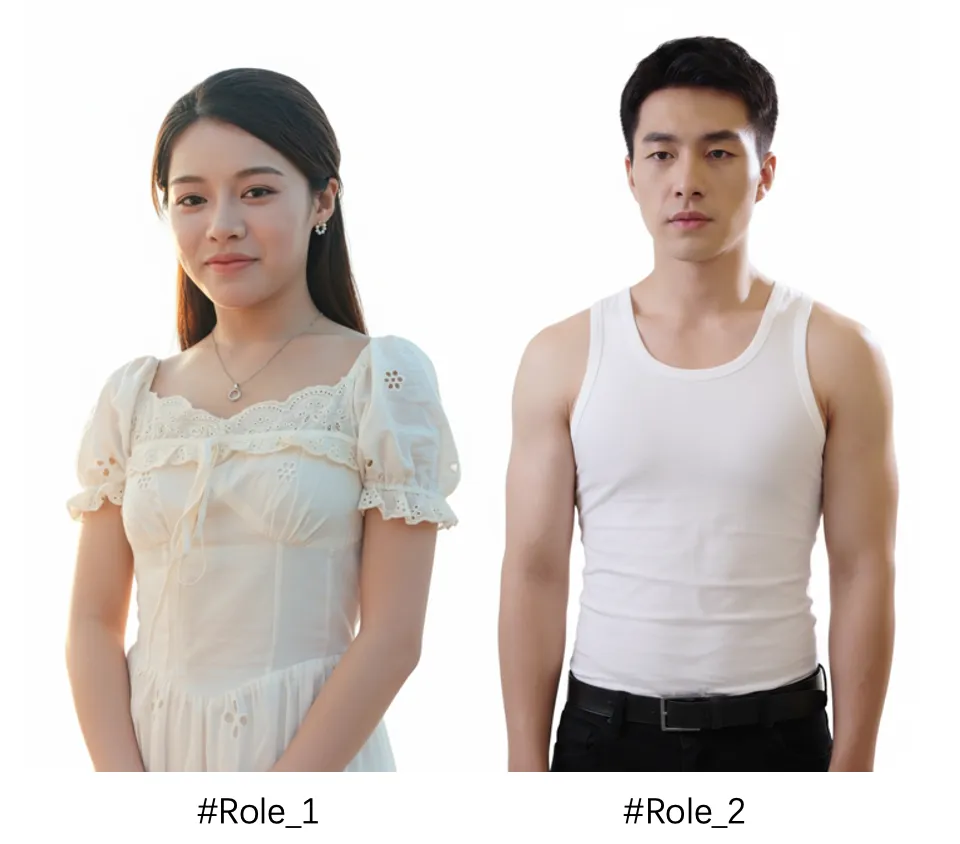
PromptReference ImageGenerated Clip
Framed like a polished short-form drama, the sequence unfolds in an elegant hallway and centers on a private moment charged with concern. The camera first lingers on #Role_1 in close-up, catching her uneasy expression as she looks away, then shifts to #Role_2 with a black phone pressed to his ear, speaking in a controlled, resolute tone: 我说我现在回来。好。 A wider shot reveals both characters standing opposite each other in the upscale space, after which the focus tightens again on #Role_2 as he lowers the phone and firmly adds, 那我让二妹过来,让她送你回去。 #Role_1 responds with a small shake of her head and a gentle refusal, 不用,不用这么麻烦。 As the moment settles, #Role_2 reaches toward her shoulder and answers with quiet finality, 不行。, while restrained ambient music with a faint sense of tension runs beneath the scene.
reference image 1

Reference-Aware Character Consistency

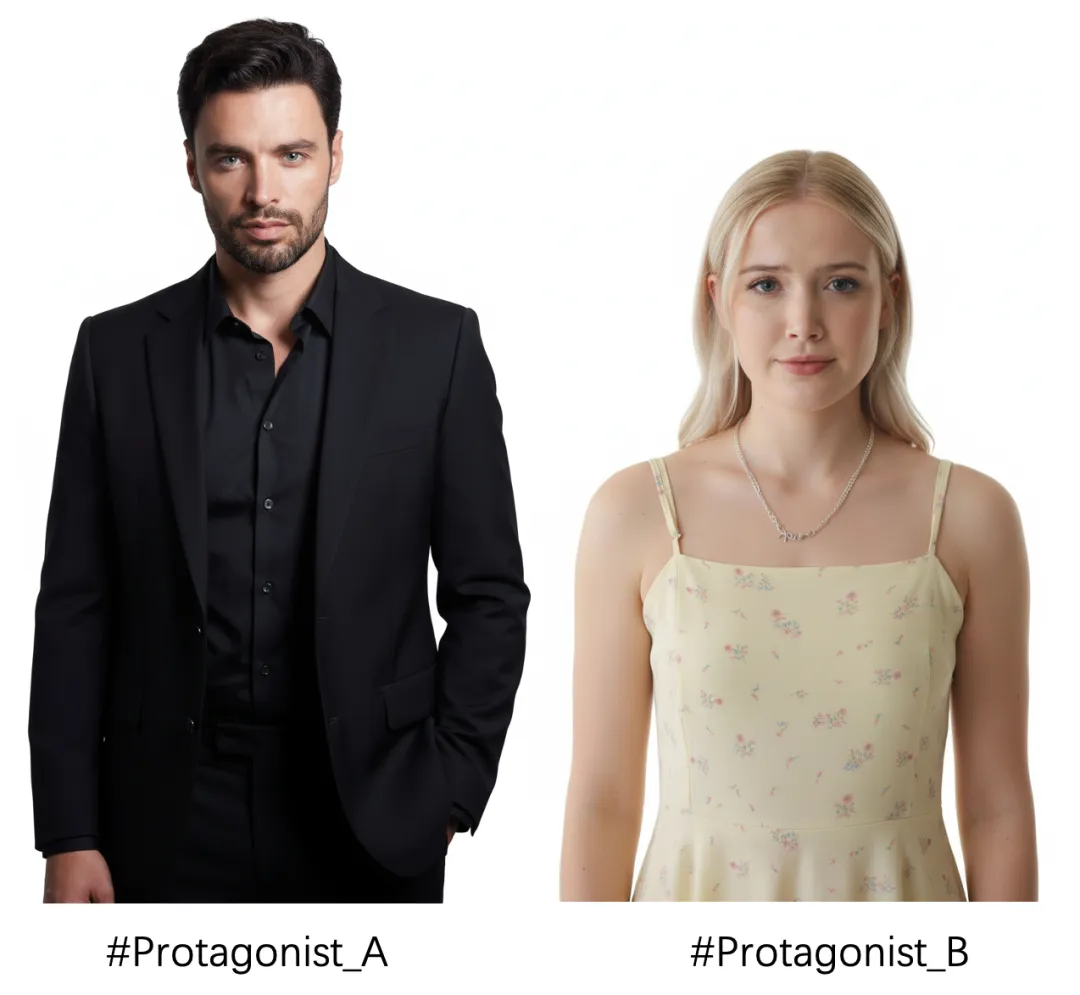
One of the biggest reasons people look at SkyReels V4 is consistency. The model can take visual references seriously, helping preserve facial identity, clothing cues, and scene tone across multiple shots. That makes SkyReels V4 image to video workflows feel more controlled than loose prompt-only generation, especially for creators moving from image to video experiments into short narrative work.
PromptReference ImageGenerated Clip
Shot in a streaming-drama style, the scene presents a clinical exchange inside a sterile hospital room. It begins with a tight close-up of #Protagonist_A watching the patient with quiet focus, then shifts to #Protagonist_B reclining against white pillows as she murmurs in a frail, pleading voice, <dialogue>Look, I'm feeling much better now. I should probably just go home.</dialogue> The camera shifts to an over-the-shoulder shot as #Protagonist_A leans in, gently touching her forearm and soothing her with <dialogue>Hey, hey, hey.</dialogue> In the final reverse shot, he places a hand on her forehead, checks her temperature, and says firmly but gently, <dialogue>You're burning up. You have a fever.</dialogue> Bright medical lighting and the hospital monitor in the background reinforce the serious mood.
skyreels v4 video example 2

Single Unified System for Both Video Generation and Editing

  • Localized editing: Add or remove objects in the video, and adjust specific textures and attributes in selected areas.
  • Intelligent element removal: Automatically detect and remove watermarks, subtitles, and logos while keeping the background natural and visually consistent.
  • Global editing: Apply style transfer (such as LEGO style or paper-cut style) and modify scene-level attributes like weather, lighting, and time of day.
  • Reference-based editing: Support motion transfer based on appearance and movement references, as well as subject insertion based on character reference.
PromptReference ImageGenerated Clip
Replace the right mask area in @video_1 with the cat from @image_1 and the left mask area in @video_1 with the woman from @image_2, ensuring a harmonious and natural scene.
reference image 3

Built for High-Resolution Long-Form Output

SkyReels V4 follows an efficient two-stage generation method: it first builds the full video sequence at low resolution, then produces high-resolution keyframes and reconstructs the result to enhance overall output quality. In plain terms, it is designed to make 1080p, 32 FPS, 15-second output more practical. According to the official project page, the model is positioned around unified multimodal video and audio generation rather than a single-task demo official Skywork project information.

Better Audio-Visual Alignment for Performance Scenes

Many video models still feel strongest when the sound is added later. SkyReels V4 video model design is different. Its audio and video branches interact during generation, which gives it a stronger foundation for speech timing, scene rhythm, and synced motion. For filmmakers, marketers, and narrative creators, that practical alignment is often more valuable than flashy one-second motion.

SkyReels V4 Specifications

ParameterSkyReels V4
Model TypeUnified multimodal video foundation model
Core ArchitectureDual-stream MMDiT with a shared MLLM-based text encoder
Input ModalitiesText, images, video clips, masks, and audio references
Supported TasksJoint video-audio generation, inpainting, editing, image-to-video, and video extension
Max Output ResolutionUp to 1080p
Max Frame Rate32 FPS
Max Duration15 seconds
Native Audio GenerationYes, with temporally aligned synchronized audio

Why SkyReels V4 Stands Out

FeatureSkyReels V4Compared with Other ModelsWhy It Matters
Unified Core ArchitectureOne foundation model for joint video-audio generation, inpainting, and editingMany leading models are presented primarily as generation systems first, while editing, extension, or repair are often treated as separate workflows or product layersThat gives SkyReels V4 the feel of a broader production system, not just a tool built for one narrow generation task
Multimodal Input BreadthAccepts text, images, video clips, masks, and audio references in one systemOther strong models may support text, image, or audio-driven generation, but SkyReels V4 explicitly frames these as part of one unified multimodal conditioning setupThis is especially helpful for creators who want scene control anchored by references rather than relying only on text prompts
Native Audio + Video GenerationDesigned to generate video and temporally aligned audio together through a dual-stream architectureVeo 3.1, Kling 2.6, and Wan 2.6 also promote native or synchronized audio, so SkyReels V4 is not alone hereIts real strength is not simply that it includes audio, but that sound and video are designed to be produced together at the architectural level
Generation + Editing in One FrameworkImage-to-video, video extension, video editing, and inpainting are handled under one channel-concatenation frameworkCompeting models often highlight generation quality or storytelling first, but SkyReels V4 more explicitly positions editing and repair as part of the same base model designThat reduces workflow breaks when a team needs to generate first and revise later
High-Resolution Long-Form EfficiencySupports up to 1080p, 32 FPS, and 15 seconds with an efficiency strategy based on low-res full sequences plus high-res keyframesVeo 3.1 reaches higher top-end resolution, while Wan 2.6 also promotes 15-second 1080p output; SkyReels V4’s differentiator is the efficiency strategy described in the paperThis matters for teams that care about cinematic multi-shot output without brute-force scaling costs
Reference-Guided ConsistencyBuilt around rich conditioning and in-context multimodal guidance for stronger scene and character controlOther models also push consistency, but SkyReels V4 emphasizes unified reference-aware control across generation and editing, not just prompt fidelityThis becomes particularly useful in short-form drama, commercial sequences, and stories built around recurring characters
Research PositioningPresented by its authors as the first model to unify multimodal input, joint video-audio generation, and unified generation/inpainting/editing at cinematic settingsOther leading models may stand out in visual polish, audio quality, or narrative feel, while SkyReels V4 is more distinctive in how completely it brings those capabilities into one underlying systemSo its main advantage is system design depth, not just one benchmark number
Frequently Asked Questions

You may want to know

What is SkyReels V4?

SkyReels V4 is a multimodal video model developed by the SkyReels team and publicly linked to Skywork AI. It is designed for creators and production teams that need synchronized audio, multi-shot consistency, reference-based control, and flexible generation or editing within one unified system.

What is SkyReels V4 primarily designed for?

SkyReels V4 is built for creators and teams who need more than short silent motion clips. Its value is strongest when a project needs synchronized audio, reference-based control, multi-shot continuity, and the flexibility to generate, extend, or edit inside one model family.

How is SkyReels V4 different from a typical text-to-video model?

A typical text-to-video system focuses on visual generation first and often leaves sound to another workflow. SkyReels V4 is designed around joint audio-video generation, so it is better suited to dialogue scenes, timing-sensitive storytelling, and projects where sound and picture need to feel born together rather than stitched together later.

Is SkyReels V4 limited to new video generation, or can it also edit existing footage?

It is useful for both. Based on the model design described in the source material, SkyReels V4 can handle new generation, image-conditioned video creation, continuation, replacement, and inpainting-style repair within a unified framework. That makes it more practical for real production revisions than a model that only handles first-pass generation.

Why does the unified editing framework matter in real projects?

In real production, the first output is rarely the last one. Teams often need to extend a scene, swap an element, repair a section, or keep a character consistent after feedback. A unified framework reduces workflow breaks and lowers the chance that visual style, motion language, or audio feel will shift too much between stages.

Can SkyReels V4 help with character consistency?

Yes, that is one of the more practical reasons to pay attention to it. When reference images or guided conditions are used well, SkyReels V4 is positioned to hold identity, clothing, and shot continuity more reliably than looser prompt-only generation. This matters most in short drama, ad storytelling, and branded character work.

What level of output quality is SkyReels V4 designed to deliver?

Based on the material you shared, SkyReels V4 is positioned as a cinematic multi-shot video model that can generate clips of about 15 seconds at up to 1080p and 32 FPS, while also supporting synchronized audio. In practice, final quality still depends on prompt clarity, reference quality, and the complexity of the scene, but the model is clearly aimed at higher-end production use rather than casual novelty generation.

Who is most likely to get the most value from SkyReels V4 right now?

It is especially well suited to short-form drama teams, AI video startups, ad creatives, and creators making story-driven clips where timing and continuity matter most. Someone making abstract motion loops may not need its full strengths. Someone trying to make character-driven scenes with sound, edits, and multiple shots probably will.

Does SkyReels V4 replace every other video workflow?

No serious tool does that. SkyReels V4 looks strongest as a high-value model for projects that need multimodal control and stronger audio-visual alignment. For lightweight social content, simpler tools may still be faster. The better question is whether your project needs synchronized audio, reference control, and revision-friendly generation. If the answer is yes, SkyReels V4 becomes much more relevant.

Ready to Explore SkyReels V4?

If your video work needs stronger continuity, cleaner multimodal control, and audio that belongs to the scene instead of being patched on afterward, SkyReels V4 is a model worth watching closely. It points toward a more unified future for AI-generated filmmaking.

Explore SkyReels V4 Now