Raphael AI Image Generator

Raphael AI is a browser-based image generation and editing platform built around low-friction creative experimentation. Users can start generating images without signing in, switch between different AI image models, work from text or reference images, and continue into image editing, templates, upscaling, background tools, and other creative workflows.
Start Generating Without Building an Account First
Choose Different Models for Different Image Jobs
Keep Working From a Reference Instead of Starting Over
GoEnhance 2.0
Prompt
Example prompts
Opens the GoEnhance editor with this model and prompt ready.

Key Features of Raphael AI

Start Generating Without Building an Account First

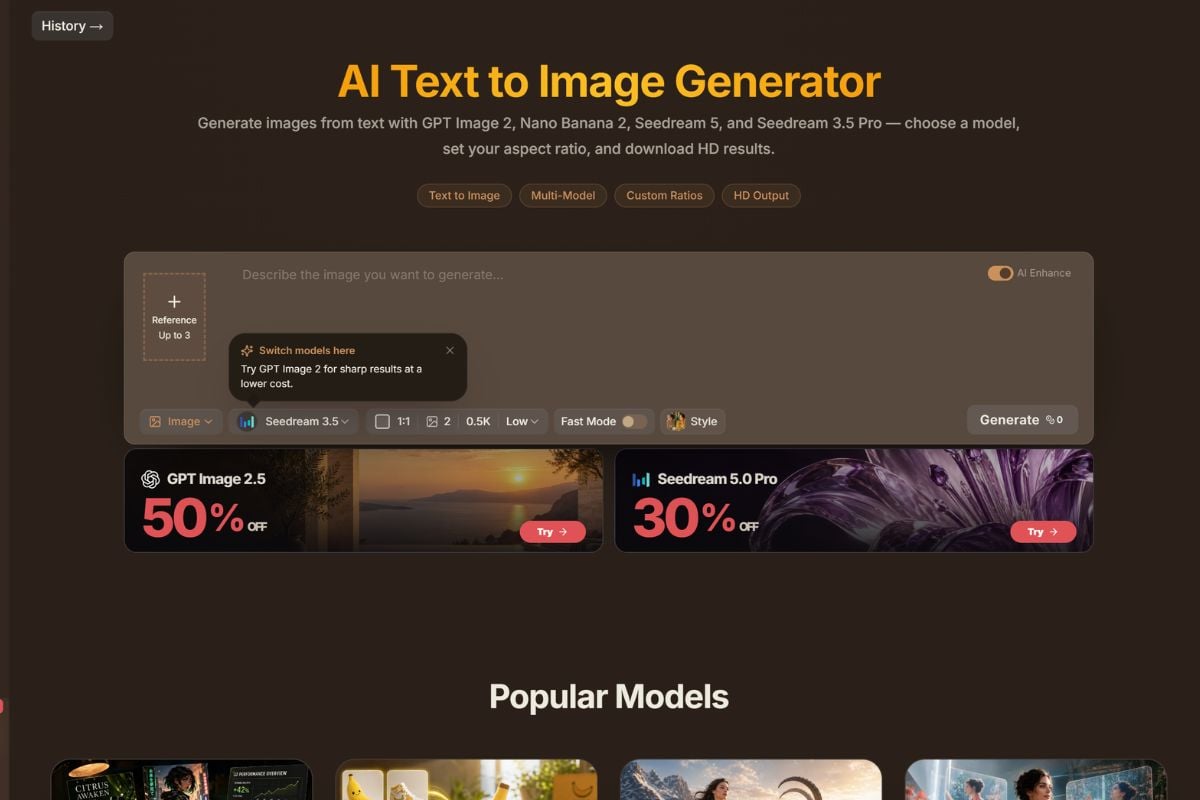
Raphael removes much of the setup that often comes before using an AI image generator. Visitors can begin with the free basic experience directly in the browser, while signed-in users gain access to additional credits, account history, higher-resolution models, and faster generation options. This makes the platform particularly approachable for quick prompt tests and early visual exploration.

Raphael AI image generator interface with prompt box, reference images, aspect ratio controls, and free basic generation

Choose Different Models for Different Image Jobs

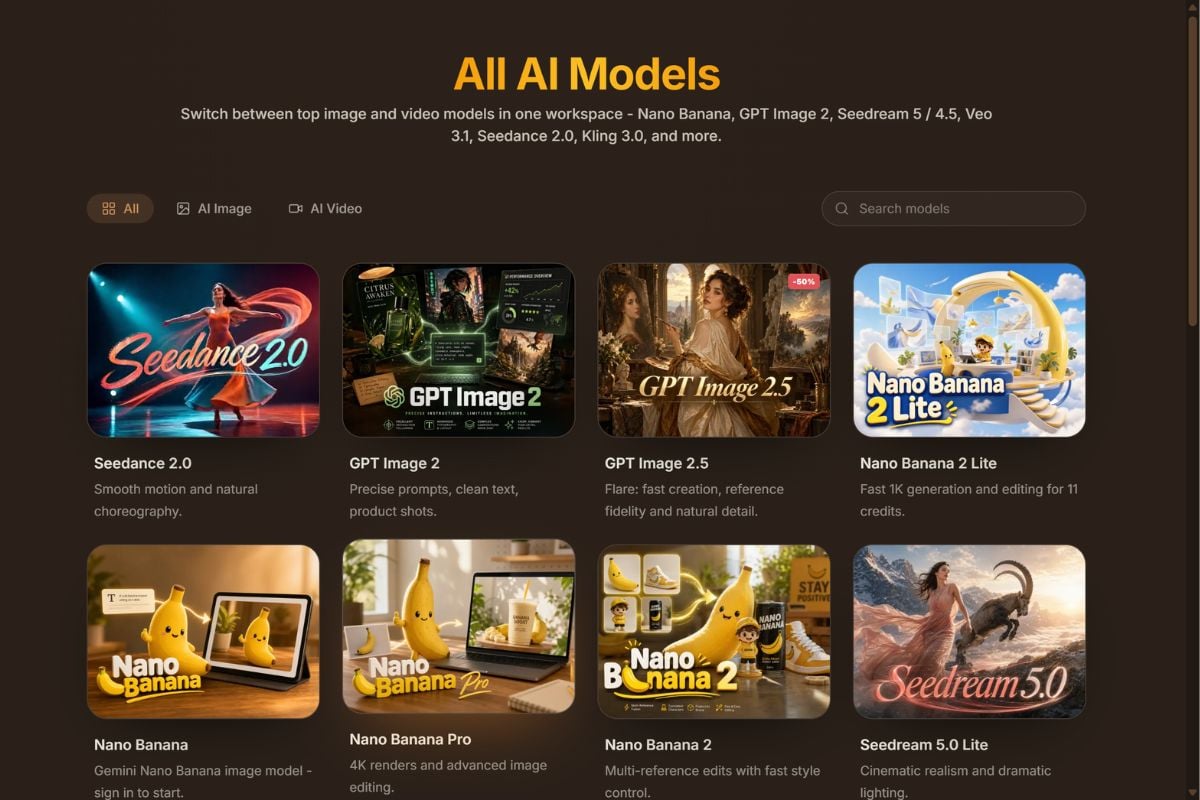
Raphael is no longer centered on only one image model. Its current generator brings together model families such as GPT Image, Nano Banana, and Seedream, allowing creators to choose between strengths such as prompt following, readable text, multi-reference editing, photorealism, portrait consistency, and fast concept generation. For a more focused text to image workflow, creators can also compare how different models respond to the same prompt.

Raphael AI multi-model image generator showing GPT Image, Nano Banana, Seedream, and other AI image models

Keep Working From a Reference Instead of Starting Over

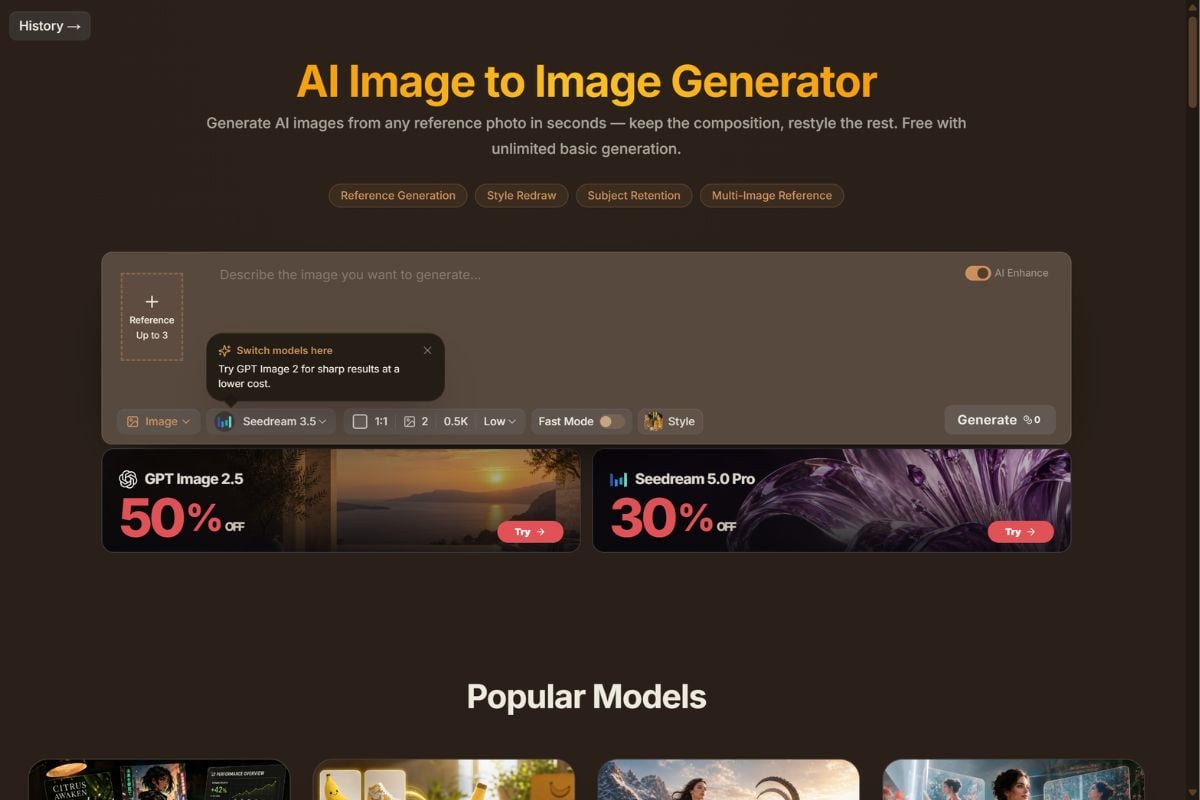
Raphael also supports image-to-image workflows where creators can upload one or more references and change the style, lighting, background, composition, clothing, or other visual details. For creators exploring a broader image to image process, supported models can combine multiple references, preserve important parts of the source, and turn one image into a broader set of variations and creative assets.

Raphael AI image to image generator with multiple reference images, prompt controls, models, and transformation templates

How to Use the Raphael AI Image Generator?

01

Start With a Prompt or Reference Image

Open the image generator and describe the subject, scene, lighting, style, composition, or result you want. You can also upload reference images when using supported generation or image-to-image workflows.

02

Choose the Model and Output Settings

Select an available image model and adjust settings such as aspect ratio, output count, resolution, quality, references, or generation mode. Different models are better suited to different tasks, so the best option may change between portraits, product visuals, text-heavy graphics, and image editing.

03

Generate, Compare, and Continue Editing

Review the generated images, try another model or prompt when necessary, and continue a selected result through image-to-image, templates, background tools, image expansion, or other editing workflows.

Raphael AI vs GoEnhance AI

PlatformCore StrengthCreative RangeBest Fit
Raphael AILow-friction multi-model image generation with free basic creation and reference-based editingText-to-image, image-to-image, multiple image models, templates, photo editing, background tools, upscaling, and selected video workflowsUsers who want to test prompts and models quickly without committing to a complex creative workspace
GoEnhance AIConnected image and video creation for turning visual concepts into more developed assets and motion contentText-to-image, image-to-image, image enhancement, text-to-video, image-to-video, animation, video transformation, and creative effectsCreators who want to continue developing a selected still image into a broader visual or motion workflow
Raphael is especially useful for fast prompt exploration, model comparison, and finding a strong still image. GoEnhance becomes more relevant once that selected visual needs to grow into a larger creative asset rather than remain another generated variation.

Where GoEnhance AI Fits After the Raphael Generation Loop

Graduate From Prompt Testing to a Production Asset

Raphael makes it easy to generate many ideas and compare models. Once one result becomes the chosen direction, GoEnhance can take that approved visual into a more focused creation workflow instead of continuing to generate unrelated alternatives.

Animate the Winner Instead of Generating More Stills

When the image already looks right, another still variation may not add much value. The selected artwork, portrait, product visual, or character can instead become the starting point for motion.

Carry Reference-Driven Visual Decisions Into Motion

Raphael can combine references to establish the subject, outfit, product, background, or style. GoEnhance can continue the approved result after those visual decisions are settled, helping the concept move beyond the reference-image stage.

Bring Existing Footage Into the Same Creative Direction

Raphael begins primarily from prompts and still-image references. When real footage already exists, GoEnhance can help explore how that footage fits the visual direction established during the earlier image-generation stage.

Keep a Character or Product Moving Across Formats

A visual concept often needs more than one finished image. Character art, campaign visuals, product concepts, and branded imagery can continue into animated and short-form formats while preserving the core creative direction.

Use Raphael for Exploration and GoEnhance for the Next Stage

The two workflows can complement each other naturally. Raphael is useful for quickly exploring models, prompts, and still-image directions, while GoEnhance can take over when the chosen visual needs animation, motion, or broader transformation.

Raphael AI Discussions on Reddit

Frequently Asked Questions

Raphael AI FAQ

What is Raphael AI?

Raphael AI is a browser-based AI image generation and editing platform available at raphael.app. Its current toolset includes text-to-image, image-to-image, AI photo editing, image expansion, background removal, templates, upscaling, and selected AI video workflows. It also provides access to multiple image model families rather than relying on only one generator.

Is Raphael AI free?

Raphael offers a free basic image-generation experience. The official website says users can begin without an account and that signed-in users can access unlimited free generations in Basic mode without Fast Mode. Free use may involve queues, watermarks, lower-resolution options, or other limitations, while paid plans add credits, faster generation, advanced models, watermark-free output, privacy benefits, and commercial-use rights.

Is Raphael AI safe?

Raphael publishes a privacy policy and says it uses secure encrypted connections and technical measures intended to protect user data. Its policy also explains that account information, prompts, uploaded files, generated outputs, history, billing records, device information, IP addresses, and anti-abuse signals may be processed depending on how the service is used. No online service can be treated as risk-free, so avoid uploading confidential material and review the current privacy policy before using sensitive images.

Does Raphael AI have restrictions?

Yes. Raphael's use of phrases such as free or no-restrictions refers mainly to reducing access barriers such as forced registration and generation-count limits in the basic experience; it does not mean there are no content rules. Raphael's Terms prohibit NSFW or sexually explicit content, nudity, sexually suggestive material, illegal content, hateful or discriminatory content, infringement, harassment, harmful content, violence, deception, fraud, and attempts to bypass platform restrictions or security measures. Free users can also face queues, watermarks, model or resolution differences, and non-commercial usage limits.

How to delete Raphael AI account?

Raphael's privacy policy states that users may request deletion of eligible personal data, but the public policy does not currently document a verified step-by-step self-service account-deletion path. The safest approach is to contact [email protected] from the email associated with your account and request account and eligible personal-data deletion. Raphael notes that some records may still need to be retained for security, fraud prevention, accounting, disputes, or legal compliance.

Is Raphael AI good?

Raphael can be a good choice for users who value fast access, free basic generation, multiple image models, reference-image workflows, and simple browser-based experimentation. Its limitations matter too: free users may encounter queues and watermarks, commercial rights depend on the applicable paid plan, exact reference preservation is not guaranteed, and output quality varies between models and prompts. It is strongest as a fast image exploration and generation environment rather than a replacement for every professional design workflow.

Is Raphael AI safe to login to?

Raphael states that signed-in account information is used for features such as authentication, history, subscriptions, billing, support, and security, and that its service uses encrypted connections. Signing in also means more information can be retained than during anonymous generation, including account-related prompts, outputs, history, subscription records, and support records where needed. Use a unique secure login method, review the privacy policy, and avoid uploading highly sensitive material if you do not need it for the task.

Is there a Raphael AI app?

Raphael currently works as a responsive web app at raphael.app and can be used from mobile browsers. The official Raphael website currently says dedicated mobile apps are planned for the future, so references to the Raphael AI app often mean the browser-based Raphael experience rather than a separate official iOS or Android application.

Do I need an account to use Raphael AI?

No account is required to start the basic Raphael AI image generator. Signing in becomes useful when you want account history, free daily credits, faster or higher-resolution options, paid subscriptions, and other account-based benefits.

What AI models does Raphael AI support?

Raphael currently lists image models from families including GPT Image, Nano Banana, and Seedream. Its broader platform also lists video model families such as Seedance, Veo, Kling, MiniMax, and Gemini-based tools. Model availability, versions, pricing, credits, and supported controls can change over time.

Can I use Raphael AI images commercially?

Raphael's current Terms state that paid subscribers may use generated content for personal or commercial purposes subject to the Terms and applicable law. Free users are limited to personal and other non-commercial use unless Raphael explicitly states otherwise. Users remain responsible for prompts, uploads, trademarks, likenesses, copyrights, and other third-party rights.

Why is GoEnhance AI better than Raphael AI?

GoEnhance AI is a better fit for creators who want to make both images and videos. While Raphael AI focuses on still-image creation and editing, GoEnhance AI also supports image-to-video generation, animation, and video-to-video transformation. This gives creators more ways to develop a visual concept, from a single image to moving content, within one platform.

Found the Raphael Image You Want? Make It Move.

Once prompt testing is finished and you have the still image worth keeping, turn that chosen visual into motion instead of generating another static variation. Bring it into GoEnhance AI and continue the idea as animated content.

Animate This Image