Popular
Nano Banana Pro
Image20000+ prompts
View prompts
Discover infographic and educational visual prompts for explainers, processes, lessons, comparisons, timelines, and clear visual storytelling.
Educational Infographic
Infographic / Educational Visual
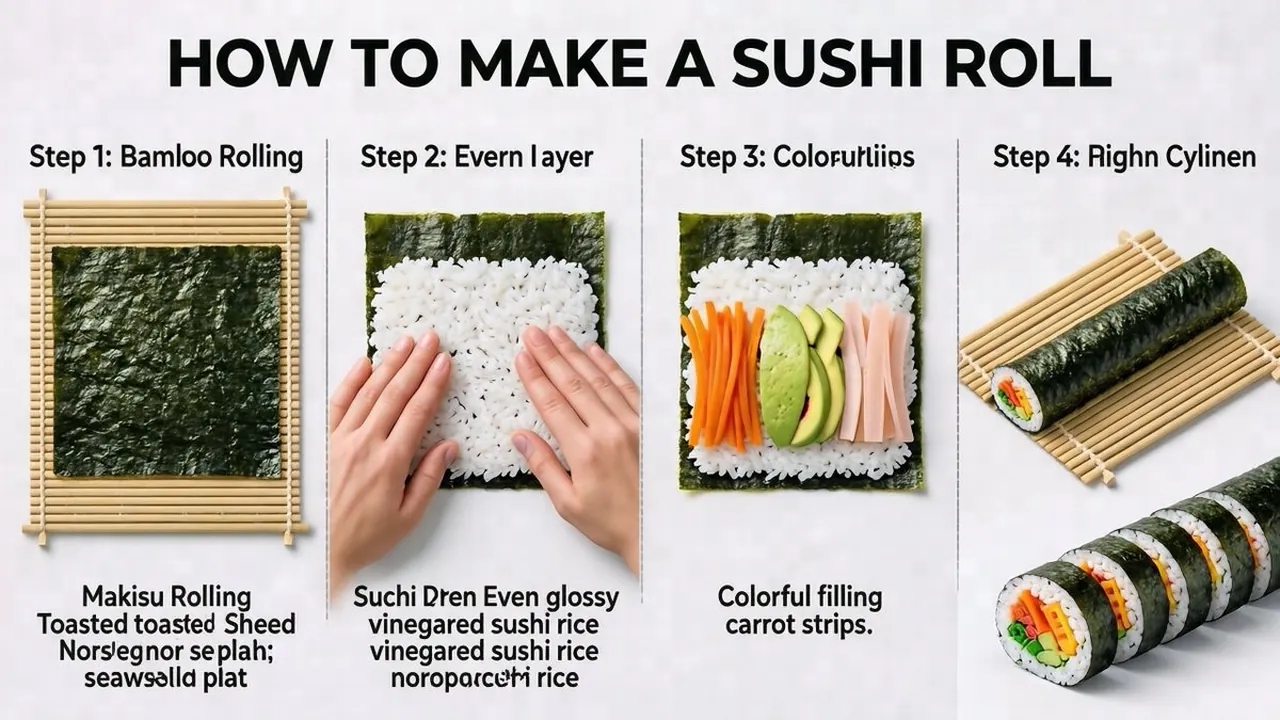
Create a diagram explaining how to prepare a basic roll of sushi
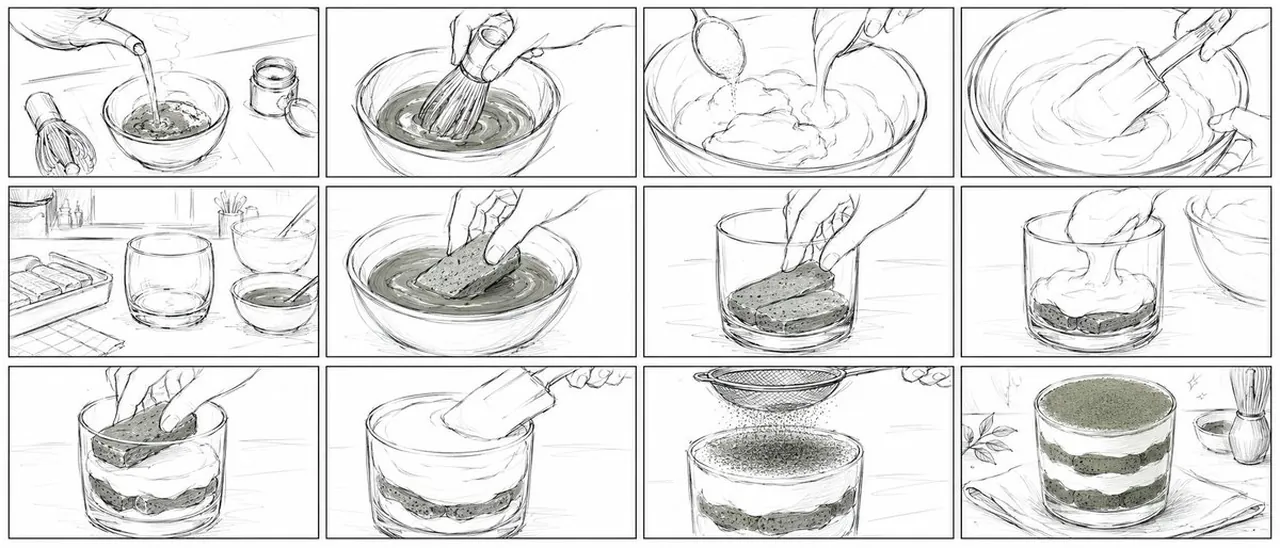
Goal: Create an ultra-rough pencil storyboard for a 9-second Japanese 2D anime-style dessert cooking short video about making matcha tiramisu. Canvas: Wide cinematic 21:9 horizontal storyboard sheet, white background, thin black panel borders, arranged as exactly 12 panels in a 3-row by 4-column grid. Use loose hand-drawn graphite pencil lines, sketchy construction strokes, minimal shading, a few muted pale green matcha accents, and no polished coloring. Layout and panel count: Show exactly 12 discrete storyboard panels, left to right, top to bottom: 1. A kettle pours hot water into a small bowl of matcha powder on a kitchen counter; a whisk lies nearby and a small jar sits in the background. 2. Close-up of a hand whisking matcha in a bowl, circular motion lines visible. 3. Two spoons add creamy mascarpone or cream into a large mixing bowl. 4. A spatula folds the cream mixture in a large bowl, smooth sweeping motion lines. 5. Mise-en-scène wide shot: glass dessert cup centered, tray of sponge fingers on the left, small bowl of matcha on the right, kitchen tools in the background. 6. Hand dips one rectangular sponge finger into the matcha liquid inside a shallow bowl. 7. Hand places matcha-soaked sponge fingers into the bottom of a clear cylindrical glass cup. 8. A spoon drops a mound of cream onto the sponge layer inside the glass. 9. Hand adds another soaked sponge finger layer on top of the cream in the glass. 10. Spatula smooths a thick top layer of cream in the glass, showing layered sponge and cream through the transparent side. 11. A mesh sieve dusts matcha powder evenly over the top of the dessert. 12. Final beauty shot: completed matcha tiramisu in a clear round glass with three visible layers, green matcha dusted top, placed on a napkin with small leaves and a bamboo whisk nearby. Visual style: Japanese 2D anime production storyboard, rough pencil animatic look, monochrome line art with subtle green-gray matcha shading, dynamic hands and utensils, expressive motion arcs, clean rectangular framing, light tabletop perspective, soft food-prep atmosphere. Text content: No captions, no dialogue, no panel numbers, no watermarks. Constraints: Keep the drawing intentionally rough and storyboard-like, preserve the exact 12-panel grid, maintain the 21:9 aspect ratio, focus on cooking actions and ingredient layering, and avoid photorealism.
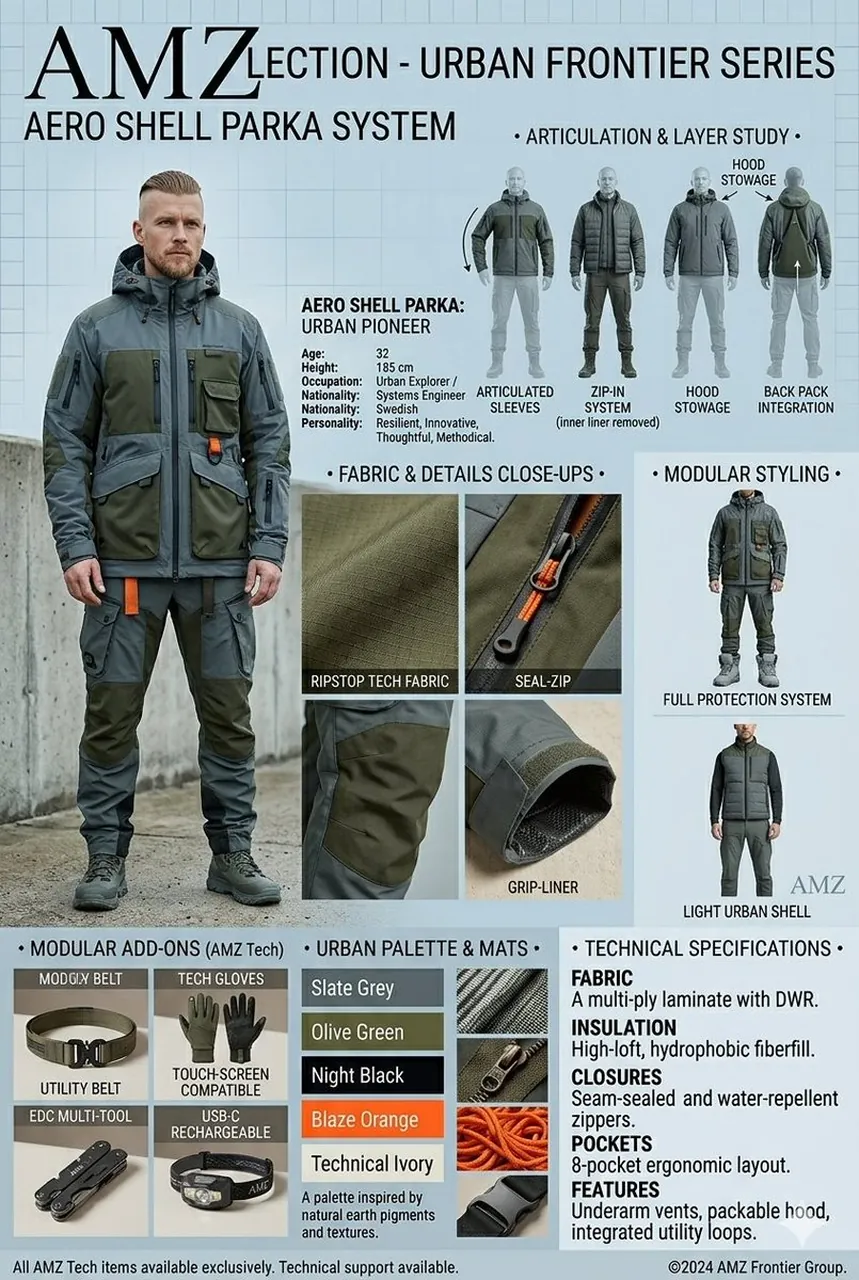
An AMZ Collection fashion design spec sheet and product layout presented as a tall, vertical infographic for men's technical outerwear. On the left side, a full-body shot features a 32-year-old male model with a short beard and a faded haircut, wearing a rugged, multi-pocketed utility jacket and matching cargo pants in deep olive green and slate grey with bright orange accents. The top of the sheet prominently displays the title "AMZLECTION - URBAN FRONTIER SERIES" and "AERO SHELL PARKA SYSTEM" in a bold, clean sans-serif typeface, accompanied by a bio detailing his occupation as a systems engineer and urban explorer. The right side features a technical "Articulation & Layer Study" breakdown showing multiple back and front silhouette angles detailing the zip-in system, articulated sleeves, and hood stowage. The center section provides macro close-up macro shots highlighting the technical textures, including ripstop tech fabric, a seal-zip closure, and a grip-liner sleeve cuff. Below, a "Modular Styling" column showcases alternative ways to style the garment, such as a full protection system or a light urban shell. The bottom of the layout features grid sections labeled "Modular Add-Ons" displaying accessories like a utility belt, touchscreen-compatible tech gloves, an EDC multi-tool, and a headlamp. Adjacent to this is an "Urban Palette & Mats" swatch color bar showing slate grey, olive green, night black, blaze orange, and technical ivory, followed by a comprehensive "Technical Specifications" block outlining the fabric, insulation, closures, pockets, and features of the high-performance gear.
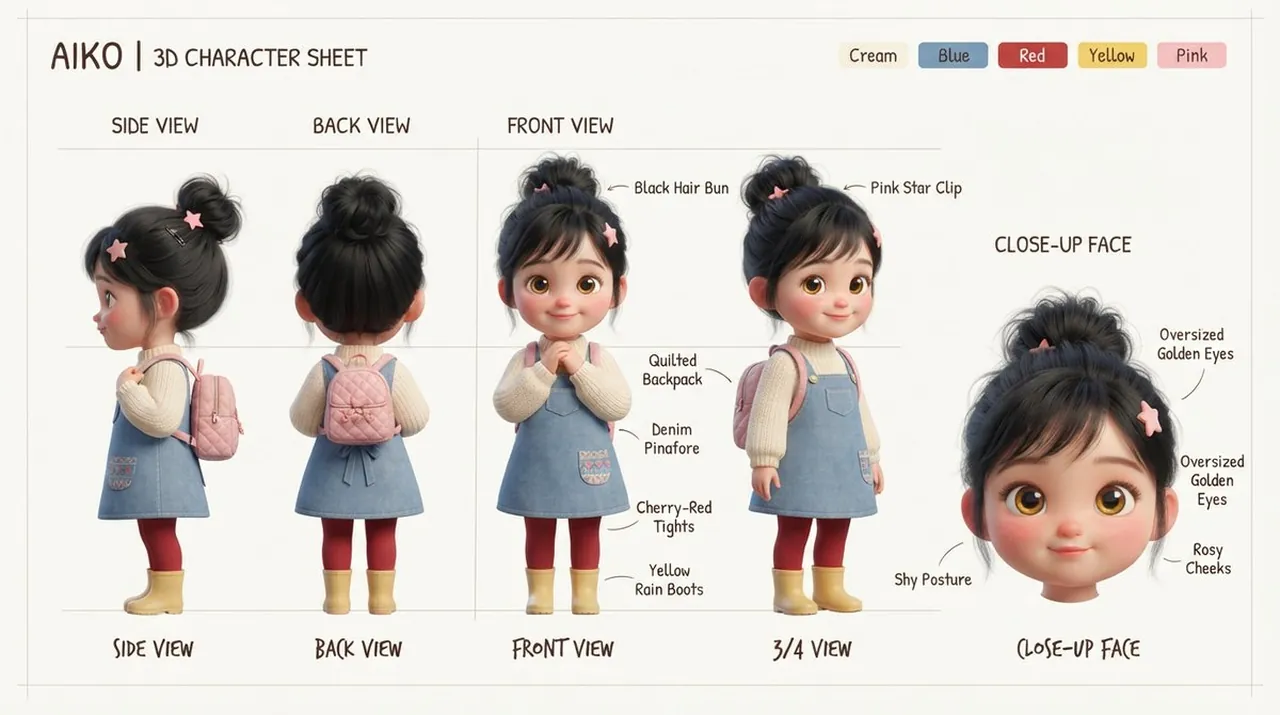
Goal: Create a clean 3D character design sheet for a cute stylized toddler girl named AIKO, presented like a professional toy/animation reference board. Canvas: Wide horizontal character sheet on a warm off-white background with faint grey guide lines, thin section dividers, and a subtle hand-drawn annotation feel. Use soft studio lighting, high-quality 3D render style, rounded childlike proportions, plush toy/Pixar-inspired realism, and gentle pastel colors. Header: Top left text reads “AIKO | 3D CHARACTER SHEET”. Top right include exactly 5 small rounded color swatches labeled: Cream, Blue, Red, Yellow, Pink. Layout: Show exactly 5 character views across the sheet: 1 side view on the far left, 1 back view left-center, 2 front-area full-body views in the middle (one straight front pose and one 3/4 pose), and 1 close-up face view on the far right. Above the full-body columns place neat uppercase labels “SIDE VIEW”, “BACK VIEW”, and “FRONT VIEW”. Along the bottom, use handwritten-style captions: “SIDE VIEW”, “BACK VIEW”, “FRONT VIEW”, “3/4 VIEW”, and “CLOSE-UP FACE”. Subject details: The character is a shy, sweet young girl with oversized golden-brown eyes, rosy cheeks, tiny smile, small nose, rounded face, and black hair gathered into a messy high bun with side bangs. Hair accessories: pink star clips. Outfit: cream ribbed long-sleeve sweater under a light blue denim pinafore dress with a small front pocket and embroidered patch detail, cherry-red tights, yellow rain boots, and a quilted pink backpack. The far-left side view shows her profile and backpack straps; the back view clearly shows the quilted backpack and rear of the bun; the front view shows hands clasped shyly; the 3/4 view shows the backpack and outfit volume; the close-up face is a large floating head cropped at the neck. Annotations: Add thin curved callout arrows and handwritten labels pointing to exactly 9 details: “Black Hair Bun”, “Pink Star Clip”, “Quilted Backpack”, “Denim Pinafore”, “Cherry-Red Tights”, “Yellow Rain Boots”, “Shy Posture”, “Oversized Golden Eyes”, and “Rosy Cheeks”. Keep labels legible, black or dark brown, placed around the figures without clutter. Constraints: No extra characters, no scenery, no watermark, no logo, no photorealistic adult proportions. Maintain a tidy concept-art sheet composition with consistent scale between full-body views and a larger close-up face.
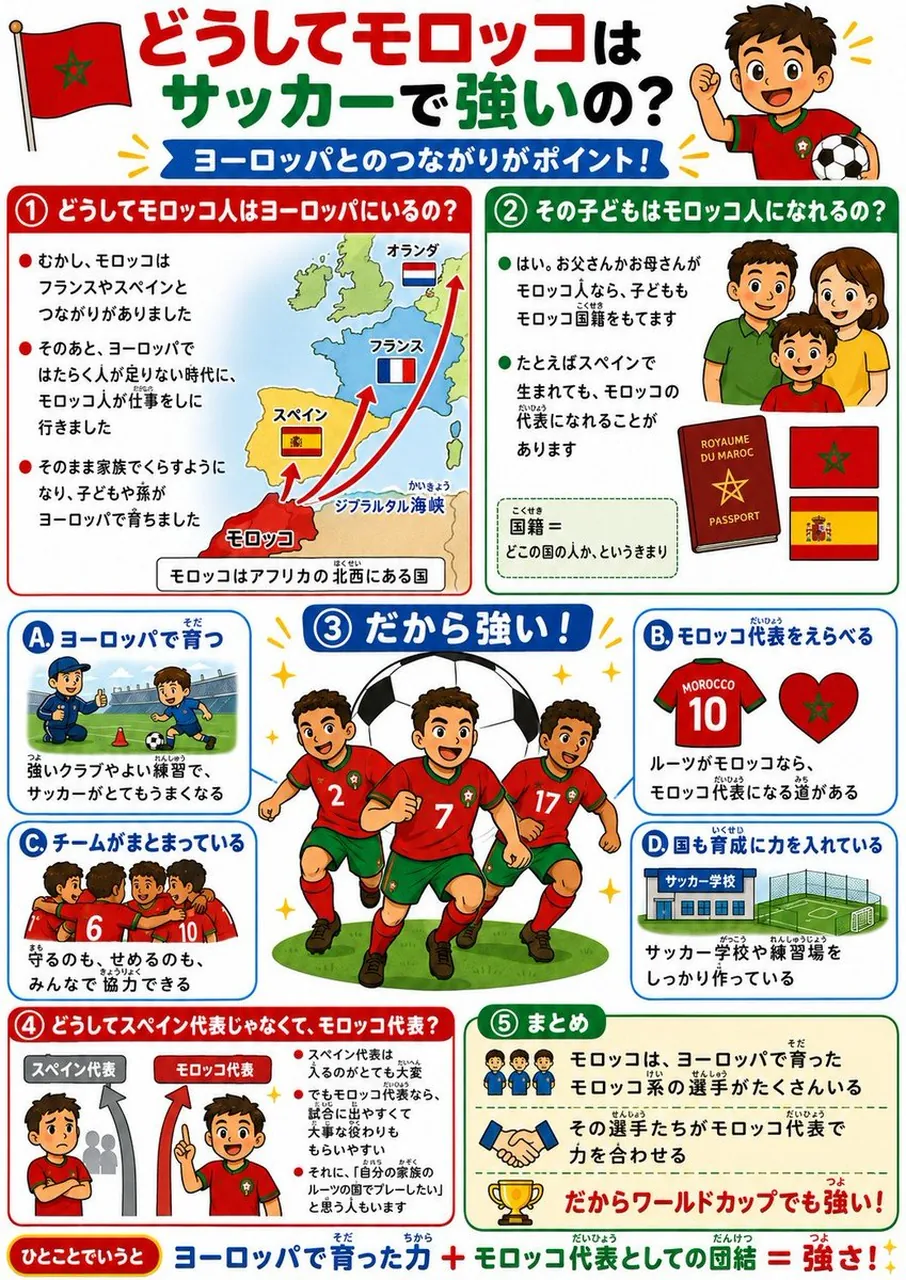
Goal: Create a cheerful Japanese educational infographic for children explaining どうしてモロッコはサッカーで強いの?. Make it look like a colorful school handout that a parent and child could read together. Canvas: Vertical portrait infographic, white background, thick rounded red/green/blue panel borders, playful manga-style illustrations, high readability, bright primary colors, clean vector-like drawing, 2D cartoon style, no photorealism. Top header: Large bold Japanese headline across the top: 「どうしてモロッコはサッカーで強いの?」 with 「モロッコ」 and 「サッカーで強い」 emphasized in red and green. Under it, a blue ribbon subtitle: 「ヨーロッパとのつながりがポイント!」. Place a waving Morocco flag on the top left and a smiling boy in a red Morocco soccer jersey holding a soccer ball on the top right. Layout: Use exactly 5 numbered main sections plus 4 smaller lettered explanation cards. The page should be dense but organized, like a kids’ encyclopedia infographic. Section 1, upper left, red numbered badge 「①」: Title 「どうしてモロッコ人はヨーロッパにいるの?」. Include three red bullet points explaining that Morocco has historic links with France and Spain, many people went to Europe for study or work when there were not enough jobs, and families settled there so children and grandchildren grew up in Europe. Show a simple map of western Europe and north Africa with labels for 「フランス」, 「スペイン」, 「オランダ」, 「ジブラルタル海峡」, and 「モロッコ」, with red arrows from Morocco toward Spain, France, and the Netherlands. Add a small caption: 「モロッコはアフリカの北西にある国」. Section 2, upper right, green numbered badge 「②」: Title 「その子どもはモロッコ人になれるの?」. Include two green bullet points explaining that if a father or mother is Moroccan, the child also has Moroccan nationality, and even if born in Spain they may represent Morocco. Show a smiling family of exactly 3 people: father, mother, and young boy. Add exactly 3 identity objects: a Moroccan passport labeled 「ROYAUME DU MAROC PASSPORT」, a Morocco flag, and a Spain flag. Include a dotted box labeled 「国籍=どこの国の人か、というきまり」. Center section 3, large, blue numbered badge 「③」: Title 「だから強い!」. Show exactly 3 energetic Moroccan soccer players in red jerseys and green shorts running forward in front of an oversized soccer ball. Their jersey numbers are exactly 2, 7, and 17. Add small yellow sparkle marks around them. Lettered cards around section 3: Create exactly 4 blue-framed cards labeled A, B, C, and D. Card A title 「ヨーロッパで育つ」, showing exactly 2 children training on a European soccer field with cones and a coach-like atmosphere; text says strong clubs and training make them very good at soccer. Card B title 「モロッコ代表をえらべる」, showing a red Morocco jersey with number 10 and a red heart containing the green Moroccan star; text says if their roots are Moroccan, there is a path to become a Morocco representative. Card C title 「チームがまとまっている」, showing exactly 5 players in red jerseys huddling from behind, with visible numbers including 6 and 10; text says everyone cooperates in defending and attacking. Card D title 「国も育成に力を入れている」, showing a soccer school building and practice field; text says the country builds soccer schools and training grounds. Section 4, lower left, red numbered badge 「④」: Title 「どうしてスペイン代表じゃなくて、モロッコ代表?」. Make a split illustration comparing two routes: left label 「スペイン代表」 with a worried boy and gray silhouettes suggesting competition is hard; right label 「モロッコ代表」 with a happy boy pointing upward in a Morocco jersey. Include bullet text explaining that entering Spain’s national team is difficult, representing Morocco may offer a better chance to play in big tournaments, and the player may want to play for the country of their family roots. Section 5, lower right, green numbered badge 「⑤」: Title 「まとめ」. Use three rows with icons: exactly 3 small children, a handshake, and a trophy. Summary text should say Morocco has many players who grew up in Europe, those players unite as the Morocco national team, and therefore they are strong even at the World Cup. Emphasize the final line in red: 「だからワールドカップでも強い!」. Bottom formula strip: A red rounded label 「ひとことでいうと」 followed by the equation in bold colors: 「ヨーロッパで育った力 + モロッコ代表としての団結 = 強さ!」. Visual style: Bright Japanese children’s infographic, thick outlines, cute expressive faces, simple geography map, rounded panels, bold handwritten-style Japanese fonts, red/green/blue color coding matching Morocco and soccer. Keep all text legible and avoid adding unrelated facts or extra sections.
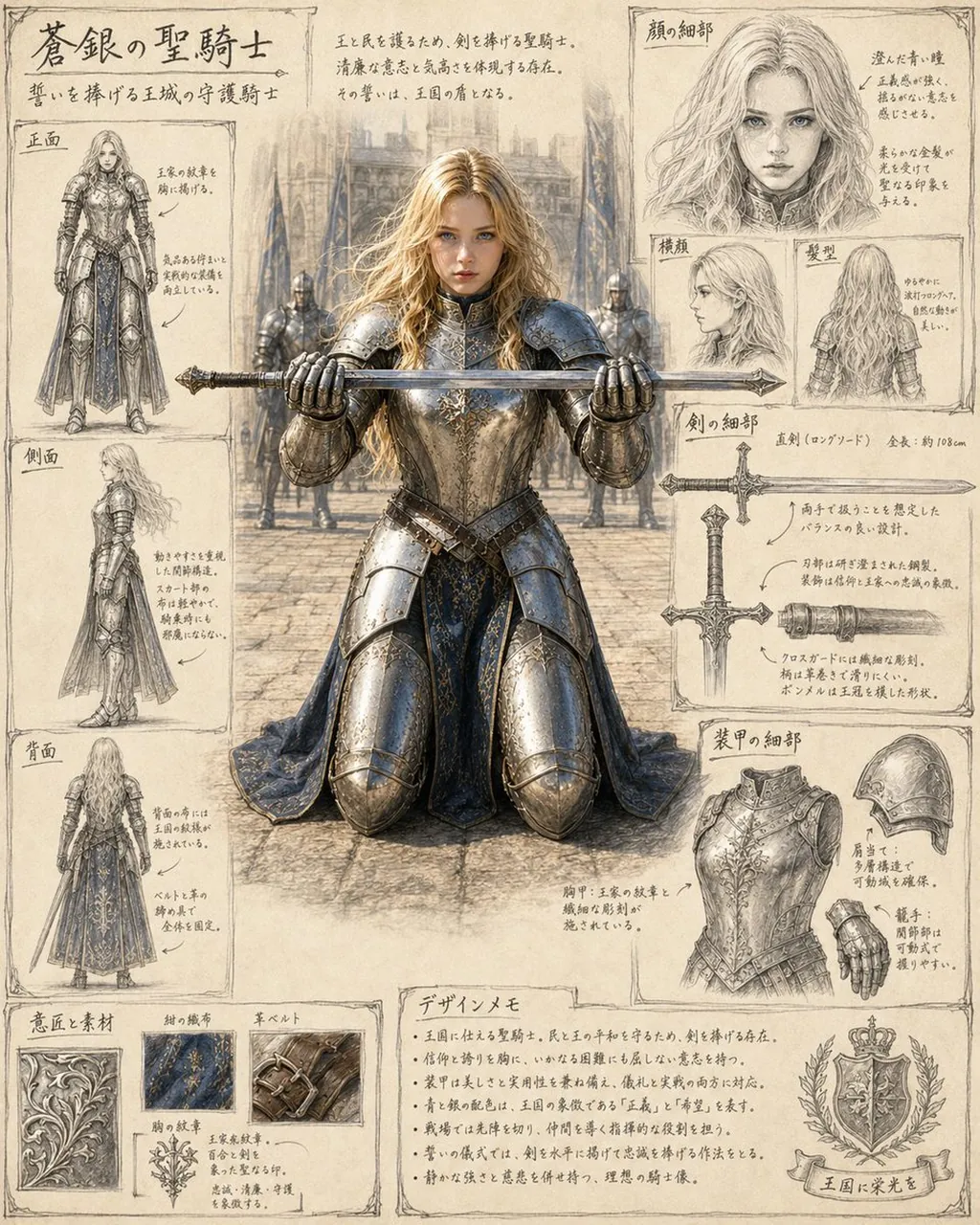
与えた画像の人物を高精細コンセプトアートとして描き、鉛筆での設定資料(文字列は手書きの日本語。線などはフリーハンド)を作成してください。アスペクト比は[4:5]で描画
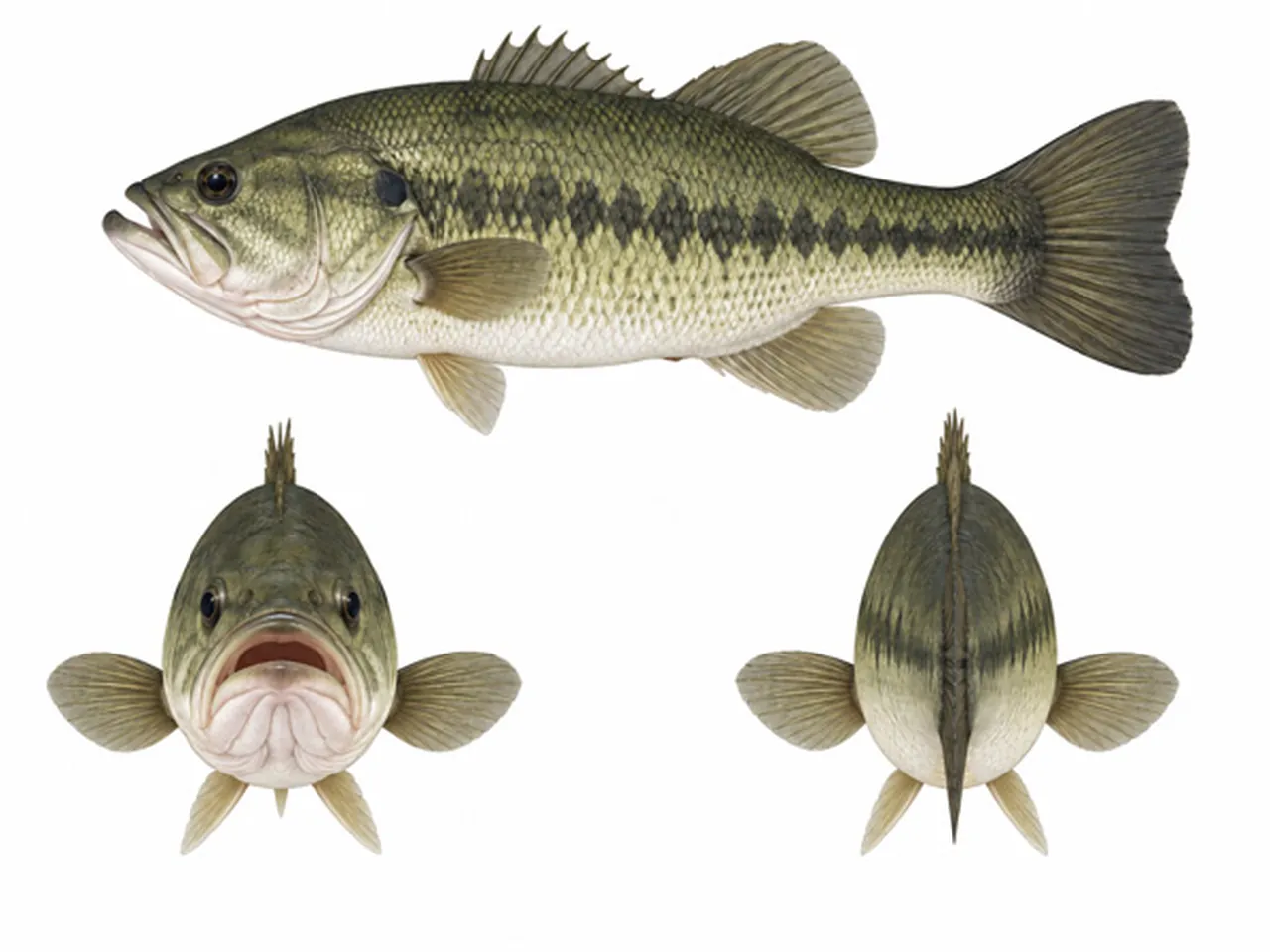
Goal: Create a clean scientific concept-art reference sheet of a largemouth black bass for game production or natural history illustration. Canvas: Landscape 4:3 canvas on a plain white background with no border, no watermark, and no text labels. Layout: Show exactly 3 discrete views of the same fish: 1 large side profile across the top, facing left; 1 smaller front view at the bottom left, mouth open and facing the viewer; 1 smaller rear view at the bottom right, tail and dorsal ridge facing the viewer. Keep generous white space between the three views and align them like a clean three-view model sheet. Subject details: Depict a realistic largemouth bass with an olive-green back, pale cream-white belly, yellow-green sides, dark mottled lateral stripe running along the body, visible individual scales, glossy dark eyes, large open jaw, spiny dorsal fin, soft dorsal fin, pectoral fins, pelvic fins, anal fin, and broad fan-shaped tail. The top side-view fish should be long and horizontally stretched with the head on the left and tail on the right, showing detailed gill plates, slightly open mouth, layered fins, and subtle shadowless studio lighting. The bottom front view should emphasize the wide bass mouth, symmetrical pectoral fins, chin folds, and small frontal eyes. The bottom rear view should show the oval body cross-section, central dark dorsal line, tail fin vertical in the center, and paired side fins. Visual style: Highly detailed semi-realistic digital painting, naturalistic fish anatomy, crisp edges, soft watercolor-like texture, accurate scale patterning, muted olive, black, beige, and cream palette, rendered like a polished creature reference sheet for an indie fishing game. Constraints: Use exactly 3 fish views and no additional objects, hooks, water, plants, measuring marks, annotations, logos, or background scenery.
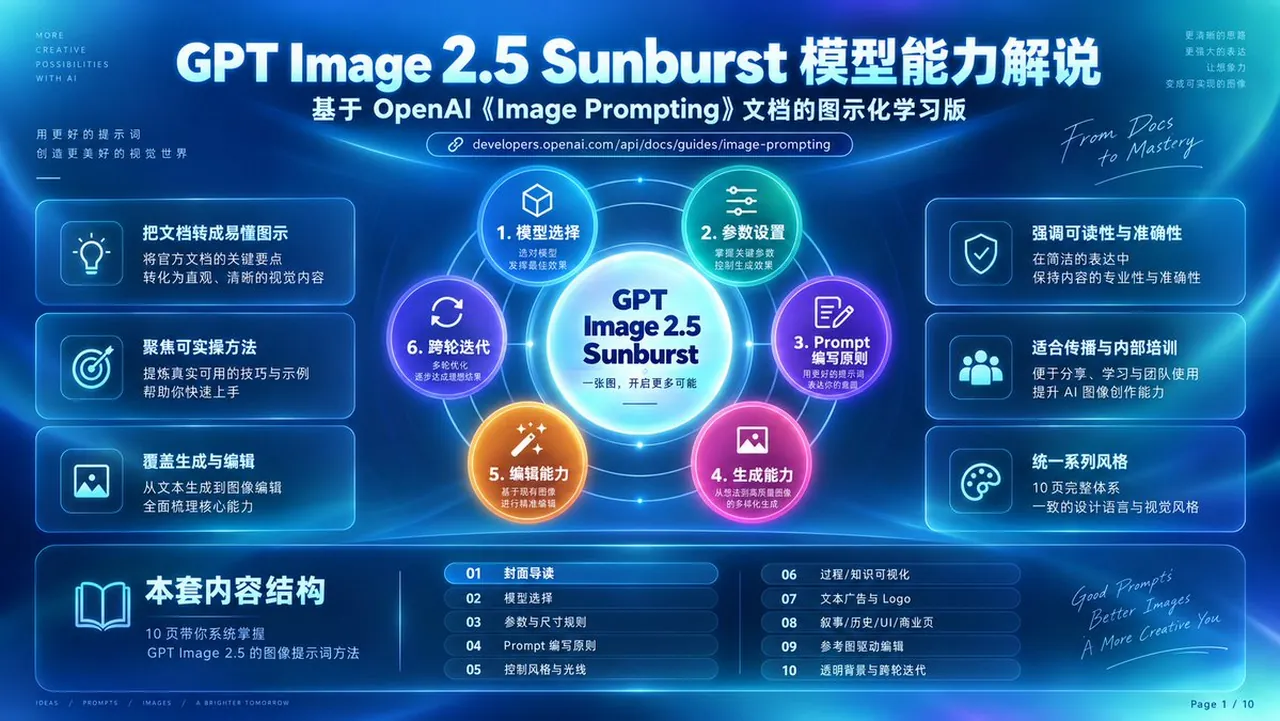
Goal: Create a futuristic Chinese tech infographic cover slide explaining GPT Image 2.5 Sunburst 模型能力解说, based on OpenAI image prompting documentation, in a glowing cyber-blue presentation style. Canvas: 16:9 horizontal slide, deep navy-to-cyan gradient background with soft radial light beams, neon arcs, thin orbital lines, lens glow, glassmorphism panels, and subtle high-tech UI grid details. Use crisp vector-like typography and luminous cyan borders. Add small decorative English microcopy in the corners. Main header: At the top center, large bold white title: “GPT Image 2.5 Sunburst 模型能力解说”. Directly below it, smaller bold subtitle: “基于 OpenAI《Image Prompting》文档的图示化学习版”. Under the subtitle, place a rounded URL pill with a chain-link icon and the text “developers.openai.com/api/docs/guides/image-prompting”. Central diagram: In the center, create a circular sunburst capability map. Put a bright glowing white-cyan core circle labeled “GPT Image 2.5 Sunburst” with a smaller Chinese line underneath: “一张图,开启更多可能”. Around it, place exactly 6 numbered colored capability nodes connected by orbit rings and radial lines: 1. Cyan node with cube icon: “1. 模型选择”, smaller text “选对模型 / 发挥最佳效果”. 2. Green-teal node with sliders icon: “2. 参数设置”, smaller text “掌握关键参数 / 控制生成效果”. 3. Purple node with document-and-pencil icon: “3. Prompt 编写原则”, smaller text “用好的提示词 / 表达你的意图”. 4. Pink-magenta node with image icon: “4. 生成能力”, smaller text “从想法到画面 / 的多样化生成”. 5. Orange node with magic-wand icon: “5. 编辑能力”, smaller text “基于现有图像 / 进行精准编辑”. 6. Violet-blue node with refresh arrows icon: “6. 跨轮迭代”, smaller text “多轮优化 / 逐步达成理想结果”. Left side feature cards: Arrange exactly 3 rounded translucent cards stacked vertically, each with a square icon tile on the left and Chinese text on the right: 1. Lightbulb icon, title “把文档转成易懂图示”, body “将官方文档的关键要点 / 转化为直观、清晰的视觉内容”. 2. Target icon, title “聚焦可实操方法”, body “提供真实可用的技巧与示例 / 帮助你快速上手”. 3. Image icon, title “覆盖生成与编辑”, body “从文本生成到图像编辑 / 全面梳理核心能力”. Right side feature cards: Arrange exactly 3 matching rounded translucent cards stacked vertically: 1. Shield-check icon, title “强调可读性与准确性”, body “在简洁的表达中 / 保持内容的专业性与准确性”. 2. Group/users icon, title “适合传播与内部培训”, body “便于分享、学习与团队使用 / 提升 AI 图像创作能力”. 3. Palette icon, title “统一系列风格”, body “10 页完整体系 / 一致的设计语言与视觉风格”. Bottom content-structure band: Add a wide rounded glass panel across the bottom. On the left of this panel, show a large open-book icon and the bold heading “本套内容结构”, with smaller body text “10 页带你系统掌握 / GPT Image 2.5 的图像提示词方法”. To the right, show exactly 10 chapter rows in two columns of five, each row in a small rounded blue pill with a two-digit number: 01 “封面导读” 02 “模型选择” 03 “参数与尺寸规则” 04 “Prompt 编写原则” 05 “控制风格与光线” 06 “过程/知识可视化” 07 “文本广告与 Logo” 08 “叙事/历史/UI/商业页” 09 “参考图驱动编辑” 10 “透明背景与跨轮迭代”. Decorative side text: Upper left tiny vertical microcopy reads “MORE / CREATIVE / POSSIBILITIES / WITH AI”; below it add Chinese copy “用更好的提示词 / 创造更美好的视觉世界” with a small underline. Upper right tiny Chinese copy reads “更清晰的思路 / 更强大的表达 / 让想象力 / 变成可实现的图像”. Add handwritten script near the upper-right diagram: “From Docs to Mastery”. Add handwritten script near bottom right: “Good Prompts / Better Images / A More Creative You”. Footer: Bottom left add tiny separated words “IDEAS / PROMPTS / IMAGES / A BRIGHTER TOMORROW”. Bottom right add page marker “Page 1 / 10”. Visual style: Premium SaaS keynote cover, luminous blue glass cards, neon cyan outlines, high contrast white Chinese typography, rounded UI panels, subtle blur, volumetric light, polished infographic composition. Keep all major elements symmetrical and readable, with the central sunburst as the focal point. Constraints: Use exactly 6 central capability nodes, exactly 6 side feature cards, and exactly 10 bottom chapter rows. Do not add extra chapters or cards. Preserve the Chinese headings and labels exactly as specified. No logos other than text references to OpenAI and GPT Image 2.5. No watermark.
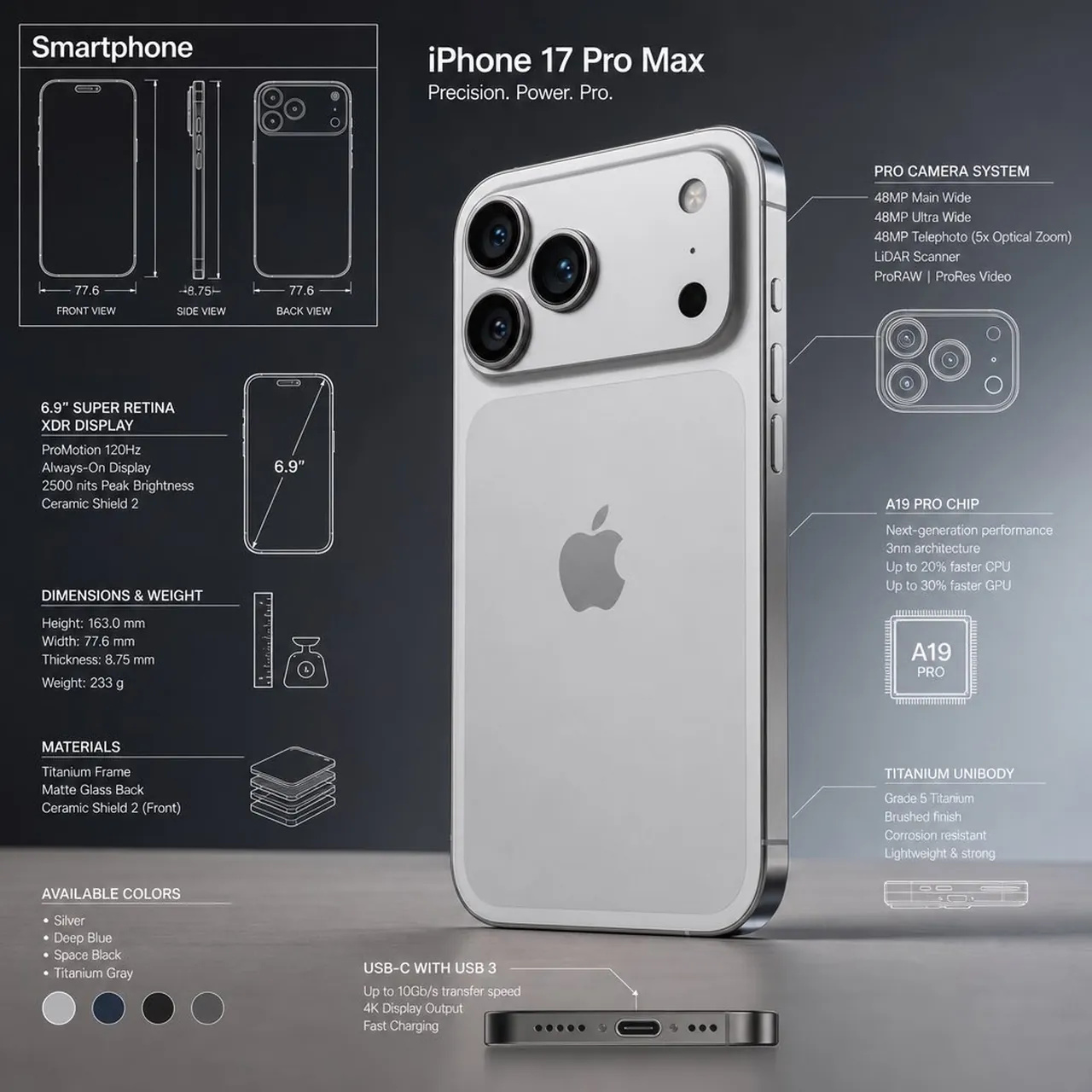
Premium technical infographic of [product name ]. Use the reference image only to understand the shape and structure of the object, without copying the same photo, angle, composition, or background. Reinterpret the subject in a new professional and realistic photograph, clean and well-lit, with a suitable and more aesthetic background. Keep the object as a real photo, not an illustration. Add a technical blueprint-style overlay with white lines, arrows, dimensions, labels, and small diagrams of parts, materials, measurements, and functionality. Clear, elegant, and informative composition. Include a sketch box in the upper left corner with the title "[name] ".
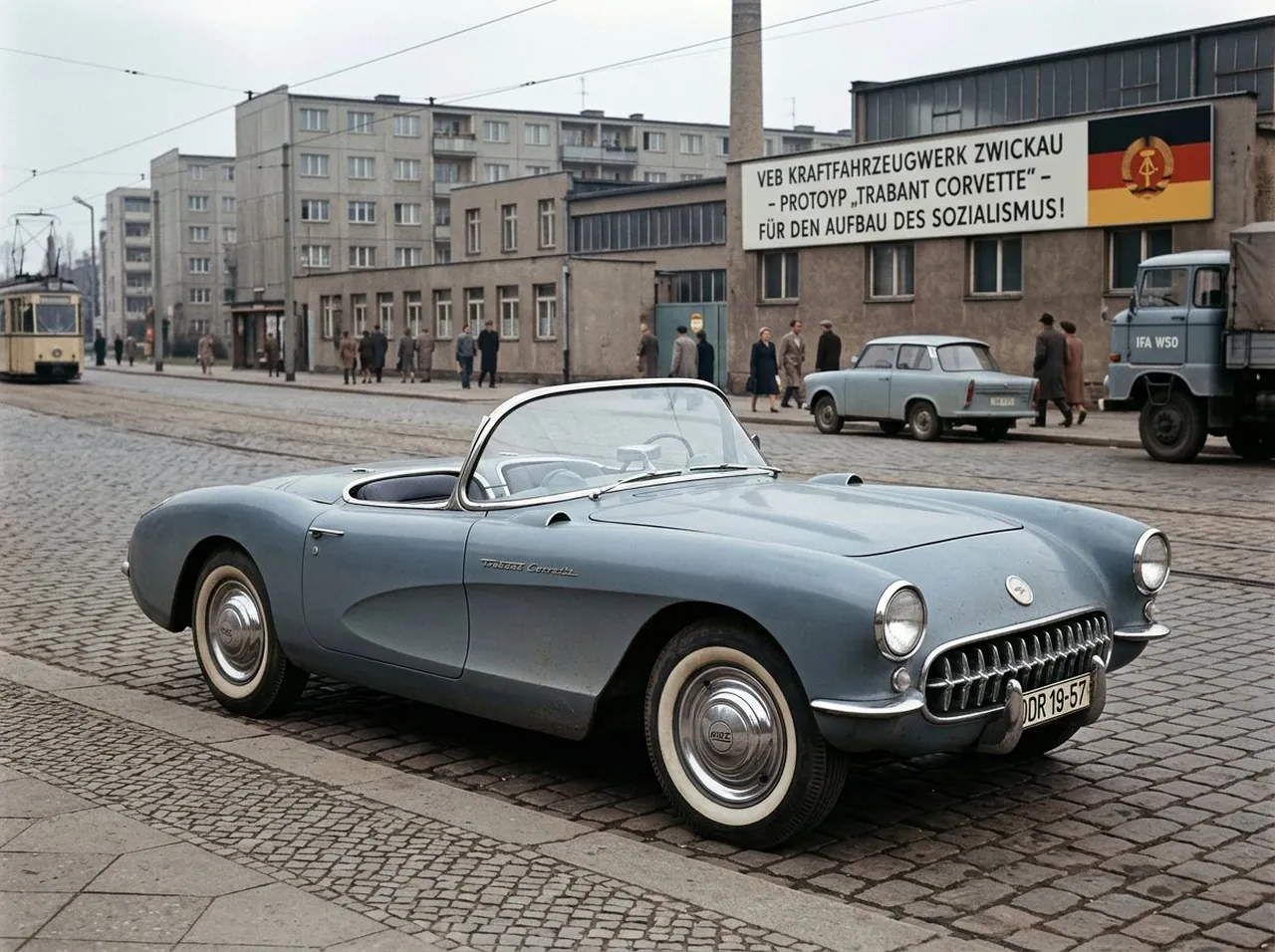
Chevrolet Corvette designed in East Germany by Trabant engineers in 1957, retro GDR automotive design, socialist industrial aesthetics, realistic alternate history
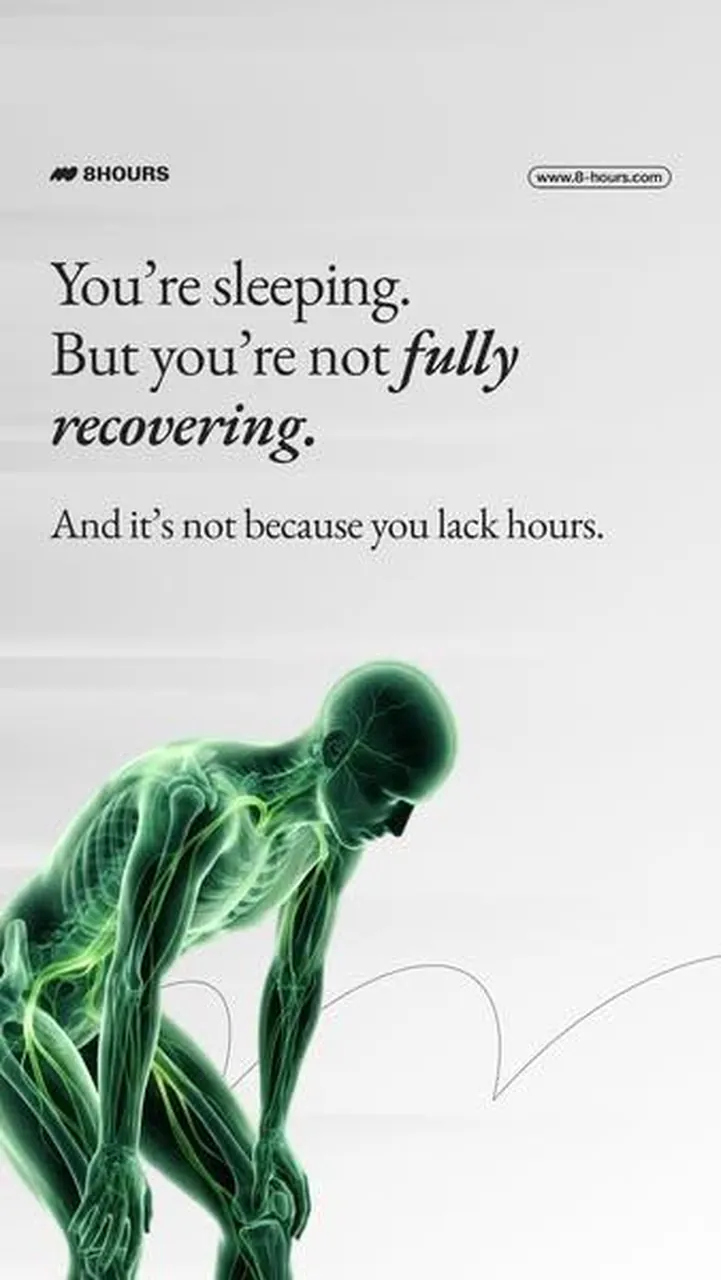
A ultra-detailed, hyper-realistic 3D rendering of human waist, presented against a smooth, clean white-to-light-grey gradient background. The style must mimic that of an advanced, glowing medical scan (like an fMRI combined with a CT). The entire structure is composed of luminous, semi-transparent green tissue (fascia, muscles, nerves), with skeletal elements and major neural pathways rendered in a brilliant, glowing electric green light. The texture is that of a complex, interwoven network of lit fibers and nodes. The aesthetic is clean, technological, and medicinal, with the green structures appearing to emit light. The composition must be high-focus and minimalist, with a single, clear subject and no text.
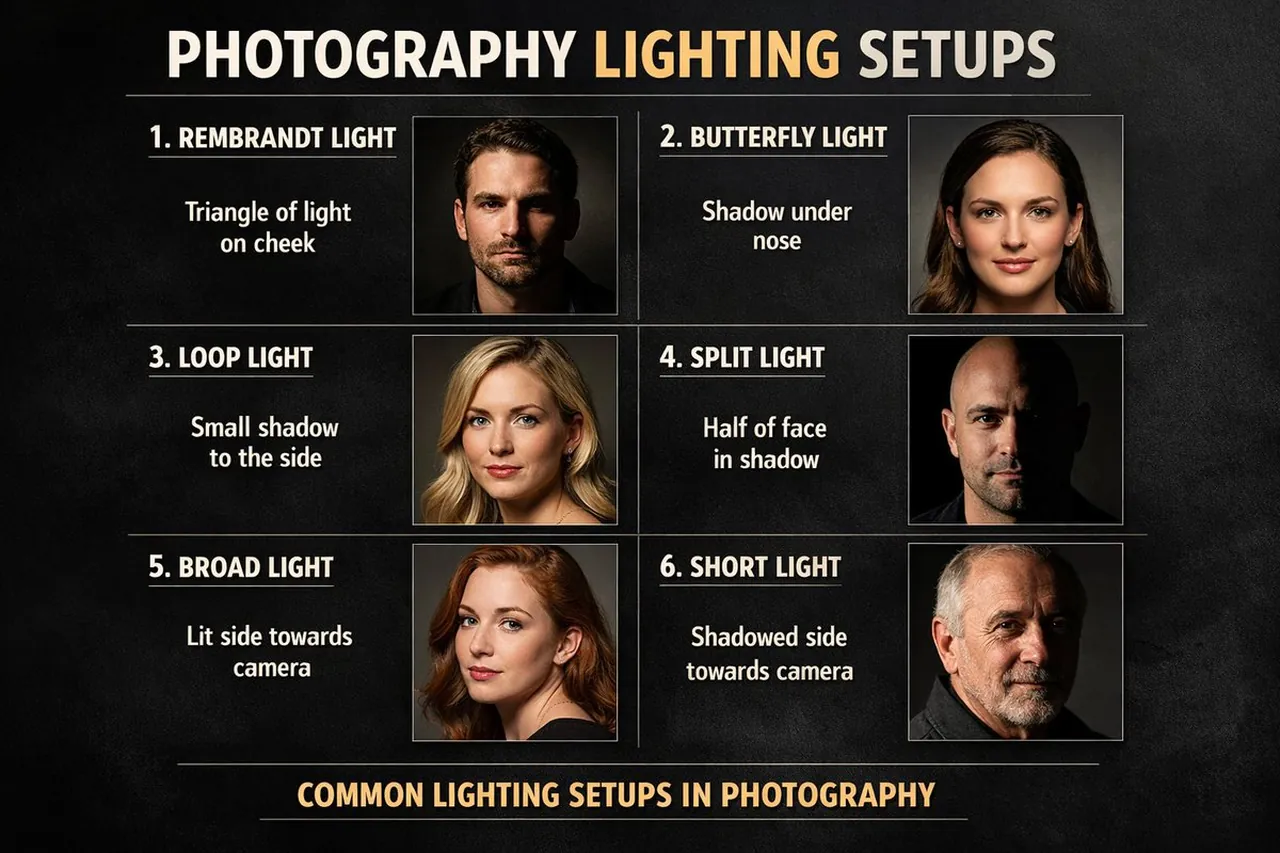
Create a professional educational poster illustrating essential photography lighting setups, featuring clean diagrams and visual examples of studio lighting techniques.
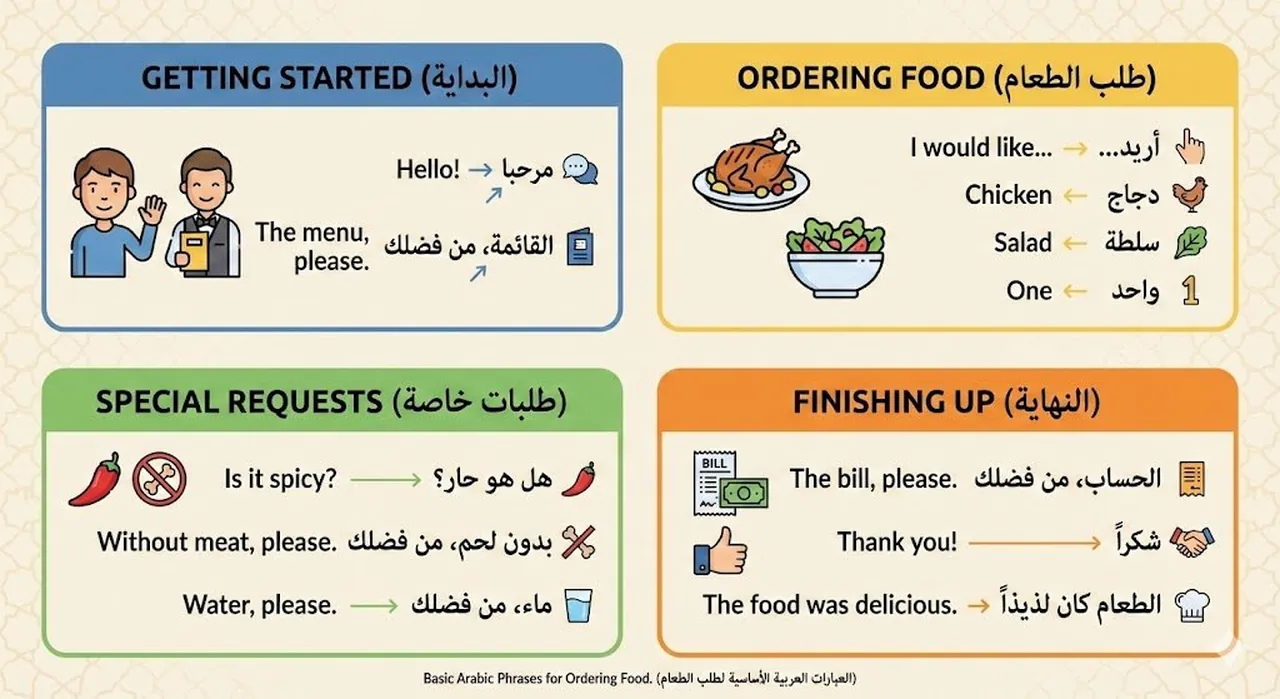
A multi-panel image showing basic phrases on how to order food in Arabic, featuring clear typography and illustrative icons for each phrase.
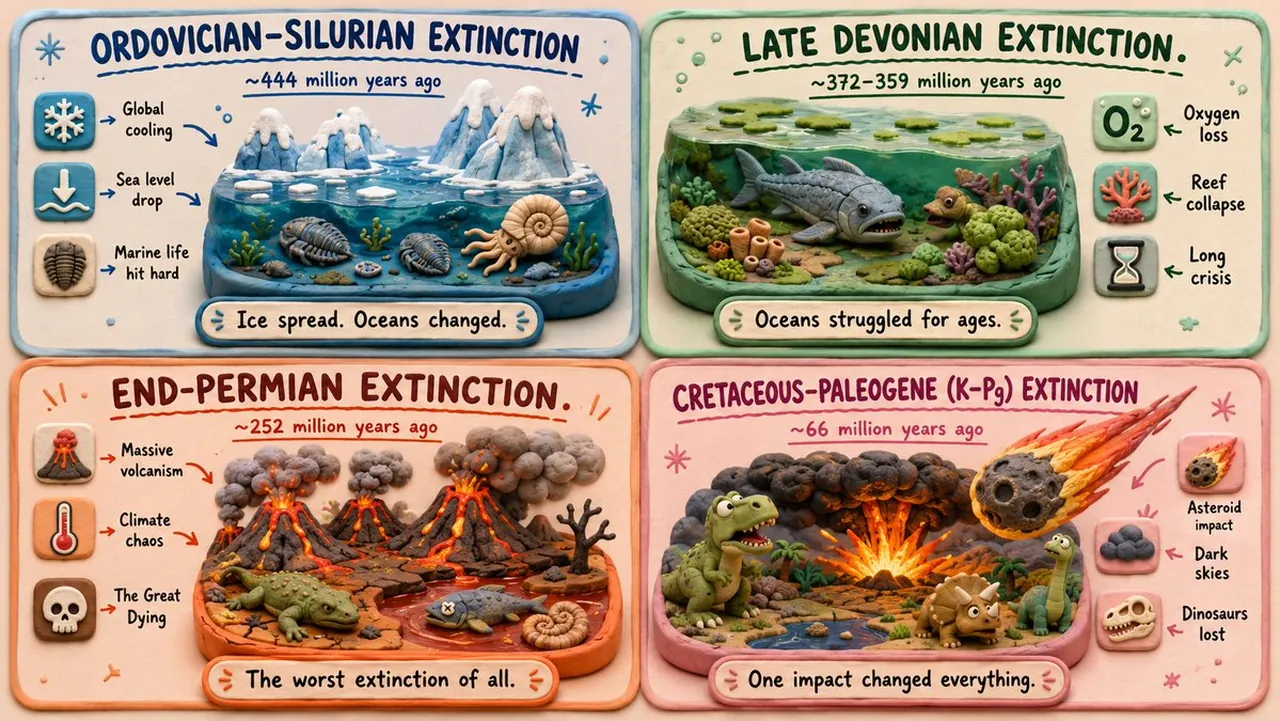
A polished claymation diorama infographic about [TOPIC]. The design features a multi-panel timeline, where each panel is a rounded display base containing a chunky simplified clay object representing a stage, 2-3 small clay icons, and short educational labels. Materials include soft polymer clay and matte plastic with rounded edges and smooth surfaces. Typography is in a hand-drawn marker style, uneven and playful, with arrows and doodles. Lighting is soft studio with gentle shadows and toy-photography crispness. The background is a warm pastel color with teal, coral, pink, mint, yellow, and cream accents, and black lettering. Educational, fun, and high-quality 3D render.
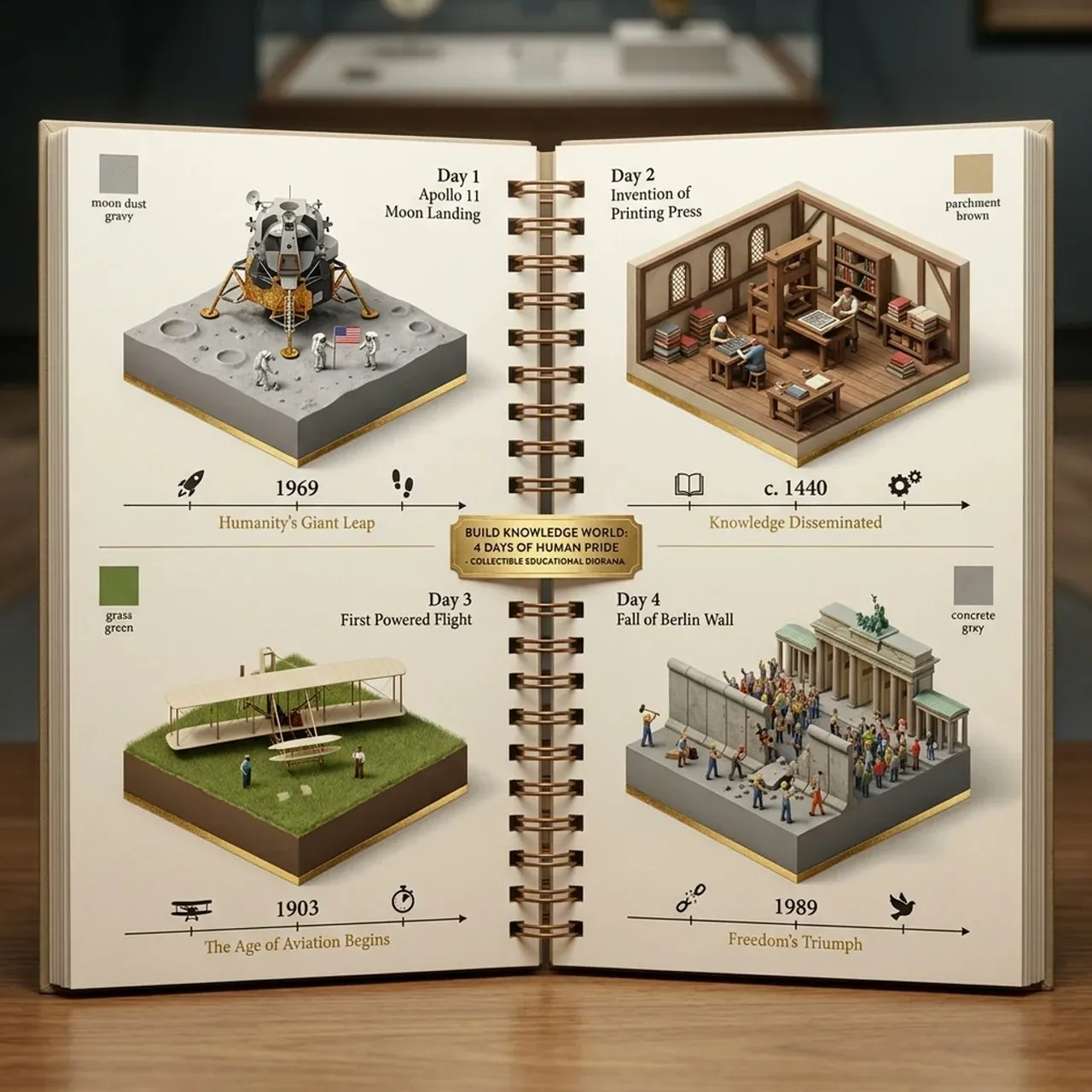
4 important days for humans visualized. Nano Banana Pro vs. MAI-Image-2.5 2x2 grid, 16:9, do this for 4 days that made humans proud -> @ isometric_grid(angle=30, depth=3, cell_size='variable') @ cutaway_rooms(material='matte_painted_resin', prop_style='$SUBJECT_domain', figure_scale='1:100') @ silhouette_arrangement(shape='$SUBJECT_iconic_silhouette', cell_population='density_by_category') @ infographic_layer(axes=['timeline','complexity','function'], callouts=True, swatches=True, font='serif_edu') @ open_book_spread(pages='thick_cream_cardstock', pop_up=True, binding='spiral_visible') @ premium_finish(foil='gold_on_edges', lighting='soft_museum_spot', texture='warm_paper_grain') def build_knowledge_world(subject="$SUBJECT"): return "collectible_educational_diorama" RENDER build_knowledge_world() as an 8K macro product photo, slightly overhead, shallow DOF.”
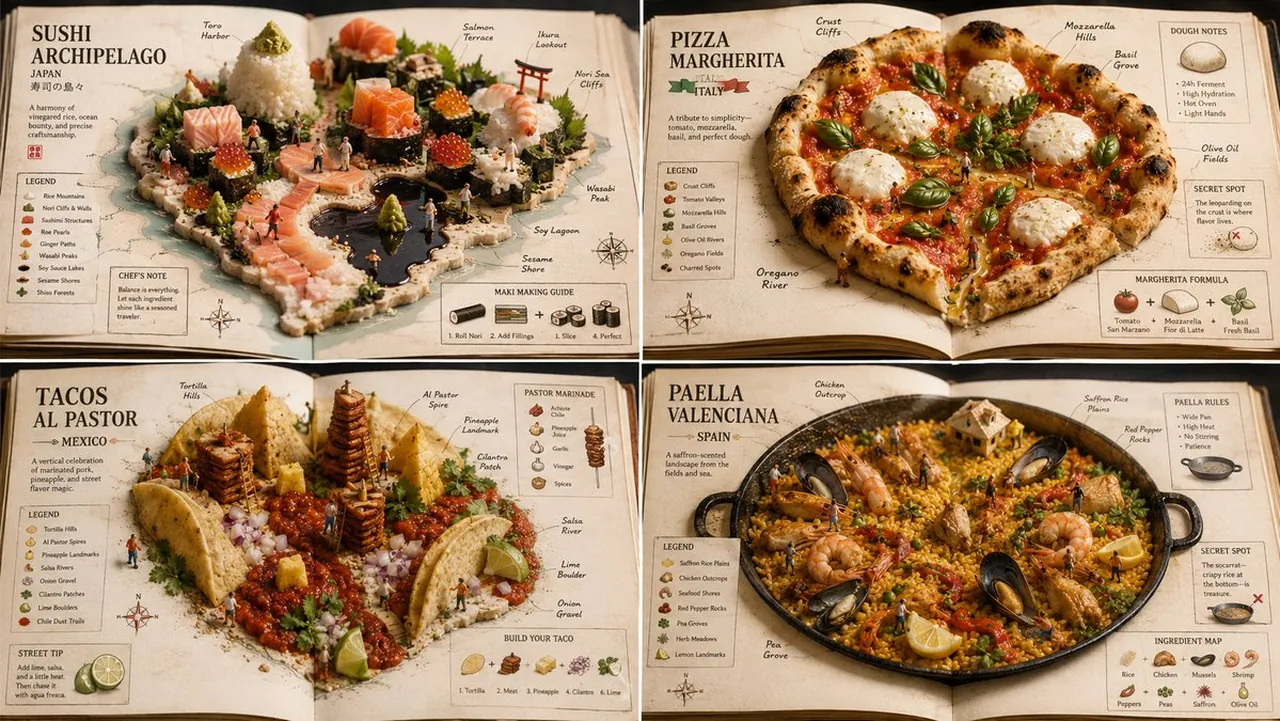
for GPT Image 2. It should work for any kind of food but I went popular dishes. 2x2 grid, 16:9, do this for 4 famous international dishes: CONCEPT ANCHOR 1: "Sushi miniature world — rice terrain, sashimi architecture, nori panels, roe beads, sesame debris, plated macro craftsmanship" :: CONCEPT ANCHOR 2: "Open food atlas — ingredients arranged as geographic terrain, edible map relief, cookbook page layout, culinary cartography, warm tabletop realism" :: CONCEPT ANCHOR 3: "Annotated miniature diorama guide — tiny figures, object callouts, side labels, ingredient diagrams, secret-spot markers, collectible educational layout" INSTRUCTION: Find the exact visual center of these three concepts. Ignore the literal astronaut, national flag, named foods, and specific maps. Capture only the reusable style DNA. Render $ SUBJECT as an edible miniature world presented inside an open atlas or cookbook. STYLE RULES: - Convert the subject into a tiny handcrafted scene built from edible materials. - Broad landforms become rice, grains, noodles, bread, pastry, sauce, puree, or layered ingredients. - Important structures become sashimi blocks, vegetable cuts, nori sheets, grilled pieces, dumplings, cubes, or carved food components. - Small repeated details become roe pearls, sesame seeds, herbs, spices, crumbs, seeds, or garnish clusters. - Present the subject on an open book, plate, tray, or cookbook spread. - Add map-like labels, ingredient callouts, tiny arrows, region markers, recipe notes, and small explanatory diagrams. - Use warm macro photography, shallow depth of field, tactile food texture, and precise miniature staging. OUTPUT: A culinary atlas-diorama where $ SUBJECT becomes a tiny edible world that is both delicious and educational.
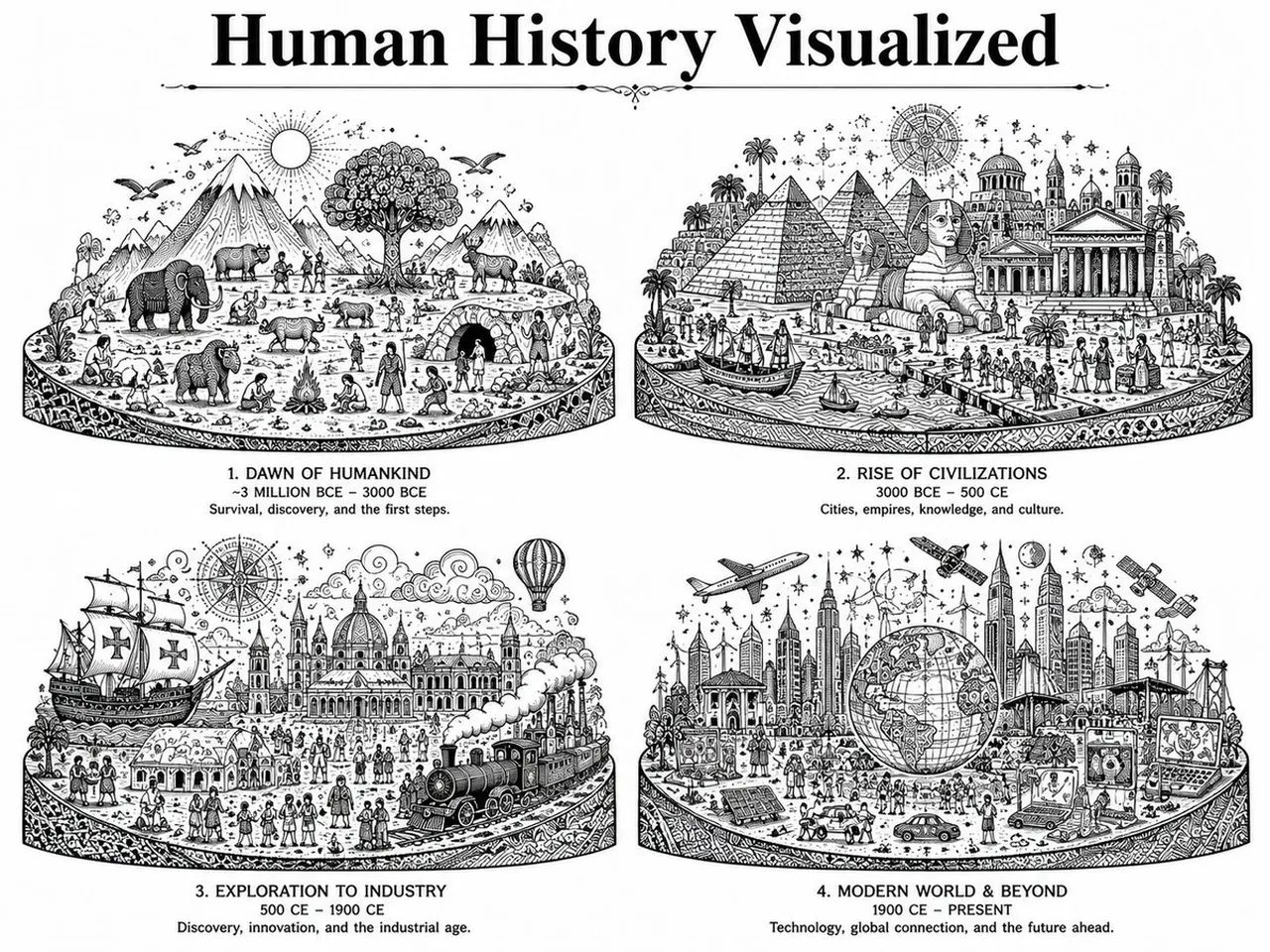
2x2 grid, do this for 3D diorama of the most historic events in the history of human race with Title in bold "Human History Visualized" : Function Render_Ink_Mandala ($ Subject) Anchor:[Zentangle $ Subject] :: [Ink Drawing Pattern]::5 Morphology: Outline of $ Subject filled with intricate abstract doodles, geometric patterns, dots, and lines, high density of detail::4 Material Physics: White paper texture, black India ink, slight bleed lines, hand-drawn imperfection::3 Illumination: Flat even lighting, high contrast black and white, no shadows::2 Render Stack: Flatbed scan, high resolution, vector art style, crisp lines::1 Negative:[Colors, shading, 3D, realistic photo, messy scribbles, blurry]:: -1
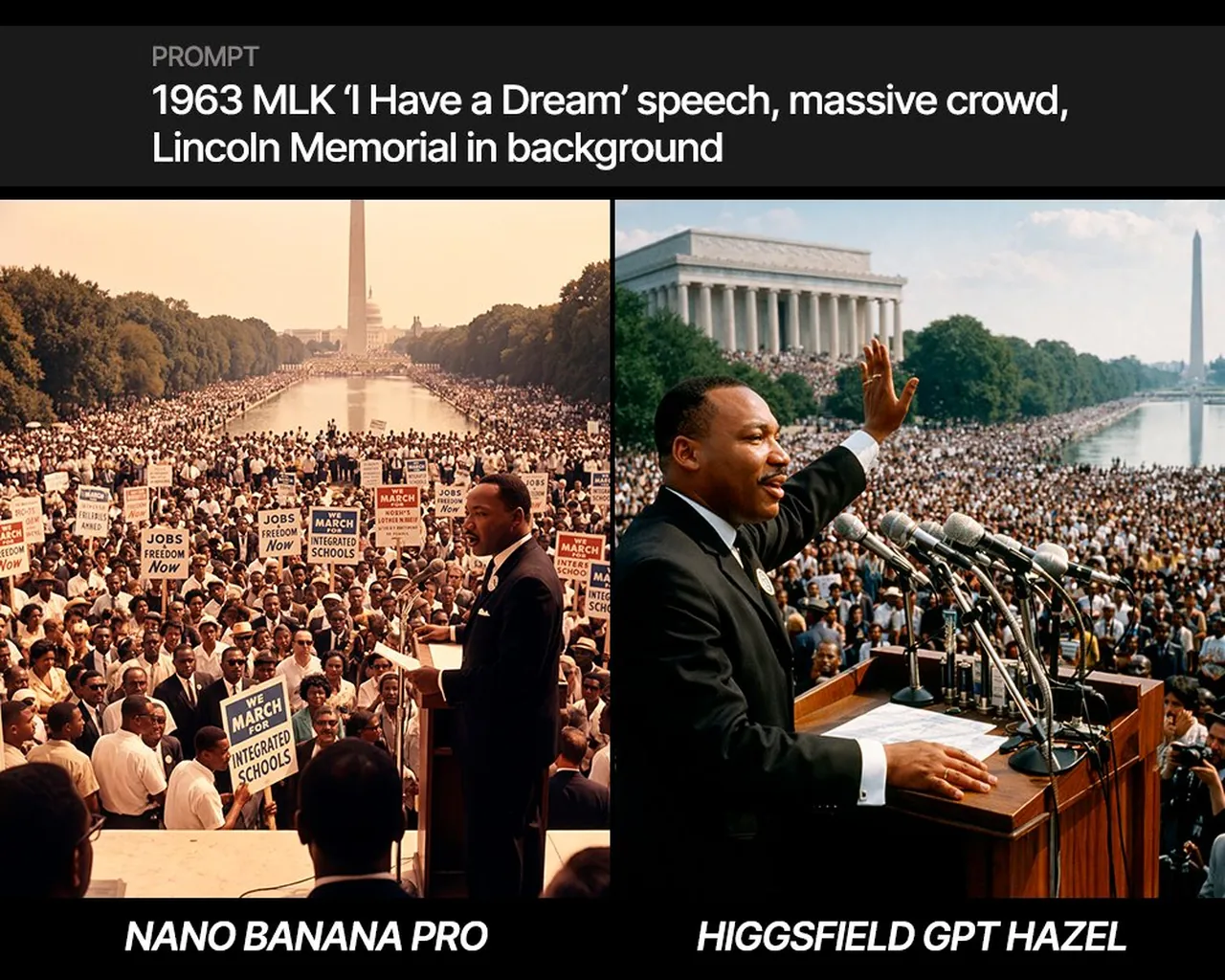
1963 MLK 'I Have a Dream' speech, massive crowd, Lincoln Memorial in background.
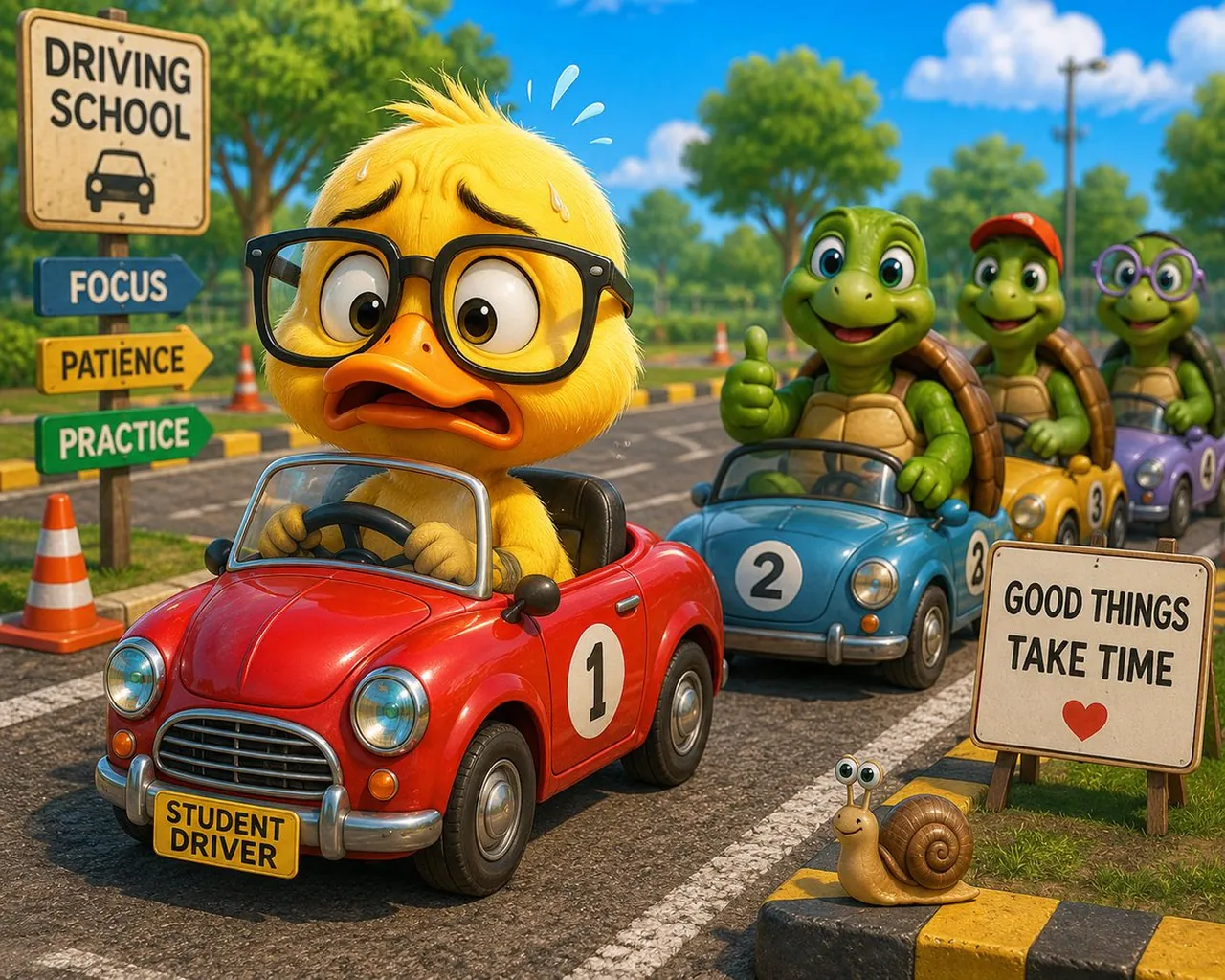
A nervous duck wearing oversized glasses attempts its first driving lesson in a tiny red toy car while confident turtles patiently wait behind. Bright cartoon style, exaggerated expressions, family friendly humor.
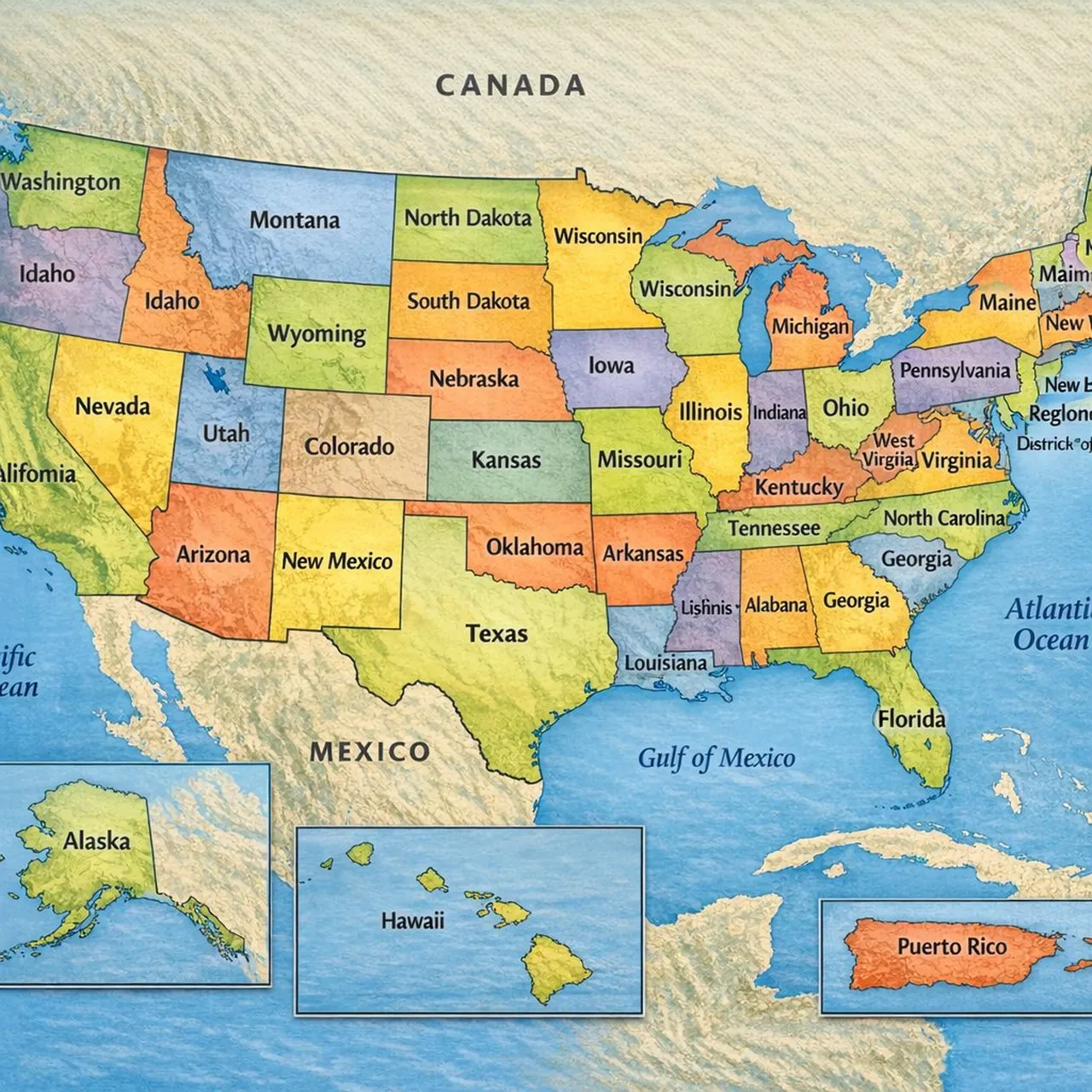
draw a realistic map of the U.S., with labels of all 54 states.
Choose an infographic or educational visual prompt and copy the full text.
Adjust the topic, information hierarchy, icons, colors, layout, labels, and visual style to fit your audience.
Paste the prompt into the image generator, choose a model, and create your educational visual.
Follow these steps to turn an infographic or educational visual prompt into a clear AI image.
Browse by type
Browse image, video, or the complete prompt library.
Explain ideas visually
Choose an infographic prompt, customize the information and layout, and generate an easy-to-understand visual in seconds.