Popular
Nano Banana Pro
Image20000+ prompts
View prompts
Discover text and typography prompts for expressive lettering, bold titles, quotes, logos, posters, and creative graphic compositions.
Creative Typography Layout
Text / Typography
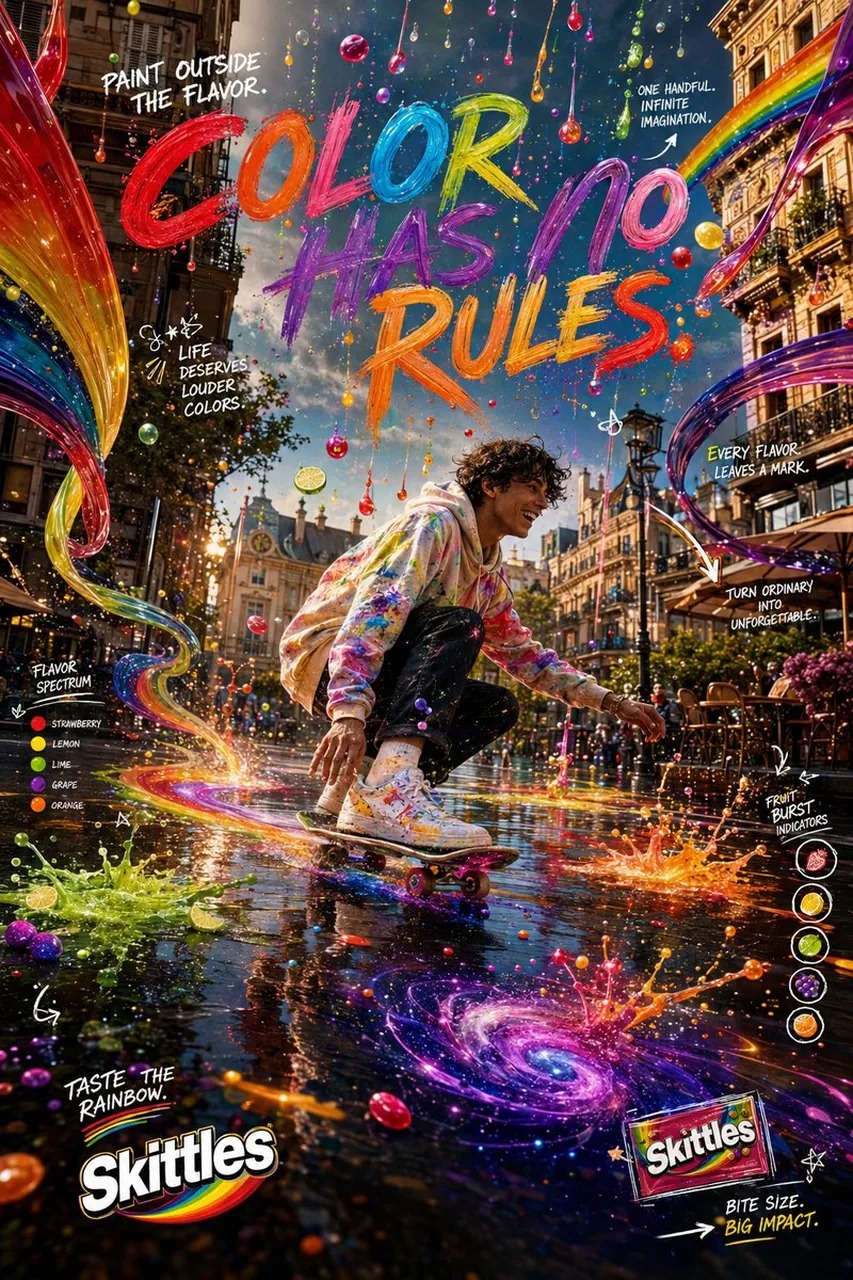
Create an ultra-premium global campaign scene. A stylish young creator skateboards effortlessly through an old European-inspired city plaza immediately after a summer rain. The wet cobblestone streets act like giant mirrors, reflecting the vibrant architecture. The sky is experiencing a 'Flavor Storm' with hundreds of glowing liquid droplets descending—suspended streams of vibrant fruit-colored paint, sparkling candy dust, translucent syrup ribbons, floating fruit slices, and shimmering sugar crystals. Each droplet creates extraordinary effects upon impact: red drops bloom into raspberry galaxies, yellow splashes become citrus sunbursts, green impacts grow luminous lime vines, purple droplets unfold into cosmic nebulas, and orange impacts explode into spirals of tropical fruit particles. The subject glides through this explosion of creativity, leaving glowing colorful wheel trails behind them. Massive translucent candy ribbons float through the air, bending naturally around buildings, balconies, and street lamps. Luxury FMCG advertising style, hyper-realistic liquid simulations, ultra-detailed fruit textures, photorealistic reflections, shallow cinematic depth of field, high dynamic range, ultra-realistic lighting, rich color grading, 8K resolution.
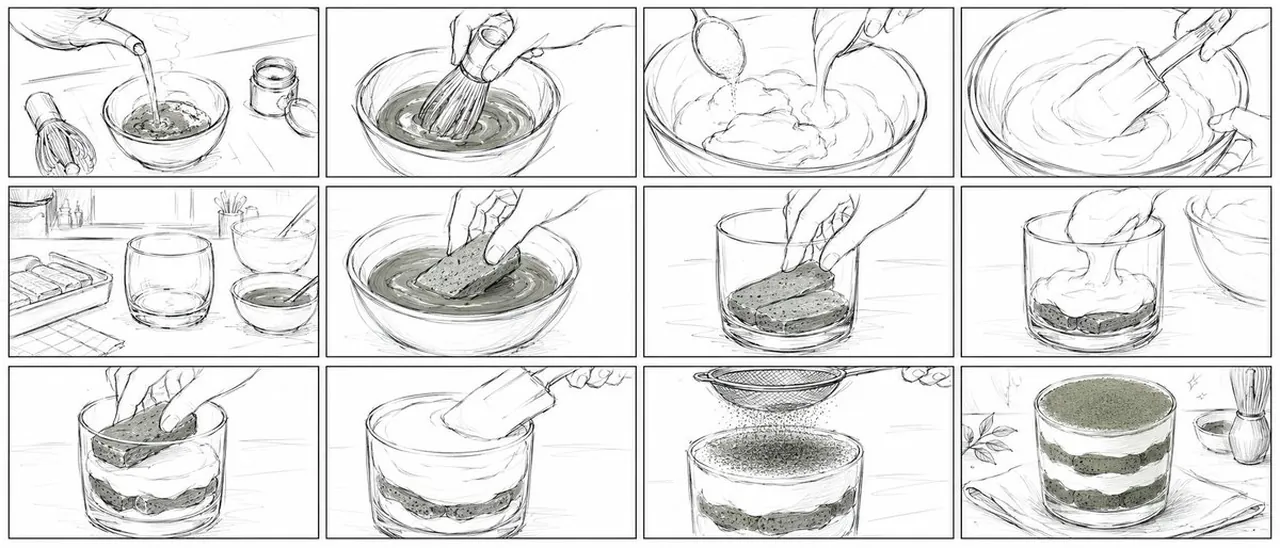
Goal: Create an ultra-rough pencil storyboard for a 9-second Japanese 2D anime-style dessert cooking short video about making matcha tiramisu. Canvas: Wide cinematic 21:9 horizontal storyboard sheet, white background, thin black panel borders, arranged as exactly 12 panels in a 3-row by 4-column grid. Use loose hand-drawn graphite pencil lines, sketchy construction strokes, minimal shading, a few muted pale green matcha accents, and no polished coloring. Layout and panel count: Show exactly 12 discrete storyboard panels, left to right, top to bottom: 1. A kettle pours hot water into a small bowl of matcha powder on a kitchen counter; a whisk lies nearby and a small jar sits in the background. 2. Close-up of a hand whisking matcha in a bowl, circular motion lines visible. 3. Two spoons add creamy mascarpone or cream into a large mixing bowl. 4. A spatula folds the cream mixture in a large bowl, smooth sweeping motion lines. 5. Mise-en-scène wide shot: glass dessert cup centered, tray of sponge fingers on the left, small bowl of matcha on the right, kitchen tools in the background. 6. Hand dips one rectangular sponge finger into the matcha liquid inside a shallow bowl. 7. Hand places matcha-soaked sponge fingers into the bottom of a clear cylindrical glass cup. 8. A spoon drops a mound of cream onto the sponge layer inside the glass. 9. Hand adds another soaked sponge finger layer on top of the cream in the glass. 10. Spatula smooths a thick top layer of cream in the glass, showing layered sponge and cream through the transparent side. 11. A mesh sieve dusts matcha powder evenly over the top of the dessert. 12. Final beauty shot: completed matcha tiramisu in a clear round glass with three visible layers, green matcha dusted top, placed on a napkin with small leaves and a bamboo whisk nearby. Visual style: Japanese 2D anime production storyboard, rough pencil animatic look, monochrome line art with subtle green-gray matcha shading, dynamic hands and utensils, expressive motion arcs, clean rectangular framing, light tabletop perspective, soft food-prep atmosphere. Text content: No captions, no dialogue, no panel numbers, no watermarks. Constraints: Keep the drawing intentionally rough and storyboard-like, preserve the exact 12-panel grid, maintain the 21:9 aspect ratio, focus on cooking actions and ingredient layering, and avoid photorealism.
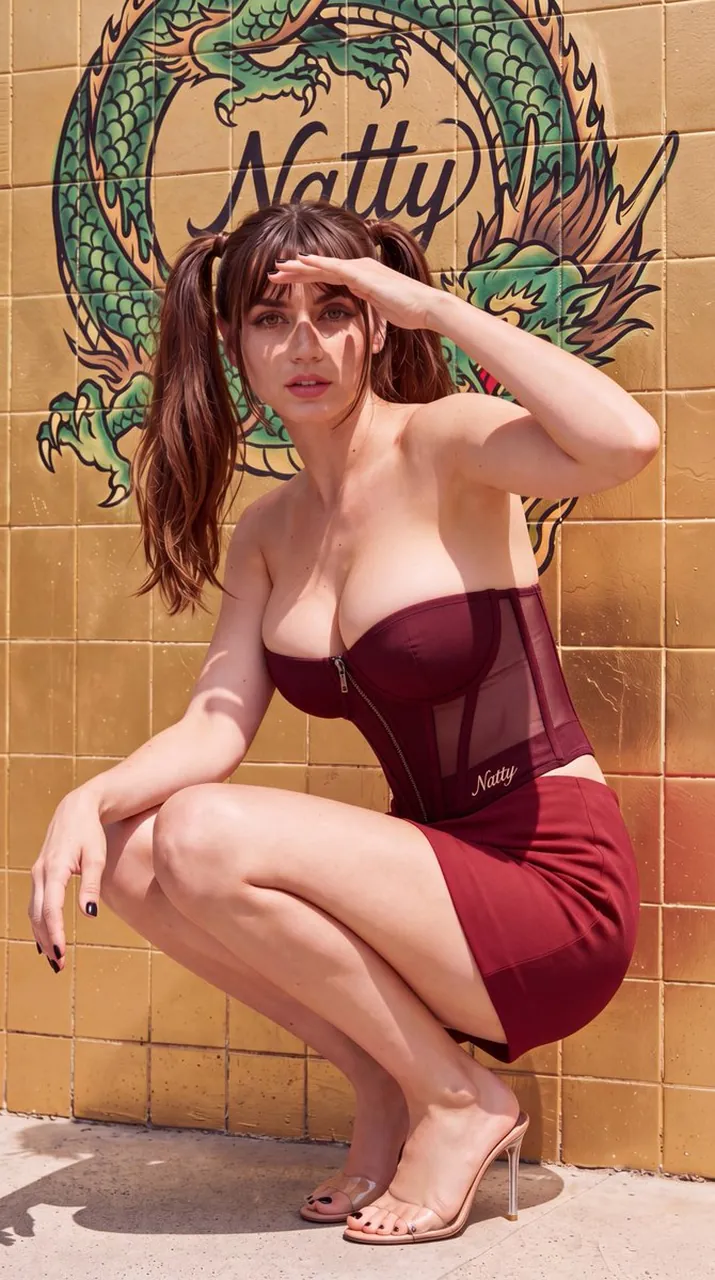
{"id": "gold_dragon_street_editorial_01", "prompt": "Ultra-realistic luxury street fashion editorial portrait of a glamorous young woman with long naturally wavy copper-red hair, soft center part, natural volume, and loose face-framing strands. Warm ivory skin with visible pores, realistic skin texture, natural freckles across the cheeks, shoulders, arms, and legs, authentic facial vellus hair, luminous satin complexion, soft peach blush, feathered brows, warm champagne eyeshadow, delicate fox-eye eyeliner, wispy lashes, glossy nude-pink lips with realistic lip texture, and hazel-green eyes. Wearing a fitted black strapless corset-style top with structured boning, underwire cups, a sheer mesh midsection, and subtle zipper detailing, paired with a short black mini skirt featuring elegant 'Natty' embroidery stitched in refined cursive near the hem. Clear acrylic block-heeled sandals with transparent straps, glossy black toenails, glossy black fingernails, and minimal jewelry. Crouching naturally against a luxurious gold mosaic tiled wall, one hand raised to her forehead shielding her eyes from the bright sun while the other rests on her thigh, maintaining direct eye contact with a confident editorial expression. Behind her is a large hand-painted emerald green dragon mural with detailed scales and bold outlines, alongside stylish graffiti typography spelling 'Natty'. Strong natural golden-hour sunlight creates dramatic shadows, warm highlights, realistic skin reflections, and vibrant color contrast across the gold tiles. Captured with a Sony A7R V and an 85mm f/1.4 GM lens. Vogue street fashion campaign aesthetic, luxury urban editorial, Kodak Portra-inspired skin tones, realistic skin rendering, DSLR-quality sharpness, high-frequency skin detail, RAW photo, ultra photorealistic, 8K.", "negative_prompt": "cartoon, anime, CGI, painting, beauty filter, plastic skin, wax skin, excessive skin smoothing, fake pores, blurry face, blurry eyes, low resolution, noise, grain, watermark, distorted anatomy, extra limbs, extra fingers, malformed hands, unrealistic body proportions, duplicate people, duplicate dragon, duplicate graffiti, oversaturated colors, clipped highlights, low-detail hair", "style": "photorealistic", "camera": {"type": "Sony A7R V", "lens": "85mm f/1.4 GM", "aperture": "f/2.0", "iso": 100, "angle": "eye-level full-body fashion portrait", "depth_of_field": "shallow"}, "lighting": {"type": "natural golden-hour sunlight", "direction": "strong front-side sunlight", "mood": "bold, luxurious, editorial"}, "composition": {"framing": "vertical full-body portrait", "subject_position": "crouching against a gold mosaic wall", "background": "gold tiled wall with an emerald green dragon mural and elegant 'Natty' graffiti, warm cinematic bokeh"}, "quality": {"resolution": "8k", "detail": "ultra high", "sharpness": "DSLR-quality", "skin_detail": "visible pores, realistic texture, natural freckles, subtle facial vellus hair", "realism": "maximum"}}
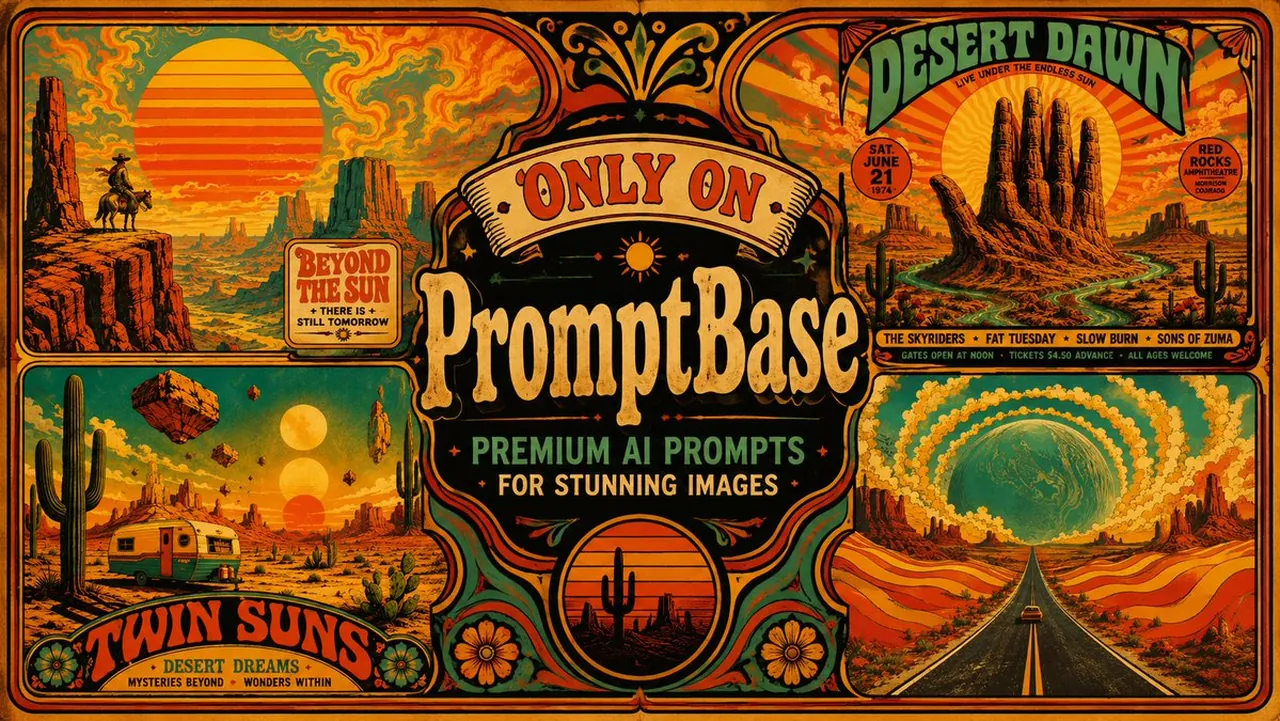
Goal: Create a wide vintage 1970s psychedelic desert advertising poster collage for PromptBase, combining retro concert-poster typography, surreal American Southwest landscapes, and bold premium-prompt marketing copy. Canvas: Horizontal 16:9 poster, warm aged print texture, thick rounded black border, orange paper grain, distressed ink, symmetrical decorative framing. Use a saturated palette of burnt orange, mustard yellow, teal green, faded red, black ink, and cream. Layout: Divide the poster into exactly 5 main visual areas: 1 large central ornate brand badge, 1 upper-left desert sunset panel, 1 lower-left desert caravan panel, 1 upper-right concert-poster panel, and 1 lower-right cosmic highway panel. All panels should have rounded corners, heavy black outlines, hand-drawn ornamental dividers, floral accents, stars, dots, scrollwork, and screen-printed imperfections. Central subject: In the middle, create a large black ornamental label with cream and orange outlines. At the top of the badge place a cream ribbon reading "ONLY ON" in red western serif letters. Below it, set the main brand text as PromptBase in huge cream vintage slab-serif lettering with orange shadowing. Under that, add two stacked taglines: PREMIUM AI PROMPTS in teal block letters and FOR STUNNING IMAGES in cream letters. Add small stars, a tiny sun icon, curved flourishes, and a circular sunset medallion at the bottom center containing a black cactus silhouette. Panel details: Upper-left panel shows a huge striped orange sun over a desert canyon, red cliffs, mesas, a tiny cowboy on horseback at the far left, teal-and-orange smoky psychedelic sky, and a small retro sign reading "BEYOND THE SUN" with smaller text "THERE IS + STILL TOMORROW". Lower-left panel shows a surreal desert campsite with exactly 3 vertically aligned suns in the sky, exactly 4 floating rocks, a silver-and-orange vintage trailer, tall saguaro cactus, prickly pear plants, mesas, and a curved title banner reading TWIN SUNS; below it add "DESERT DREAMS" and tiny text "MYSTERIES BEYOND • WONDERS WITHIN". Upper-right panel is a psychedelic gig poster titled DESERT DAWN in big arched green letters, with small subtitle "LIVE UNDER THE ENDLESS SUN"; include a giant cactus-hand rock formation in front of a striped sun, winding river or road, saguaro silhouettes, two circular info badges reading "SAT. JUNE 21 1974" and "RED ROCKS AMPHITHEATRE MORRISON COLORADO", and a bottom band strip listing exactly 4 acts: "THE SKYRIDERS", "FAT TUESDAY", "SLOW BURN", and "SONS OF ZUMA". Lower-right panel shows a straight black highway with yellow center lines leading into a huge teal planet or moon on the horizon, surrounded by concentric swirling yellow-orange cloud rings, rolling red-and-orange desert hills, distant mesas, and a tiny car driving away. Visual style: Hand-illustrated retro screenprint, psychedelic western poster art, slightly uneven registration, halftone grain, distressed edges, bold black contour lines, ornate 70s lettering, high contrast, maximal but balanced composition. Constraints: Keep the poster text legible and arranged as described, include exactly 5 main visual areas, exactly 3 suns and 4 floating rocks in the lower-left panel, exactly 4 band names in the upper-right strip, no photorealism, no modern UI, no watermark.
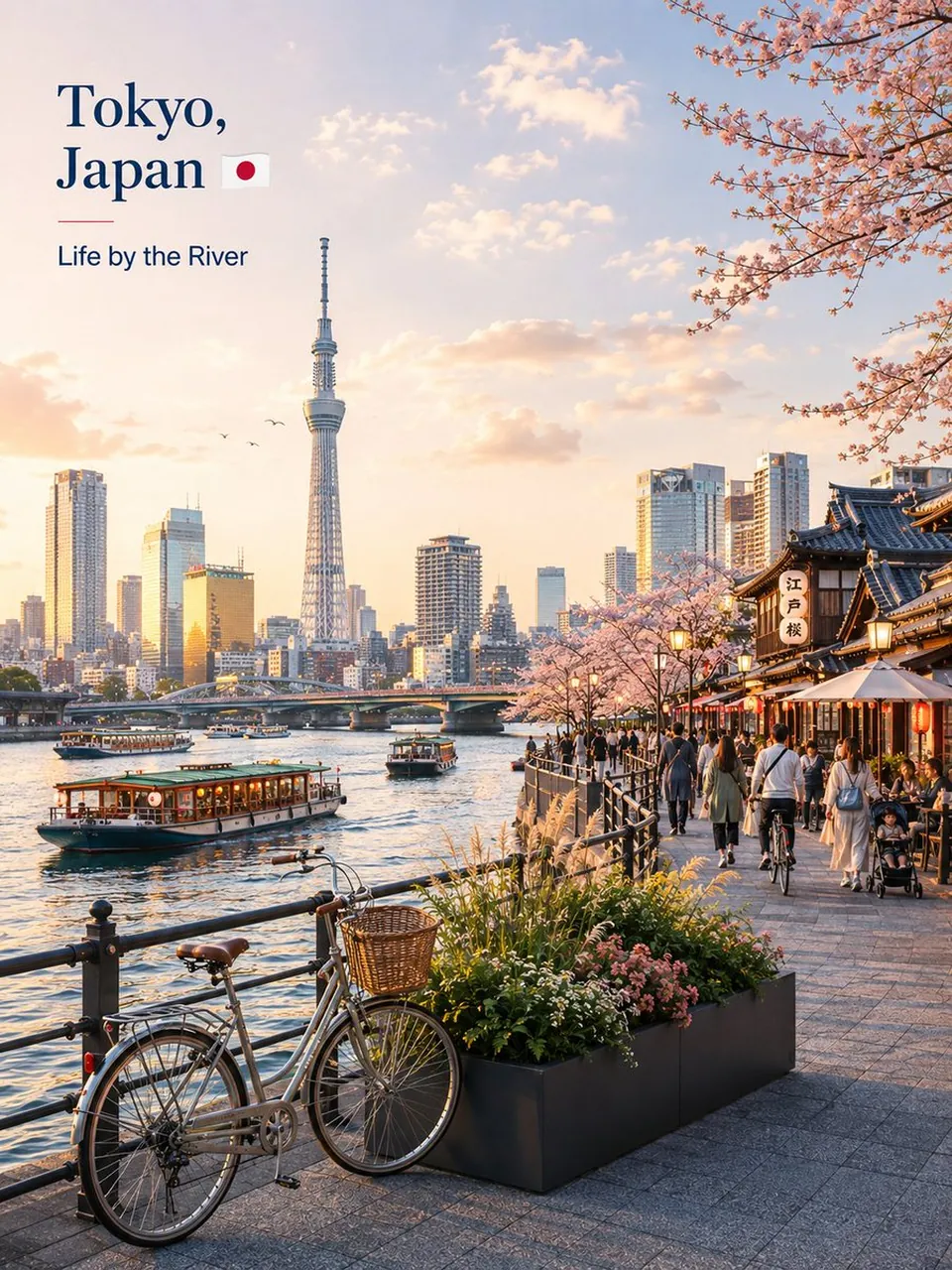
Create a beautiful, elegant Tokyo, Japan travel-poster-style illustration, inspired by the composition of the Seoul waterfront poster but transformed into an unmistakably Japanese scene. Feature a picturesque Tokyo waterfront promenade along the Sumida River, combining traditional Japanese charm with Tokyo's futuristic skyline. In the foreground, show a stylish classic Japanese city bicycle with a natural wicker basket parked beside a black metal riverside railing. Add a large modern planter overflowing with lush green foliage, delicate seasonal flowers, and ornamental grasses. Along the promenade, include Japanese couples, friends, cyclists, families, and pedestrians enjoying a peaceful afternoon. Add charming riverside cafés, minimalist outdoor seating, elegant Japanese street lamps, small landscaped trees, and subtle Tokyo urban details. Across the calm blue river, create a spectacular Tokyo skyline featuring Tokyo Skytree prominently in the distance, modern glass skyscrapers, illuminated towers, bridges, and dense but beautifully organized city architecture. Include a few traditional Japanese buildings with dark tiled roofs, wooden façades, paper lanterns, and refined architectural details near the waterfront, creating a striking contrast between old and new Tokyo. Add several small sightseeing boats and traditional-style river boats moving gently across the water, with beautiful reflections and subtle ripples. Include cherry blossom trees in soft pink bloom, adding an instantly recognizable Japanese seasonal atmosphere. Use warm golden-hour sunlight, a pale blue sky, soft fluffy clouds, distant birds, and gentle atmospheric haze. At the upper-left, include elegant editorial typography: “Tokyo, Japan 🇯🇵” and underneath: “Life by the River” Typography should be sophisticated, minimal, dark navy blue, perfectly aligned, and naturally integrated into the travel-poster composition. Visual style: premium Japanese travel poster, sophisticated editorial illustration, cinematic realism blended with refined painterly aesthetics, soft pastel color palette, clean architectural lines, subtle paper texture, highly detailed environment, beautiful water reflections, warm natural lighting, luxurious travel-magazine aesthetic. Composition: vertical 3:4 travel poster, strong foreground-to-background depth, bicycle prominently positioned in the foreground, expansive sky, balanced waterfront perspective, Tokyo Skytree visible in the background, traditional Japanese architecture contrasting with the modern skyline. Quality: ultra-detailed, crisp architecture, realistic water reflections, natural human proportions, beautiful cinematic lighting, clean edges, premium professional artwork, visually captivating and stop-scrolling worthy, high resolution, no distortion, no watermark, no unnecessary text. Aspect ratio: 3:4 vertical.
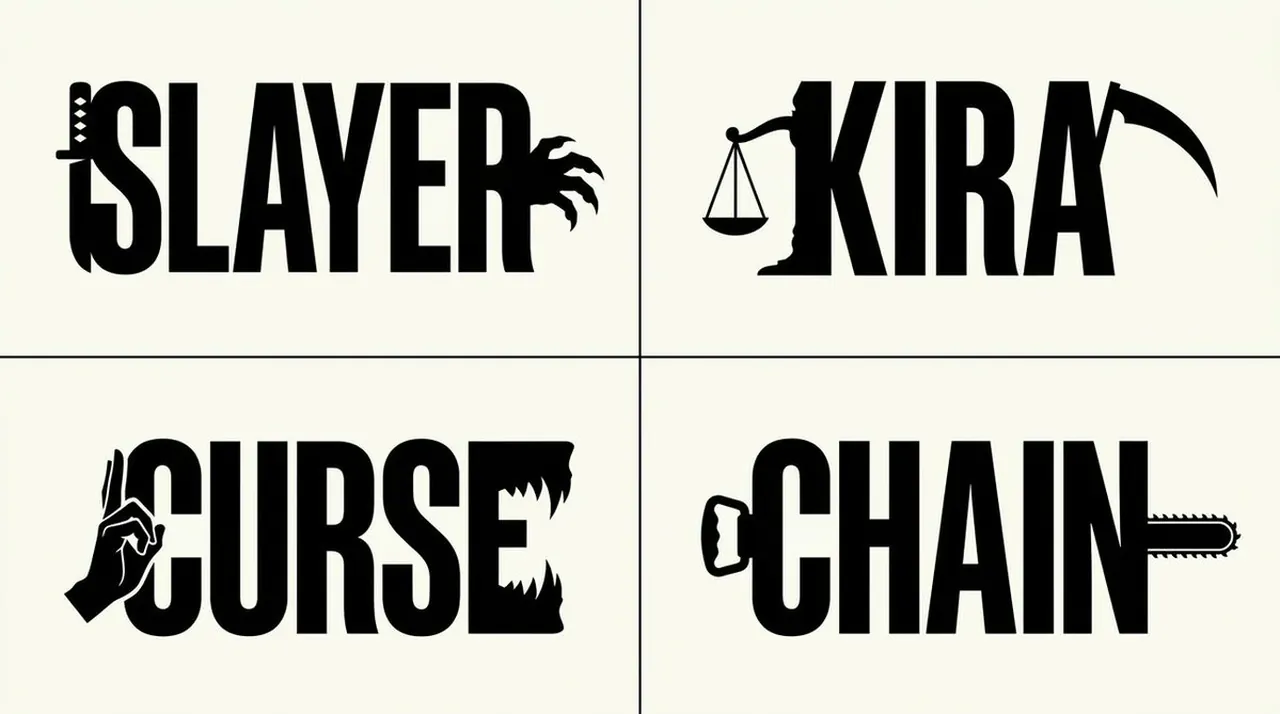
2x2 grid, 16:9, do this for 4 famous mangas about demons TOPIC=[...] Create a minimalist black-and-white semantic wordmark for TOPIC. Infer automatically: DISPLAY_WORD = derive the shortest powerful word, title, name, or concept associated with TOPIC DUAL_FORCES = infer two opposing, complementary, mirrored, or relational ideas within TOPIC LEFT_SYMBOL = infer the simplest recognizable silhouette representing DUAL_FORCES[0] RIGHT_SYMBOL = infer the simplest recognizable silhouette representing DUAL_FORCES[1] TYPOGRAPHY = custom monumental display lettering designed specifically to accommodate those silhouettes Construct one unified black graphic where: - DISPLAY_WORD is immediately readable - LEFT_SYMBOL is fused into the left boundary of the first letter - RIGHT_SYMBOL is fused into the right boundary of the final letter - symbols face inward, outward, oppose, reflect, confront, or complement each other depending on TOPIC - black letterforms and symbolic silhouettes share continuous edges - white negative space separates and reveals forms - typography is sculpted around symbolic contours rather than having symbols pasted beside it STYLE: pure black ink warm white or clean white background flat vector graphic no gradients no shadows no texture no extra illustration strong horizontal composition editorial-logo precision FAR VIEW = readable word MID VIEW = unusual custom typography NEAR VIEW = hidden semantic silhouettes Do not hard-code faces, profiles, the word TRUTH, symmetry type, serif style, or subject matter. Infer everything from TOPIC.
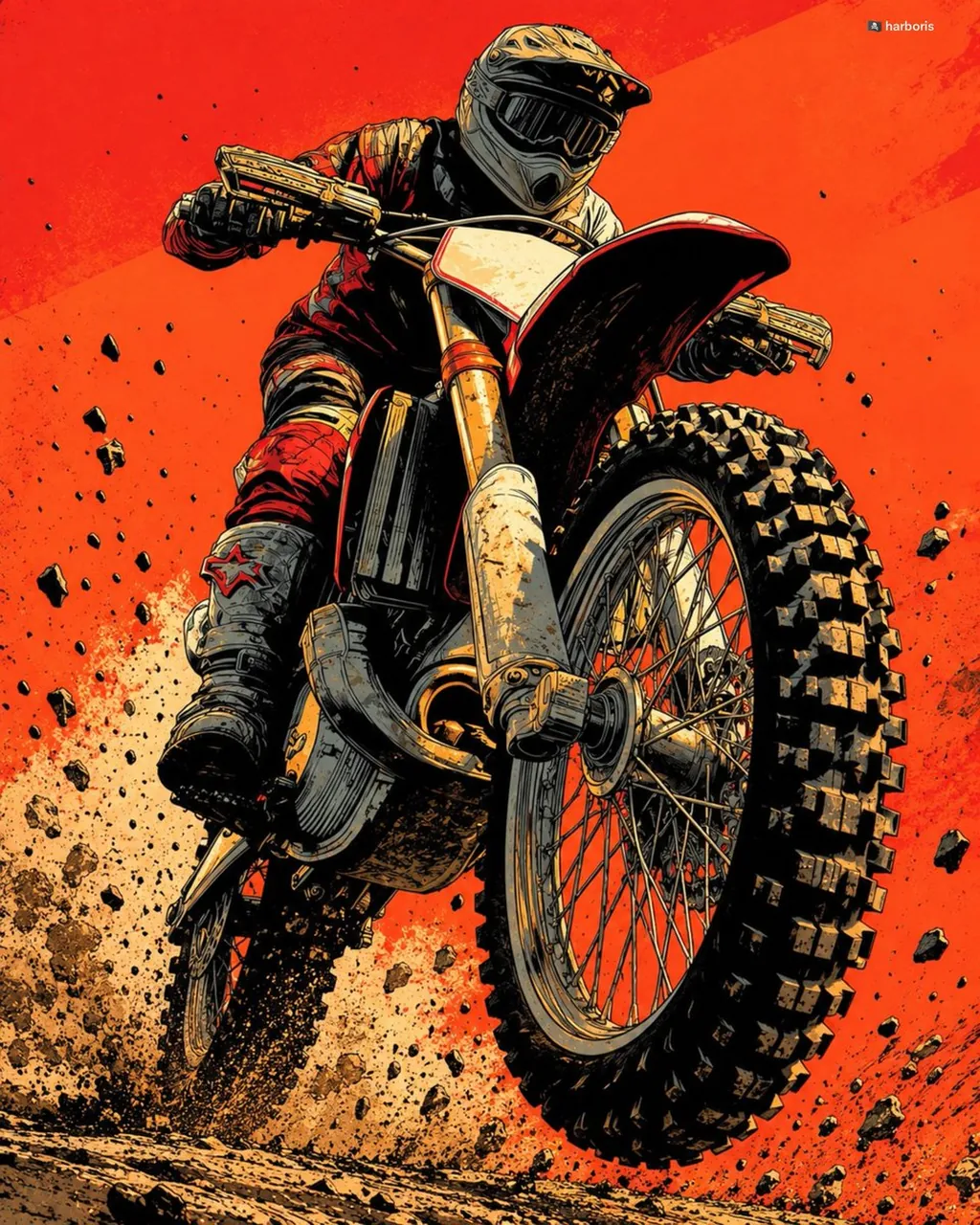
Create a high-impact vertical editorial illustration of a motocross rider performing an aggressive wheelie directly toward the camera on a dirt bike. Use an extremely low front-facing camera angle, making the large front knobby tire dominate the lower-right foreground while the rider appears powerful and imposing above it. The rider wears a full motocross helmet with a dark tinted visor, protective motocross jersey, padded riding pants, gloves, and rugged motocross boots. Show realistic protective gear with layered fabric, stitching, armor panels, folds, scratches, and worn textures. The motorcycle should have detailed handlebars, handguards, front suspension forks, spokes, brake components, engine parts, frame, mudguards, and thick off-road tires. Use a bold graphic comic-book illustration style with heavy black ink outlines, rough hand-drawn linework, crosshatching, imperfect ink edges, expressive contour lines, subtle paper grain, and screen-print-like texture. Use a limited high-contrast palette of vivid red-orange, black, cream, muted yellow, and warm gray. The background is a flat intense red-orange field with subtle geometric color variation, distressed paint texture, scattered black dirt particles, and small debris around the motorcycle. Add a dusty ground surface beneath the bike with splashes of dirt and gritty texture. Dynamic action composition, dramatic perspective, exaggerated scale, crisp illustrated details, strong shadows, vintage motocross poster aesthetic, modern editorial graphic design, energetic and rebellious mood. No text, no letters, no numbers, no logos, no usernames, no watermark, no signature, no typography anywhere in the image. Vertical 4:5 composition.
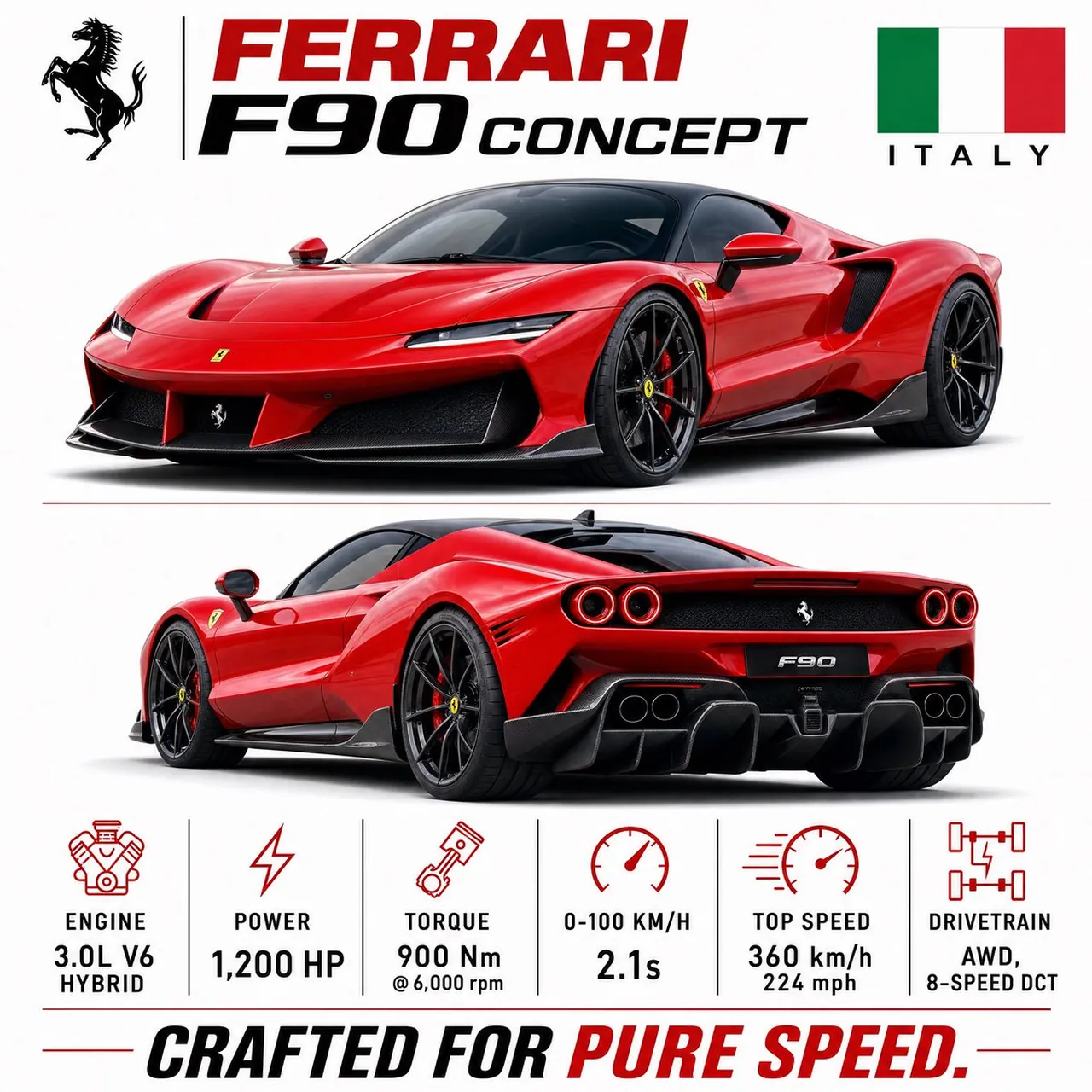
"Automotive concept poster, white background, top banner with Ferrari prancing horse logo and 'FERRARI F90 CONCEPT' in bold red/black text, Italian flag + 'ITALY' subtitle. Front 3/4 shot of a sleek red hypercar with aggressive front splitter and matte black wheels. Spec icon row: Engine (3.0L V6 Hybrid), Power (1,200 HP), Torque (900 Nm @ 6,000 rpm), 0-100 km/h (2.1s), Top Speed (360 km/h / 224 mph), Drivetrain (AWD, 8-Speed DCT). Below, rear 3/4 shot showing large rear diffuser and quad taillights. Bottom tagline: 'CRAFTED FOR PURE SPEED.
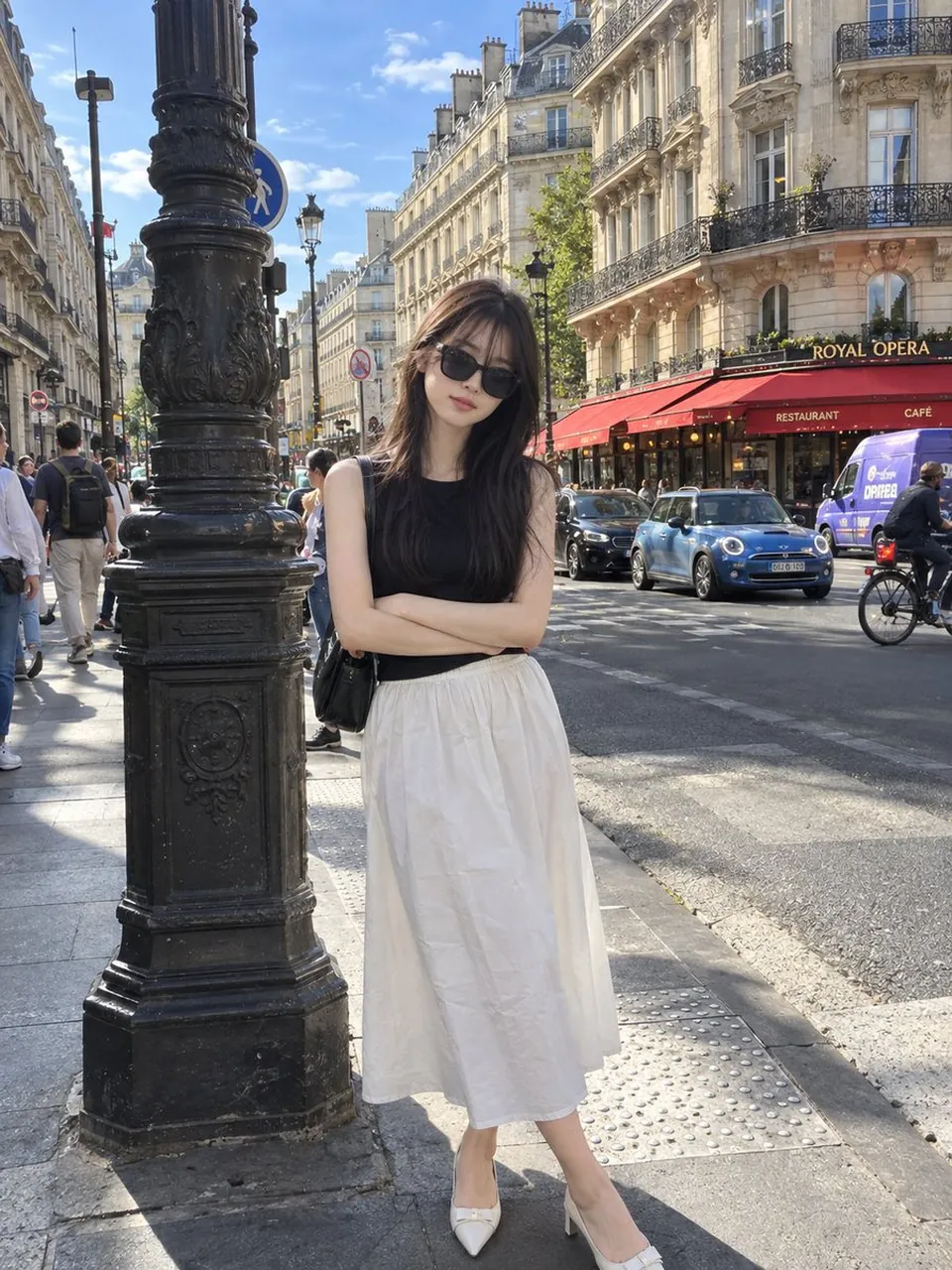
Create a sophisticated 3:4 vertical editorial art poster with GPT Image 2.5, using the uploaded photograph as the primary visual reference. Divide the composition into two perfectly balanced horizontal halves. Upper 50% — Original Photograph Keep the uploaded image almost completely untouched. Preserve the exact identity, facial features, pose, styling, clothing, objects, composition, lighting, colors, proportions, and natural photographic texture. The image should still look like the original photograph, enhanced only with subtle high-end editorial color grading. Lower 50% — Artistic Interpretation Transform the key visual elements of the photograph into a tiny, centered handmade-paper artwork. Reduce the scene into a few recognizable shapes and imperfect hand-drawn lines, as if created for an independent contemporary art publication. Use: - warm off-white handmade paper - delicate imperfect ink-like outlines - simple flat acrylic-inspired shapes - organic uneven edges - subtle natural paper fibers and grain - maximum 4 colors sampled from the original photograph The miniature artwork should occupy only 10–20% of the lower half, leaving most of the space intentionally empty. Keep it understated and poetic rather than detailed. Add optional tiny editorial typography only if it naturally complements the composition. Typography should be minimal, elegant, and secondary to the artwork. Visual direction: contemporary art book, quiet luxury, gallery editorial, handmade print, refined minimalism, poetic negative space, sophisticated composition. Do not make it: cartoonish, childish, watercolor, colored-pencil, 3D, glossy, overly digital, highly detailed, colorful, busy, or commercial-looking. The final result should feel like a limited-edition independent art-book cover where a real photograph and its handmade artistic memory coexist in one composition.
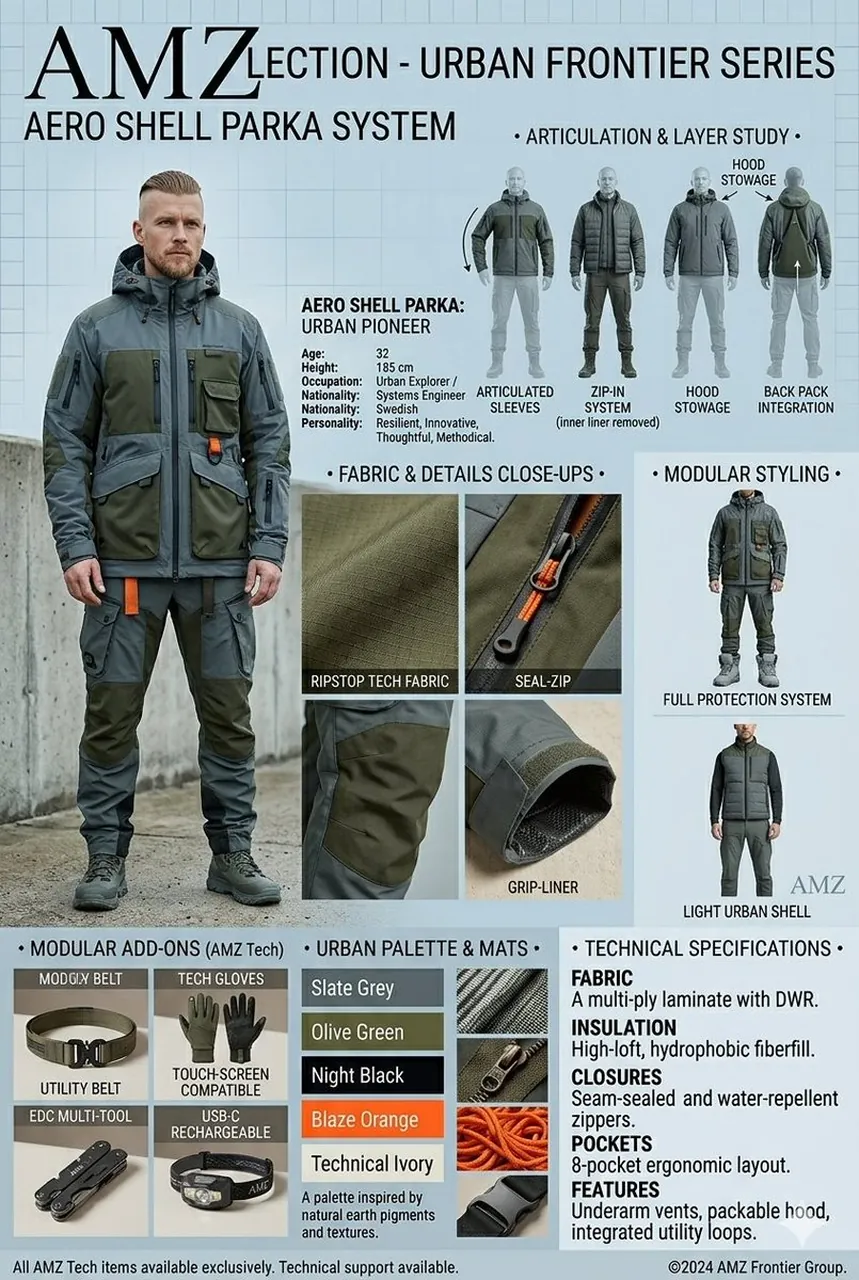
An AMZ Collection fashion design spec sheet and product layout presented as a tall, vertical infographic for men's technical outerwear. On the left side, a full-body shot features a 32-year-old male model with a short beard and a faded haircut, wearing a rugged, multi-pocketed utility jacket and matching cargo pants in deep olive green and slate grey with bright orange accents. The top of the sheet prominently displays the title "AMZLECTION - URBAN FRONTIER SERIES" and "AERO SHELL PARKA SYSTEM" in a bold, clean sans-serif typeface, accompanied by a bio detailing his occupation as a systems engineer and urban explorer. The right side features a technical "Articulation & Layer Study" breakdown showing multiple back and front silhouette angles detailing the zip-in system, articulated sleeves, and hood stowage. The center section provides macro close-up macro shots highlighting the technical textures, including ripstop tech fabric, a seal-zip closure, and a grip-liner sleeve cuff. Below, a "Modular Styling" column showcases alternative ways to style the garment, such as a full protection system or a light urban shell. The bottom of the layout features grid sections labeled "Modular Add-Ons" displaying accessories like a utility belt, touchscreen-compatible tech gloves, an EDC multi-tool, and a headlamp. Adjacent to this is an "Urban Palette & Mats" swatch color bar showing slate grey, olive green, night black, blaze orange, and technical ivory, followed by a comprehensive "Technical Specifications" block outlining the fabric, insulation, closures, pockets, and features of the high-performance gear.
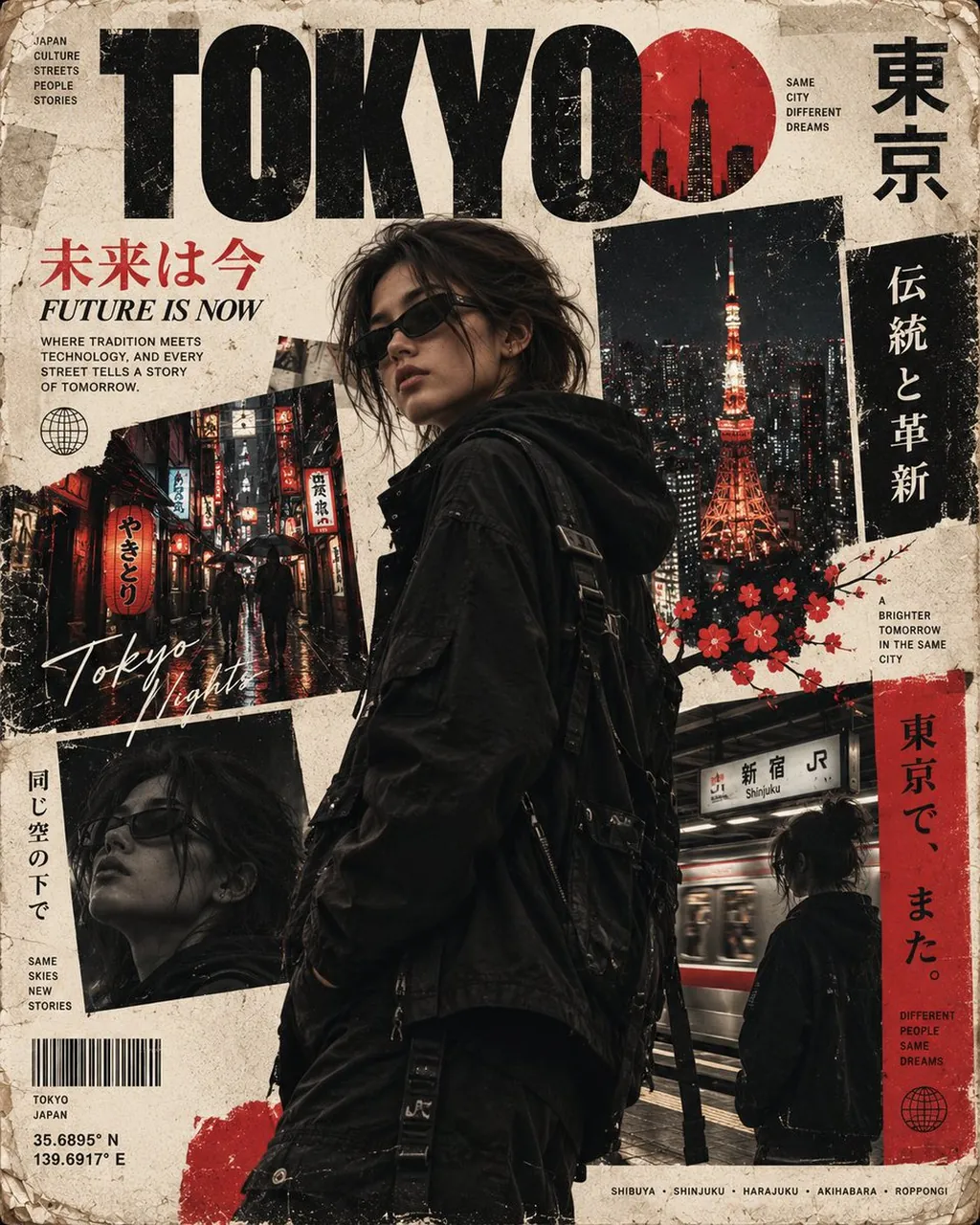
Create a vertical 4:5 ultra-realistic editorial travel fashion poster inspired by a vintage Japanese street magazine cover. A young woman stands prominently in the center foreground, photographed from a slightly low angle. She has dark hair tied into a messy high bun with loose strands framing her face, wearing narrow futuristic black wraparound sunglasses and looking slightly toward the camera with a confident, calm expression. She wears an oversized black technical utility jacket covered with realistic straps, buckles, zippers, pockets, printed patches, labels and subtle reflective details, paired with dark tactical-style clothing and a large black utility bag. Preserve realistic fabric texture and natural proportions. The background is a Tokyo night street collage, featuring rain-soaked neon streets, Japanese shop signs, narrow urban alleys, Tokyo Tower glowing at night, and a Tokyo train arriving at a station. Arrange several rectangular photographs around the central subject at different slight angles, creating a handmade editorial scrapbook layout. Use off-white aged paper as the main background with subtle paper grain, worn edges, folds, stains and vintage print texture. At the top, add huge bold black typography reading: TOKYO Under it, smaller elegant italic serif text: FUTURE IS NOW Add small editorial text blocks such as: “Where tradition meets technology, and every street tells a story of tomorrow.” Include minimalist globe symbols, technical graphic lines, barcode elements, coordinates, small labels and futuristic editorial markings. Use Japanese-inspired red and black graphic panels throughout the composition. Add a vertical red panel on the right with Japanese typography, a red graphic card on the lower left containing large Japanese characters, and another red photographic panel in the lower right showing a dark silhouette of the woman. Include small typography such as: 35.6895° N 139.6917° E and: SHIBUYA • SHINJUKU • HARAJUKU • AKIHABARA Overall aesthetic: high-end Japanese streetwear magazine, cyberpunk Tokyo, vintage travel poster, contemporary fashion editorial, analog print collage. Muted black, charcoal, cream, dark gray and deep red color palette. Strong photographic realism, cinematic night lighting, subtle film grain, slightly faded ink, authentic paper texture, imperfect print registration, sophisticated magazine typography, balanced negative space. Composition: central full-body subject, oversized “TOKYO” headline occupying the upper section, layered Tokyo photographs surrounding her, red graphic accents, vintage paper border, premium editorial layout. Photorealistic, highly detailed, cinematic, 8K, realistic skin, realistic clothing textures, professional fashion photography, authentic vintage print finish, no modern digital UI elements.
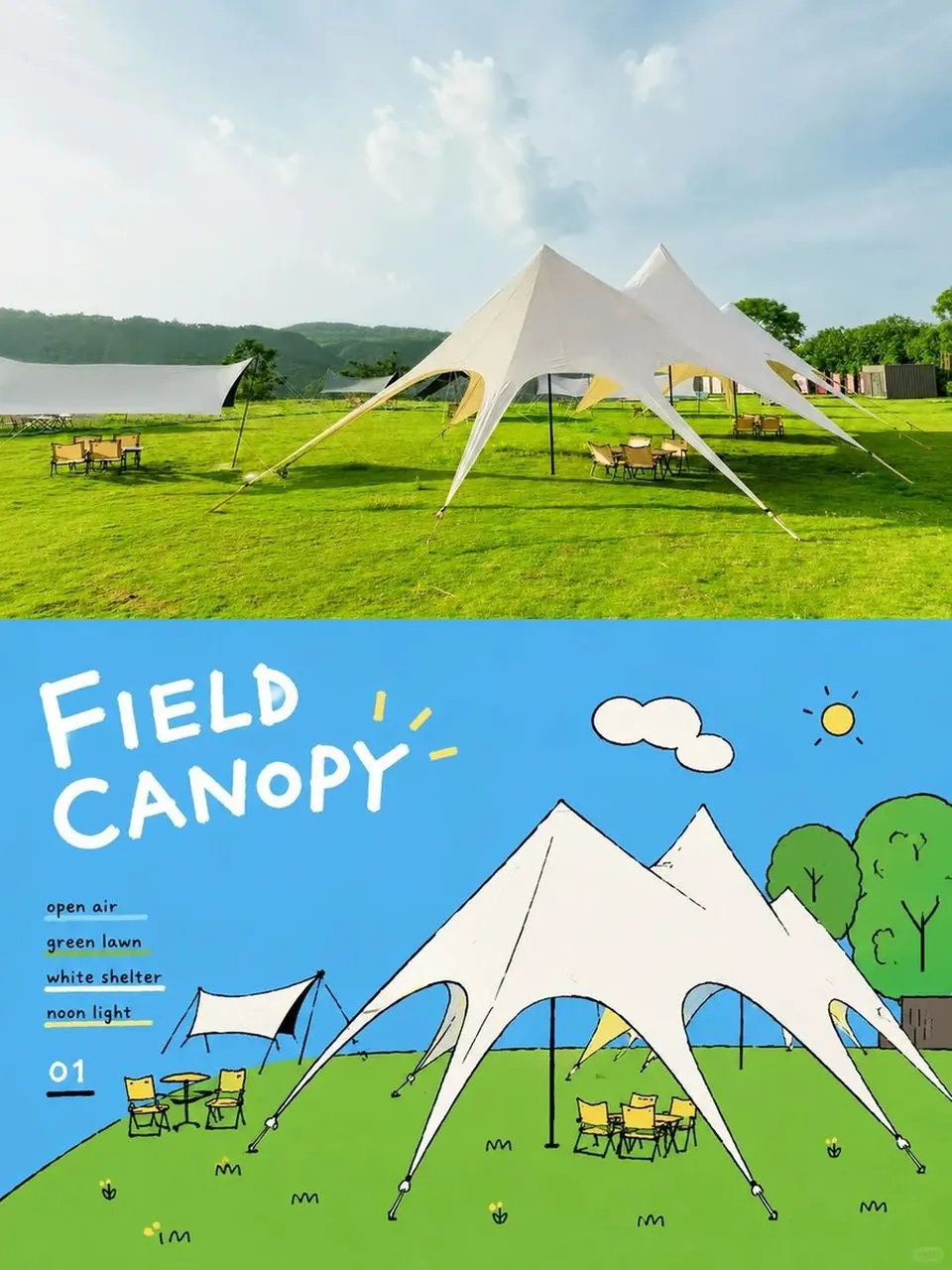
Create a vertical 4:5 editorial travel-journal poster. The top half shows a wide open lush green field with large white star-shaped tensile canopy tents, smaller white shelters in the background, scattered wooden outdoor tables and chairs, distant tree-covered hills, and a bright blue sky with soft clouds. Below, create a hand-drawn illustrated interpretation of the same scene in a playful modern sketchbook style. Use bold black ink outlines, flat bright blue sky, fresh green grass, white canopy structures, simple green trees, tiny yellow flowers, and minimal hand-drawn details. Include handwritten editorial typography reading FIELD CANOPY with smaller notes: open air, green lawn, white shelter, noon light. Add 01 with a simple underline. Keep generous blue and green negative space, textured paper feel, imperfect hand-drawn strokes, clean editorial layout, and a charming travel-journal aesthetic. Alternative: Create a vertical 4:5 editorial travel-journal poster. The top half shows a nighttime lakeside urban camping scene with a glowing modern dome canopy tent, a white triangular camping tent, warm string lights, camping chairs, a small table, green grass beside calm water, and a modern city skyline illuminated in the background. Below, transform the scene into a bold hand-drawn editorial illustration. Use thick black ink outlines, a vivid cobalt-blue night sky, deep navy skyscrapers with glowing yellow windows, bright green trees and grass, blue water, a warm yellow/orange illuminated dome tent, white triangular tent, and delicate string lights. Include large playful handwritten typography reading CITY CAMP with smaller notes: lakeside, night glow, urban view, after dusk. Add 03 with a simple underline. Use a clean magazine-style composition with generous blue negative space, subtle paper texture, imperfect hand-drawn strokes, and a nostalgic outdoor-travel-journal aesthetic.
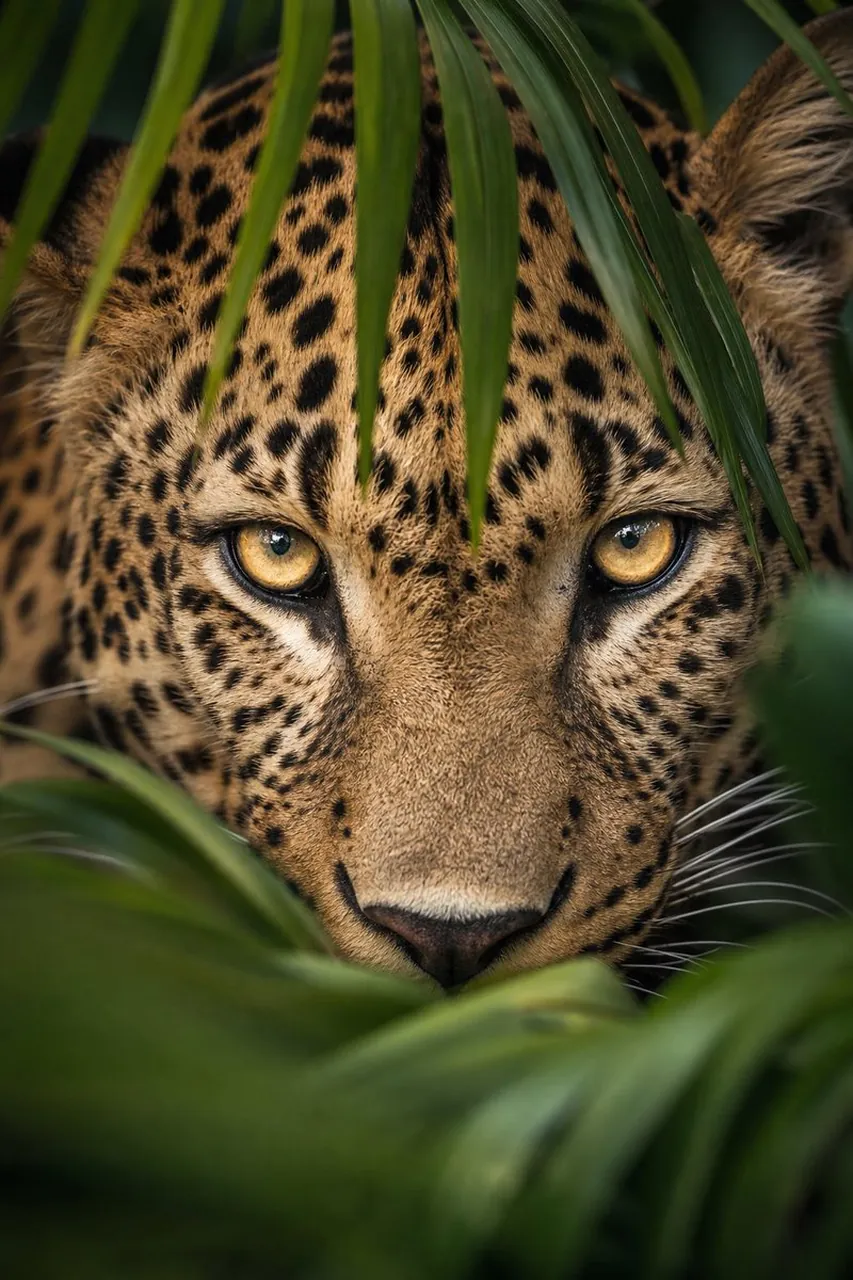
Hyper-realistic wildlife photograph. A young cheetah cub sitting in tall golden savannah grass at sunrise, enormous curious eyes looking directly at the camera, soft morning light glowing through its spotted fur. Soft warm golden light, shallow depth of field, gentle bokeh, innocent vulnerable energy. National Geographic grade, 4:5 vertical, 8k, no text.
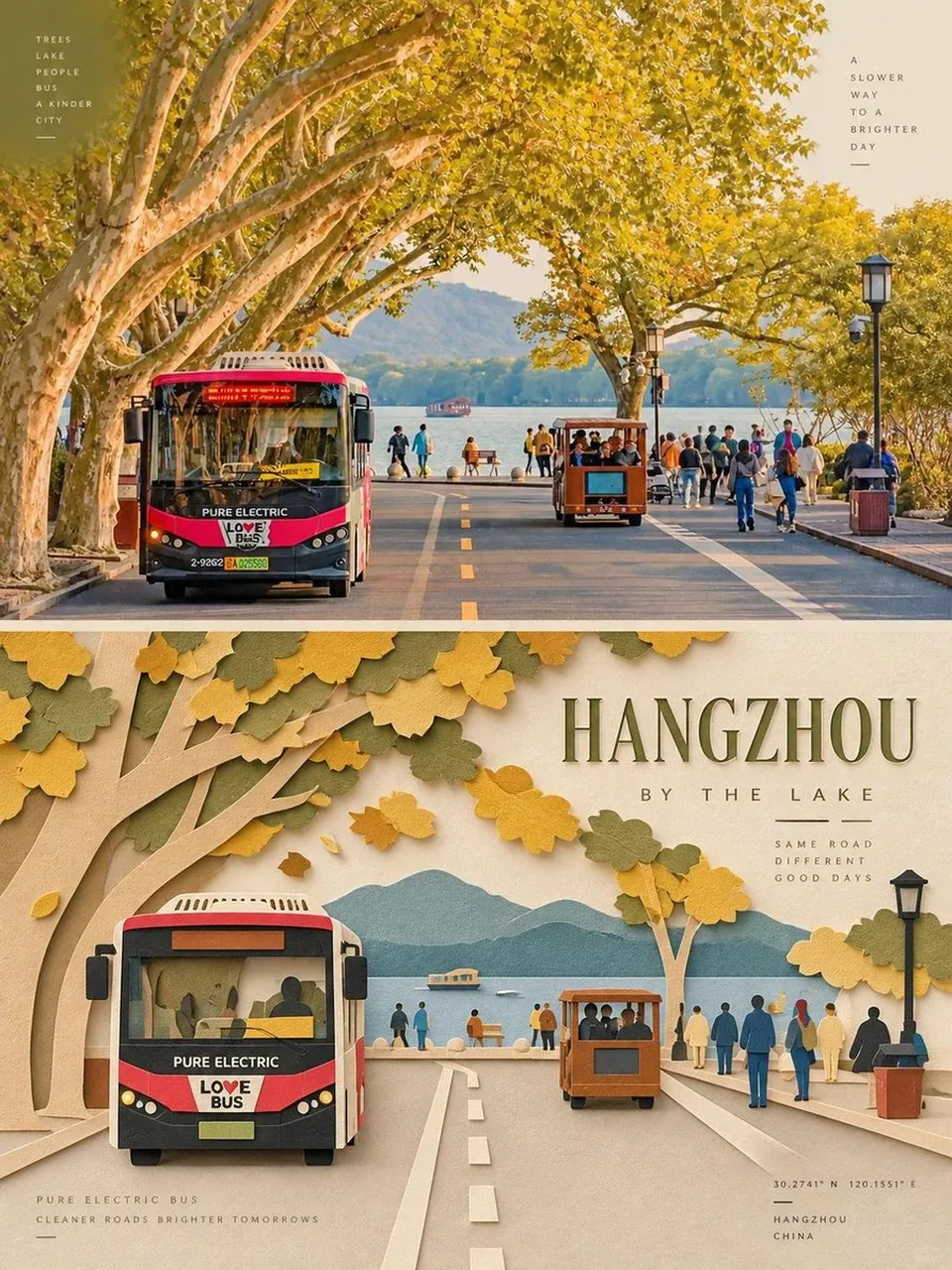
Create one independent editorial-style poster for each uploaded photo. Do not make a collage. Process and output each photo separately. Use a strict 3:4 vertical composition, divided horizontally into two exactly equal sections, each occupying 50% of the canvas. TOP HALF — ORIGINAL PHOTOGRAPH Preserve the original photo. Keep the main subject unchanged while retaining its realistic texture, natural lighting, and original color atmosphere. Apply only subtle editorial-grade color correction to create the refined feel of an art magazine, independent publication, or exhibition photography. To fit the composition, you may gently extend the sky, ground, or surrounding environmental background, but do not stretch, distort, or alter the main subject. BOTTOM HALF — LAYERED PAPER CUT / PAPER ART REINTERPRETATION Reinterpret the most recognizable subject, silhouette, pose, and spatial relationships from the photo as a minimalist layered paper-cut / paper-art composition. Use one primary subject as the visual anchor. Do not mechanically reproduce every detail. Instead, reconstruct the key silhouette, proportions, and structure through folding, cutting, layering, and overlapping. Transform only a few supporting environmental elements into foreground, midground, and background paper layers. Use scale contrast, negative space, clean alignment, and front-to-back layering to make the subject immediately recognizable while maintaining a restrained editorial composition. COLOR & MATERIAL Extract the most distinctive and recognizable colors from the original photo, then reduce them into a limited and harmonious paper-art palette. Use warm ivory or light-colored paper as the base, supported by a small amount of stronger accent colors, darker structural tones, soft transitional layer colors, and very limited highlights. The material should resemble high-quality matte cardstock, with subtle visible paper fibers, clean cut edges, and soft contact shadows under natural diffused lighting. Emphasize the tactile quality of real handcrafted paper art. Avoid glossy plastic-like 3D effects, cheap craft-paper aesthetics, neon colors, and overly saturated or complex gradients. EDITORIAL TYPOGRAPHY SYSTEM Add a refined editorial typography system. Based on the identity, location, action, material, emotion, or symbolic meaning of the subject, create one short main title. Add 2–4 groups of smaller supporting text. These may include object names, location information, numbers, sequence markers, coordinate-like numbers, direction words, status words, material descriptions, classification labels, or a very short poetic phrase. Do not use any year or date. The main title should convey emotion and identity, while the smaller text should add rhythm, structure, and refinement. TYPOGRAPHY INTEGRATION Integrate the typography naturally into the composition so that it interacts with the paper-cut forms. Arrange text along paper-layer edges, subject contours, geometric axes, or areas of negative space. Use horizontal or vertical typesetting, rotated text, generous letter spacing, edge alignment, corner placement, cross-section layouts, embedded typography, or partially overlapped text. The main title may have a subtle paper-cut or folded-paper quality, while the supporting text should remain thin, modern, restrained, and precise. The final result should feel elegant, tactile, balanced, art-directed, and distinctly editorial.
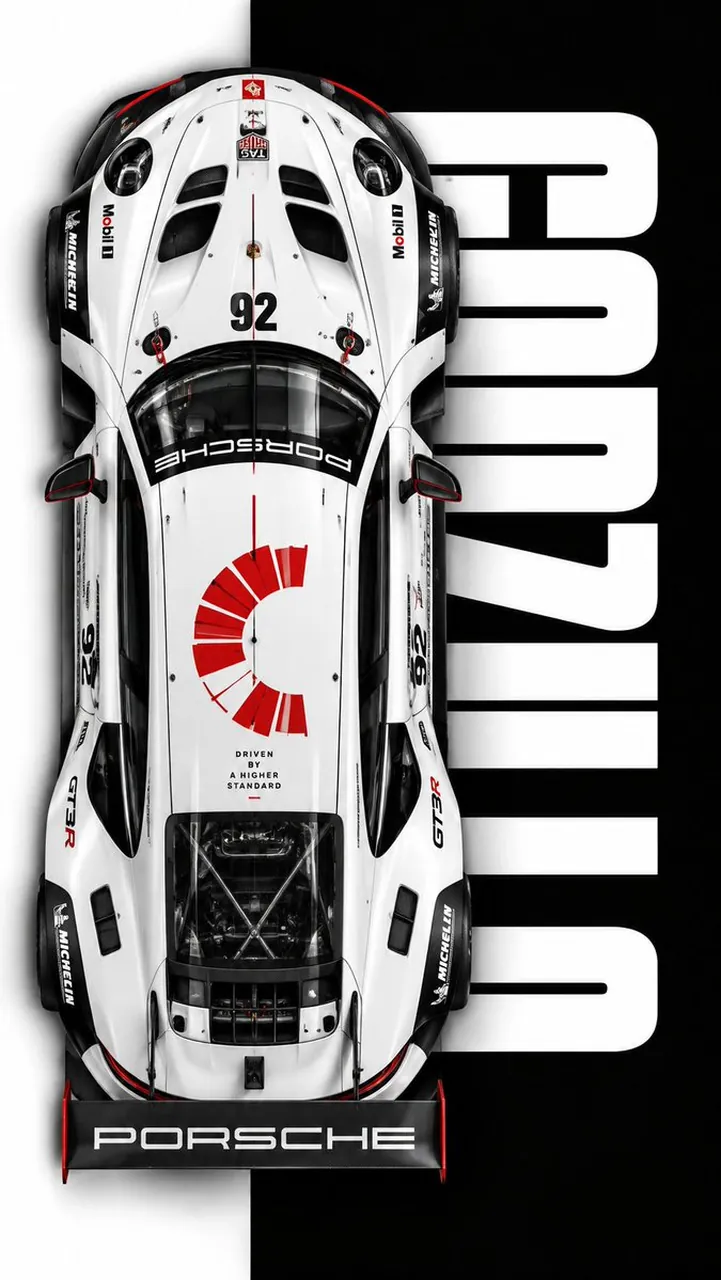
Create a hyper-realistic premium motorsport editorial poster featuring a white GT race car photographed from a dramatic high-angle top-down perspective. FORMAT: Vertical 9:16 composition, ultra-high resolution, clean commercial automotive photography, sharp details, realistic reflections and materials. MAIN SUBJECT: A white professional GT racing car viewed almost perfectly from directly above, positioned vertically along the left and center of the frame. The entire car should be visible from front to rear. The car is oriented vertically, with the front toward the top of the image and the rear toward the bottom. The vehicle has an aggressive wide-body racing design with: - White aerodynamic bodywork - Black aerodynamic vents and openings - Exposed racing wheels - Large slick racing tires - Detailed metallic multi-spoke wheels - Red accent lines around the body - Large rear aerodynamic wing - Racing splitter and diffuser - Complex aerodynamic panels - Visible windshield and cockpit - Realistic panel seams, screws, vents and carbon-fiber components The car should look like a professional endurance or GT race car, with authentic motorsport proportions and extremely detailed aerodynamic bodywork. CAR DETAILS: The tires are black racing slicks with realistic white sidewall lettering. The wheels should be highly detailed metallic dark gunmetal alloy wheels with visible brake components behind the spokes. Add subtle red motorsport branding and graphics on the white bodywork. Include a large red circular abstract racing logo or graphic on the central side panel. Use small realistic sponsor-style decals and technical markings throughout the car. PERSPECTIVE: Extreme top-down automotive photography. The camera is positioned almost directly above the vehicle, creating a flat graphic composition while maintaining realistic three-dimensional depth. The car occupies approximately 65 to 70 percent of the image width and extends almost the full height of the composition. BACKGROUND: Pure minimalist black and white graphic background. The entire background is divided vertically: - Left side: clean bright white background - Right side: deep solid black background Create a sharp vertical transition between the white and black areas. Behind the car, place enormous bold white geometric typography extending vertically through the black background. The typography should be extremely large, thick, modern and condensed, functioning primarily as a graphic design element rather than normal readable text. The letters should be partially hidden behind the race car. Use oversized white block letters with rounded corners and strong geometric construction. Some letters should extend beyond the edges of the composition. The typography should create a dramatic black-and-white contrast around the vehicle. LAYOUT: The white race car sits directly over the boundary between the white and black background. The left side of the car blends visually into the white area while the right side overlaps the giant white typography on the black background. The oversized letters must remain behind the car and should never cover the vehicle. Create strong negative space around the car while maintaining the bold graphic appearance. LIGHTING: Bright studio lighting from above, producing soft realistic shadows beneath the car. Use clean high-key illumination on the white bodywork. The black background should remain deep and pure without unnecessary gradients. Add subtle realistic reflections across the glossy white paint, windshield, metallic wheels and carbon-fiber components. The vehicle should have a premium studio-rendered appearance while remaining photorealistic. MATERIALS: Extremely realistic glossy white automotive paint. Realistic carbon fiber texture. Brushed and polished metal wheels. Transparent windshield glass. Rubber racing tires with detailed texture. Small red painted accents. Sharp aerodynamic edges. GRAPHIC STYLE: Minimalist luxury motorsport advertising campaign. Combine: - Premium automotive photography - Brutalist graphic design - Motorsport editorial design - High-contrast black and white composition - Oversized geometric typography - Clean modern advertising aesthetic COLOR PALETTE: Pure white Deep black Dark charcoal Metallic gunmetal Small amounts of vivid racing red No unnecessary colors. FINAL IMAGE: Photorealistic professional automotive campaign poster, extremely detailed race car, realistic proportions, dramatic overhead perspective, crisp edges, high contrast, clean studio lighting, premium motorsport advertising, minimalist composition, bold oversized typography, sophisticated editorial art direction, ultra-detailed 8K quality. IMPORTANT: Keep the exact overall composition of the reference: vertically oriented white race car positioned across the white and black background boundary, giant white geometric letters behind the car on the black side, minimal color palette, strong top-down perspective, red racing accents, and a clean premium motorsport poster aesthetic.
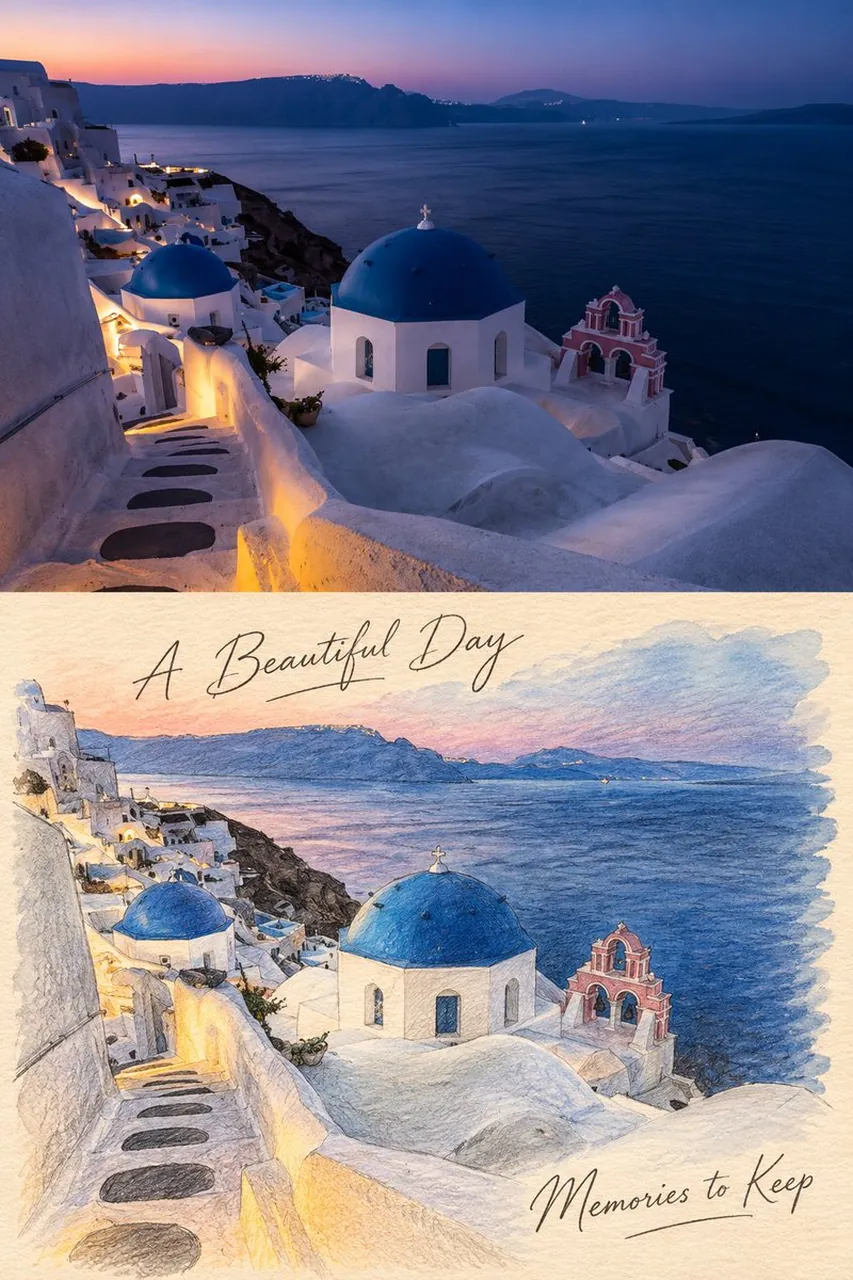
Create a premium vertical travel-journal poster in an exact 50/50 split. Top 50%: Keep the original reference photo completely real and unchanged, maintaining the same composition, architecture, people, colors, lighting, perspective, and details. Bottom 50%: Transform the same photo into a delicate hand-drawn colored-pencil and watercolor sketch on warm cream paper, with visible pencil strokes, soft washes, subtle paper grain, imperfect outlines, and gentle cross-hatching. Keep every subject recognizable. Add elegant handwritten text: “A Beautiful Day” above and “Memories to Keep” below. Minimal, nostalgic, sophisticated travel-magazine aesthetic. No extra objects, no photorealism in the bottom half, exact 50/50 layout.
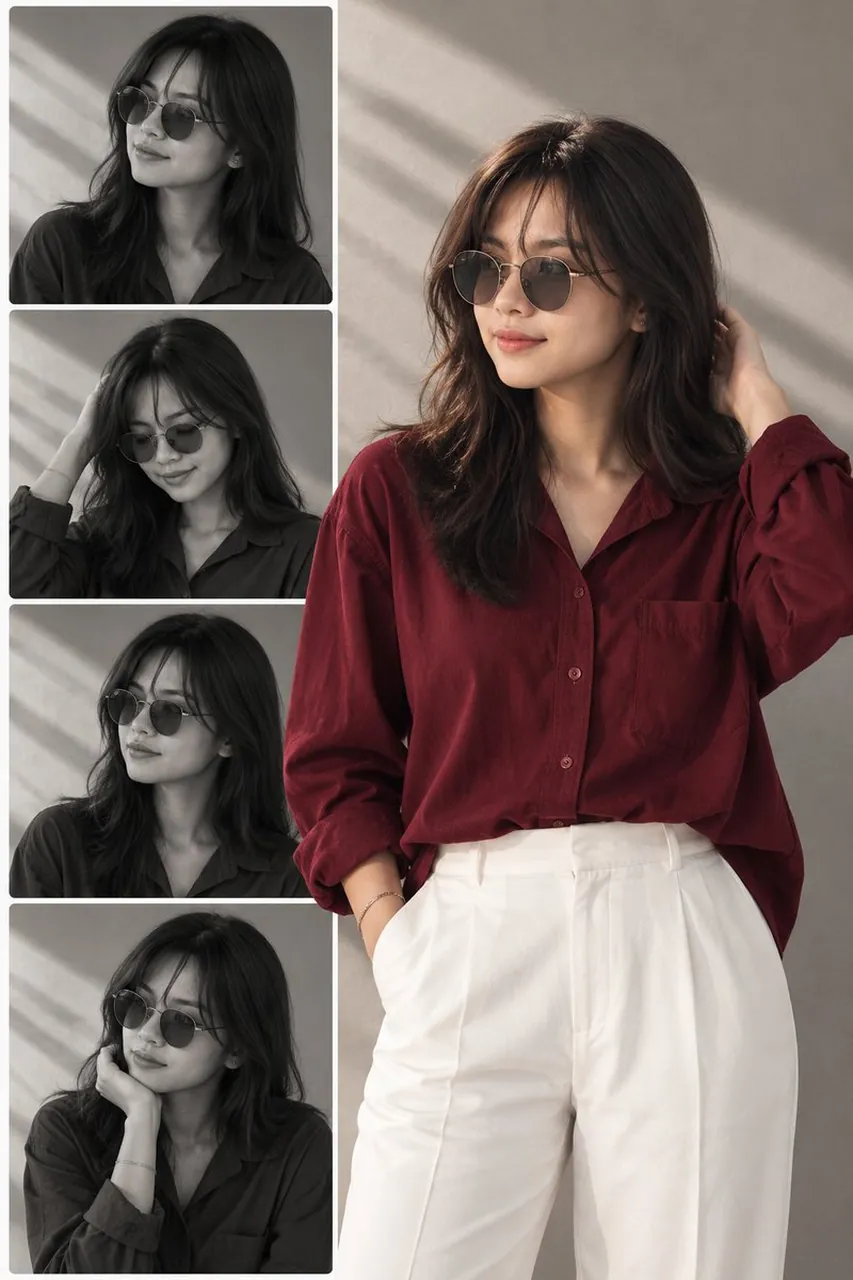
A young adult woman with a natural realistic appearance and confident relaxed presence. Maintain realistic human anatomy, natural proportions and authentic skin texture. HAIR: Shoulder-length to medium-length dark black-brown hair with soft natural volume. Hair is parted slightly off-center with loose face-framing strands around the cheeks. The rest of the hair falls naturally in soft loose waves with subtle curls toward the ends. Slightly tousled editorial texture rather than perfectly styled hair. Natural individual hair strands visible. OUTFIT: She is wearing a deep burgundy / wine-red oversized button-up shirt made from soft lightweight cotton or cotton-poplin fabric. The shirt has a relaxed oversized fit, long sleeves, classic pointed collar, full-length front button placket, small matching buttons, natural fabric folds and wrinkles, slightly dropped shoulders, relaxed cuffs, single rectangular chest pocket on the left side, and an untucked loose hem with part of the shirt naturally tucked behind the trousers. Pair the shirt with high-waisted ivory-white tailored trousers featuring clean structured tailoring, high-rise waist, wide relaxed legs, front pleats, belt loops, subtle waistband construction, natural fabric creases, and a slightly loose fit through the hips and thighs. ACCESSORIES: Add small elegant metallic stud earrings, round vintage-inspired sunglasses with thin gold-metal frames and dark slightly reflective lenses, and a delicate metallic bracelet on the wrist. Keep accessories minimal, refined and realistic. MAKEUP & FACE: Natural polished editorial makeup. Soft even skin with visible realistic skin texture. Subtle warm complexion. Light natural foundation rather than heavy coverage. Softly defined eyebrows. Neutral warm eyeshadow. Subtle eyeliner. Natural eyelashes. Very light contouring around the cheekbones. Soft natural blush. Lips with muted rosy-red lipstick and a natural satin finish. POSE: Main large portrait: The woman stands in a relaxed three-quarter pose facing slightly toward the left side of the frame. Her head is turned slightly toward the left while her eyes look toward the left side through the sunglasses. Her right arm is bent upward with her right hand placed naturally behind the back/side of her hair near the ear, gently touching the hair. Her left arm hangs naturally downward with the left hand placed casually inside the trouser pocket. Shoulders relaxed. Elbows naturally bent. Posture confident but effortless. Body language should feel candid and editorial rather than posed. Her expression is calm and subtly confident with a soft natural smile. COLLAGE COMPOSITION: Create a sophisticated multi-frame fashion editorial collage. The composition contains one large full-color main portrait occupying the right and central portion of the image. Behind and to the left of the main portrait, create multiple smaller photographic frames showing the same woman from slightly different moments of the same fashion shoot. Use approximately four smaller vertical/horizontal portrait panels stacked along the left side. The smaller panels should be predominantly black-and-white / monochrome while the main central portrait remains in full natural color. Each smaller frame shows the same woman wearing the exact same outfit and sunglasses with subtly different but consistent poses and facial expressions. The smaller images should feel like contact-sheet/editorial magazine photographs from the same photoshoot. Use thin clean white borders separating the panels. The large color portrait should overlap the smaller monochrome photographs, creating a layered magazine-editorial collage. BACKGROUND: Minimal sophisticated studio environment. Use a warm neutral gray-beige studio wall with subtle smooth texture. No distracting objects. Behind the subject, soft diagonal window-light shadows fall across the wall, creating elegant geometric shadow patterns. The background should remain clean, modern and premium. LIGHTING: Soft natural window light coming from the upper-left/front-left direction. Moderate directional sunlight filtered through a large window or sheer curtain. Create soft diagonal architectural shadows across the neutral wall. Light the face naturally with gentle highlights on the cheeks, nose and forehead. Maintain subtle shadow definition under the jaw, hair and clothing folds. CAMERA: Professional editorial fashion photography. Full-frame camera look. 50mm to 85mm portrait lens. Eye-level camera angle. Medium-full portrait framing for the main image. Natural perspective with minimal distortion. Moderately shallow depth of field. Subject sharply focused while the background remains softly separated. High-resolution realistic photographic detail. Natural optical rendering. Subtle professional film-like tonal response. VISUAL STYLE: Luxury contemporary fashion editorial. Minimalist magazine photography. Sophisticated Pinterest-style fashion editorial collage. Clean composition. Elegant muted color palette. Photorealistic skin. Natural fabric texture. Realistic hair strands. Premium commercial photography quality.
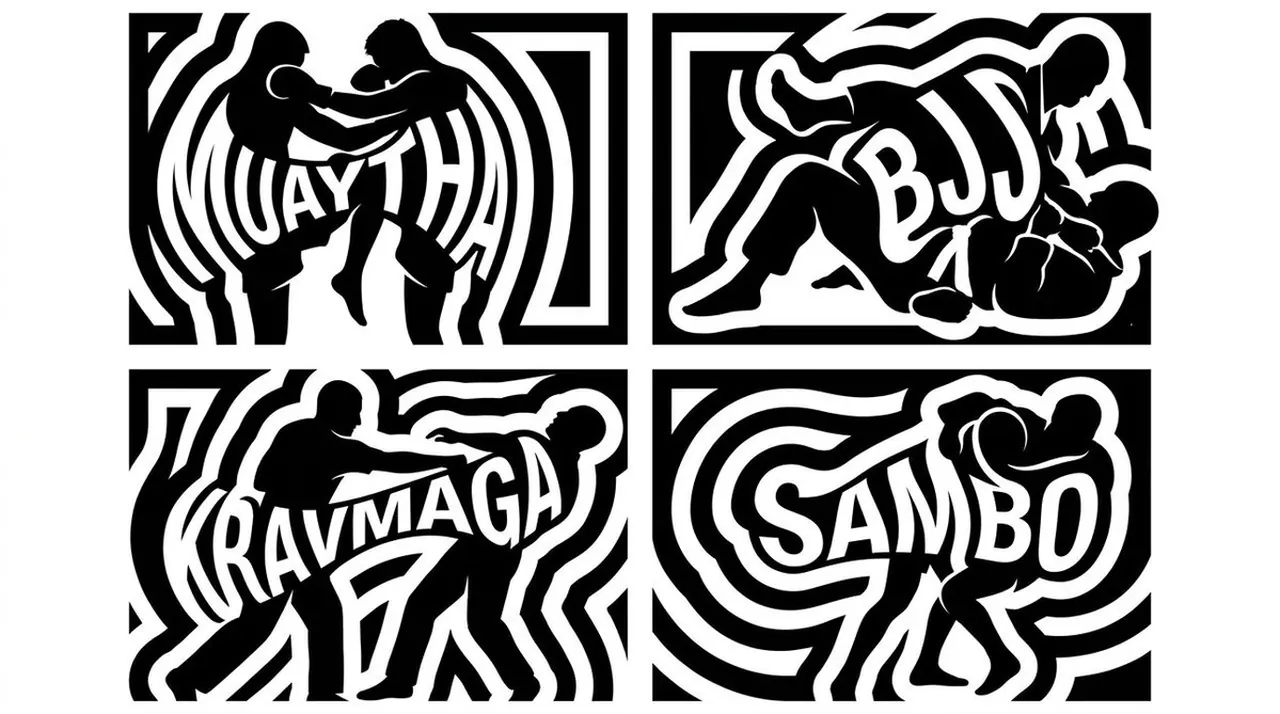
2x2 grid, 16:9, four martial arts silhouettes. Place the name of each martial art inside the main mass of the silhouette. Typography rules: letters should be large and bold, readable at mid-distance. Letters may appear as white negative space cut through black stripes or be partially formed by black stripe segments. The word must follow the curve, posture, or volume of the subject and should not feel pasted on top. The stripe system should bend around and through the word. The viewer should discover the word after recognizing the silhouette.
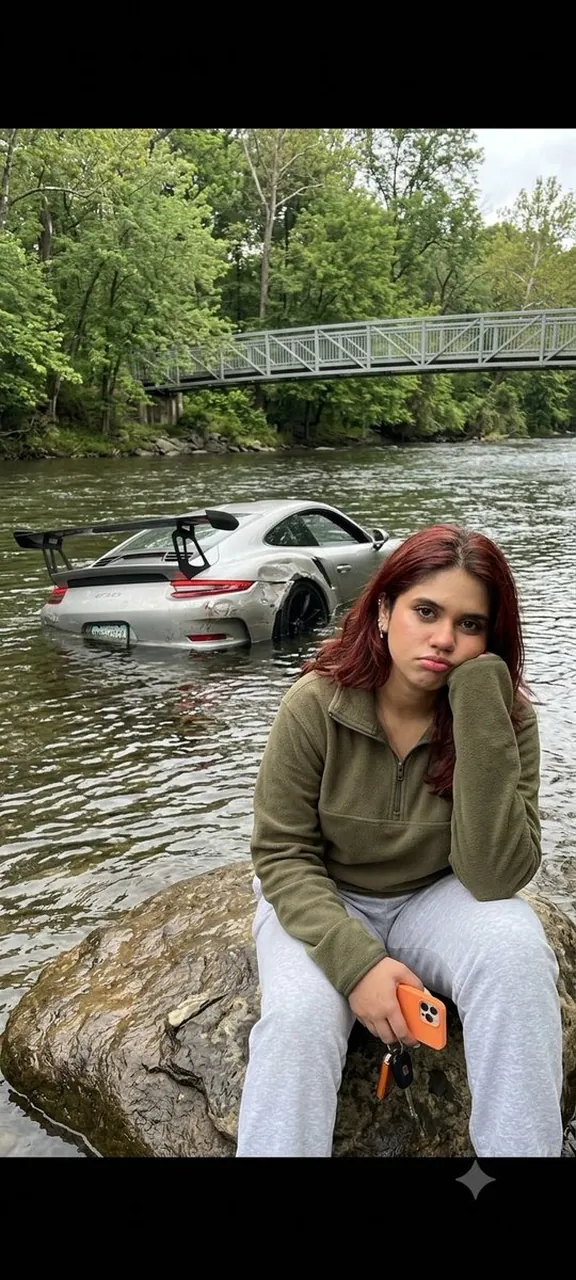
Photographic frame in iPhone style, overcast daylight. Natural river setting. In the foreground — wet stones, calm greenish water, deciduous trees around. A simple metal pedestrian bridge is visible in the background. Soft cloudy sky, even natural daylight. Realistic textures — wet stones, light ripples on the water, faint reflections. In the background, a Porsche 911 GT3 RS is partially submerged nose-first in the river; the rear is still visible above the water. The rear spoiler and taillights are above the surface; water softly touches the lower body panels. The car clearly shows damage after an accident: scratched and scuffed body panels. In the foreground, sitting casually on a large rock at the water’s edge, a woman slightly turned toward the camera. Elbows resting on her knees. Relaxed pose. Completely unbothered facial expression — a slightly bored look, a light shrug energy, lips slightly pressed together, the gaze saying “well… it happens.” No panic. No drama. Just dry acceptance. She is wearing an olive quarter-zip fleece and light gray sweatpants, holding an orange phone and car keys in her hands.
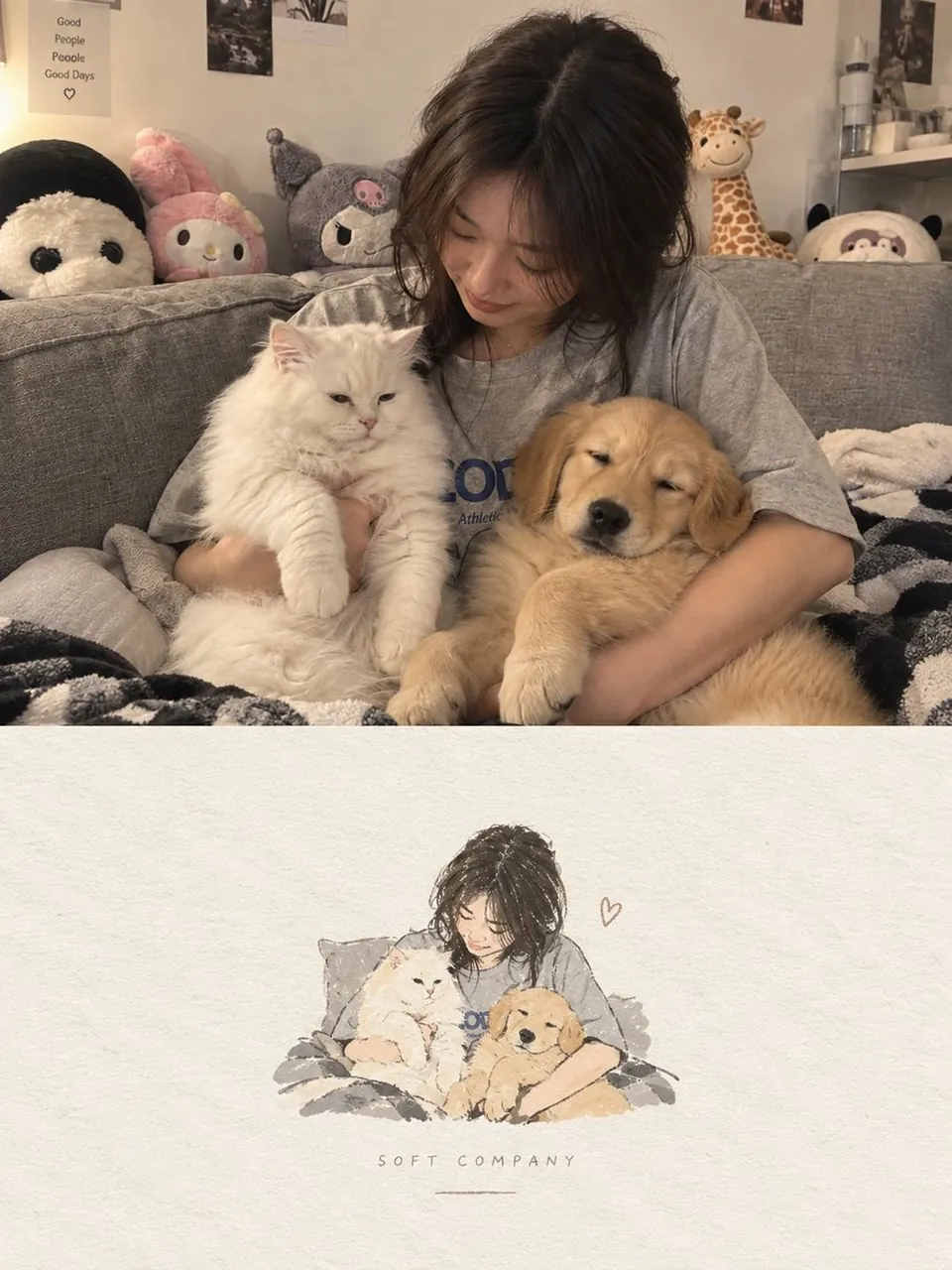
Create one independent high-end editorial poster for each uploaded photo. Do not combine multiple photos into a collage. Each photo must be processed and output as a separate poster. OVERALL FORMAT Strict 3:4 vertical composition. Divide the canvas horizontally into two exactly equal sections, with a precise 1:1 height ratio. The top half occupies exactly 50% of the canvas. The bottom half occupies exactly 50% of the canvas. The two sections should feel visually connected as one refined art publication cover. TOP HALF — ORIGINAL PHOTOGRAPH Preserve the original photograph as faithfully as possible. Keep the main composition, subjects, identity, facial features, body proportions, poses, expressions, clothing, objects, and spatial relationships unchanged. Preserve the realistic photographic texture, natural lighting, shadows, atmosphere, and original color mood. Apply only subtle, sophisticated editorial color grading, creating the feeling of a premium magazine photograph, contemporary art book, or high-end independent publication. The image should remain photorealistic and authentic, never overly retouched or artificially stylized. If necessary to fit the 3:4 composition naturally, extend the sky, ground, walls, or surrounding environmental background. Background extension must feel seamless and photographic. Never stretch, distort, reshape, replace, or alter the main subject. BOTTOM HALF — MINIMAL HAND-DRAWN PAPER ILLUSTRATION Extract the most recognizable visual elements from the original photograph and reinterpret them as a minimalist hand-drawn paper-cover illustration. Preserve: The most recognizable subject Essential silhouette and proportions Key pose or gesture Important objects The core narrative relationship between people and objects Highly simplify the image. Remove unnecessary details and retain only the visual information needed for immediate recognition. Use: Delicate, slightly imperfect hand-drawn lines A small number of bold, clearly defined acrylic-style flat color shapes Rough paper texture Visible handmade brush marks Slightly irregular, organic edges Subtle imperfections that make it feel genuinely handmade The main illustrated subject should be small, centered, and carefully composed, occupying approximately 10–20% of the bottom half. Leave a large amount of negative space around the illustration. The background should primarily resemble: Rough white paper Warm off-white paper Pale natural paper Minimal editorial book-cover stock Use only a few lines or small color shapes to suggest the surrounding environment. COLOR PALETTE Extract the dominant colors directly from the original photograph. Compress the palette into no more than 4 main colors. Keep the colors restrained, sophisticated, and harmonious. Use bold but controlled flat color blocks. Avoid excessive color variation. Preserve subtle paper grain and handmade brush texture. The illustration should visually feel like a simplified color interpretation of the photograph. TYPOGRAPHY A small amount of simple typography may be included when appropriate. Possible elements: A short title Keyword Object name Location Year Number Short phrase Text should be minimal, understated, and editorial. Typography should naturally interact with the large areas of negative space and the small illustration, evoking: Art book covers Independent publishing Contemporary editorial design Thoughtful children's picture books Do not force text into the composition if it does not naturally fit the photograph. VISUAL LANGUAGE The final poster should feel: Quiet · Poetic · Refined · Minimal · Innocent · Relaxed · Artistic · Thoughtful · High-recognition · Premium The visual concept should be: Prioritize recognition, restraint, negative space, material texture, subtle imperfection, editorial sophistication, and artistic storytelling over decorative complexity.
Choose a text or typography prompt and copy the full text.
Adjust the wording, type style, hierarchy, colors, texture, layout, and background to match your idea.
Paste the prompt into the image generator, choose a model, and create your typography visual.
Follow these steps to turn a text or typography prompt into a polished AI image.
Browse by type
Browse image, video, or the complete prompt library.
Make words visual
Choose a text or typography prompt, customize the lettering and layout, and generate a distinctive graphic in seconds.