
LTX-2.3
LTX-2.3 is an advanced AI video model focused on sharper detail, smoother motion, cleaner synced audio, and stronger prompt understanding for more controllable video creation.
Wan 3.0
Prompt
Starting image (optional)
Add a photo to animate it, or skip this and generate from your prompt.
Example prompts
By uploading a file, you agree to GoEnhance's Terms of Use and Privacy Policy
Key Features of LTX-2.3
- Stronger Prompt Adherence: LTX-2.3 understands longer prompts with more control.
- More Natural Image-to-Video Motion: Still frames feel animated instead of simply panned or zoomed.
- Cleaner Native Audio-Video Sync: Picture and sound feel more connected in the same generation flow.
- Sharper Detail and Texture Rendering: Better edges, cleaner faces, and stronger fine-detail retention.
- Better Camera and Motion Language: Natural-language scene direction works more reliably.
Stronger Prompt Adherence
LTX-2.3 does a better job following detailed instructions about subject placement, scene composition, mood, and camera direction. It is especially useful when your prompt includes multiple visual elements that need to stay organized instead of blending together.
| Prompt | Generated Clip |
|---|---|
The character turns and runs into the distance, the camera tracking behind before pulling back. The sky darkens with heavy storm clouds, and far above, a blurry giant sky monster from the Stranger Things Upside Down emerges faintly in the clouds, with six massive tentacles appearing and disappearing through the mist, glowing red. The character looks up at this apocalyptic scene. Keep the buildings unchanged, use a low-angle upward composition to heighten the sense of oppression, with strong light-shadow contrast, expressive brushwork, a grand yet terrifying atmosphere, and a smartphone-shot feel. |
More Natural Image-to-Video Motion
One of the biggest LTX-2.3 upgrades is its image-to-video performance. Instead of relying on shallow push-ins or frozen-frame motion, it creates more believable movement in people, lighting, smoke, water, and scene depth, making still images feel much more alive.
| Prompt | Generated Clip |
|---|---|
A detailed sci-fi city concept art frame animated into a dynamic shot with moving lights, drifting rain, and natural environmental motion. |
Cleaner Native Audio-Video Sync
LTX-2.3 improves audio-video alignment so effects, ambience, and spoken moments feel more naturally attached to the visuals. The result is cleaner sound output, fewer distracting artifacts, and a more finished feeling clip straight from generation.
| Prompt | Generated Clip |
|---|---|
Cinematic action blockbuster feel, continuous long shot. A female warrior wearing a black high-tech tactical bodysuit is in the center of an abandoned, rusted heavy industrial factory. The camera follows her in fluid motion. She displays superb fighting skills, first kicking away a lunging zombie with a sharp spinning kick, followed immediately by precision shooting with a handgun held in one hand, fierce flames erupting from the muzzle. |
Sharper Detail and Texture Rendering
Thanks to its upgraded video representation, LTX-2.3 holds onto fine textures more effectively. Hair strands, skin detail, fabric patterns, lighting edges, and small objects look cleaner, which helps the final video feel less soft and more polished.
| Prompt | Generated Image |
|---|---|
Cinematic single-take handheld shot, low-angle ground-level tracking with slight shake: a matte black-and-white off-road crawler races through the Sahara’s yardang desert, crushing gravel and blasting red sand, then suddenly transforms into a giant matte black mechanical beast as the bumper becomes a savage head, the doors unfold into powerful limbs, and the tires turn into sharp alloy claws; it rises tall on the burning sand with icy blue eyes, flying sparks, heat haze, ultra-realistic metal detail, and epic 8K desert lighting. |
Better Camera and Motion Language
You can describe tracking shots, gentle pans, close-up emphasis, or cinematic framing in plain language, and LTX-2.3 is more likely to interpret those instructions correctly. That makes it easier to shape a scene without overengineering the prompt.
| Prompt | Generated Media |
|---|---|
A fast-paced FPV drone shot follows closely behind a white-haired 3D anime girl racing down a steep mountain road. The scene begins in bright summer with green hills, blue sky, distant sea, and flying leaves. At 2 seconds, a magical frost wave transforms everything into winter: snow covers the ground, heavy flakes fall, and the mountains turn white, while the camera keeps a smooth, intense downhill tracking motion throughout. |
LTX-2.3 Specs Overview
Explore What LTX-2.3 Does Better
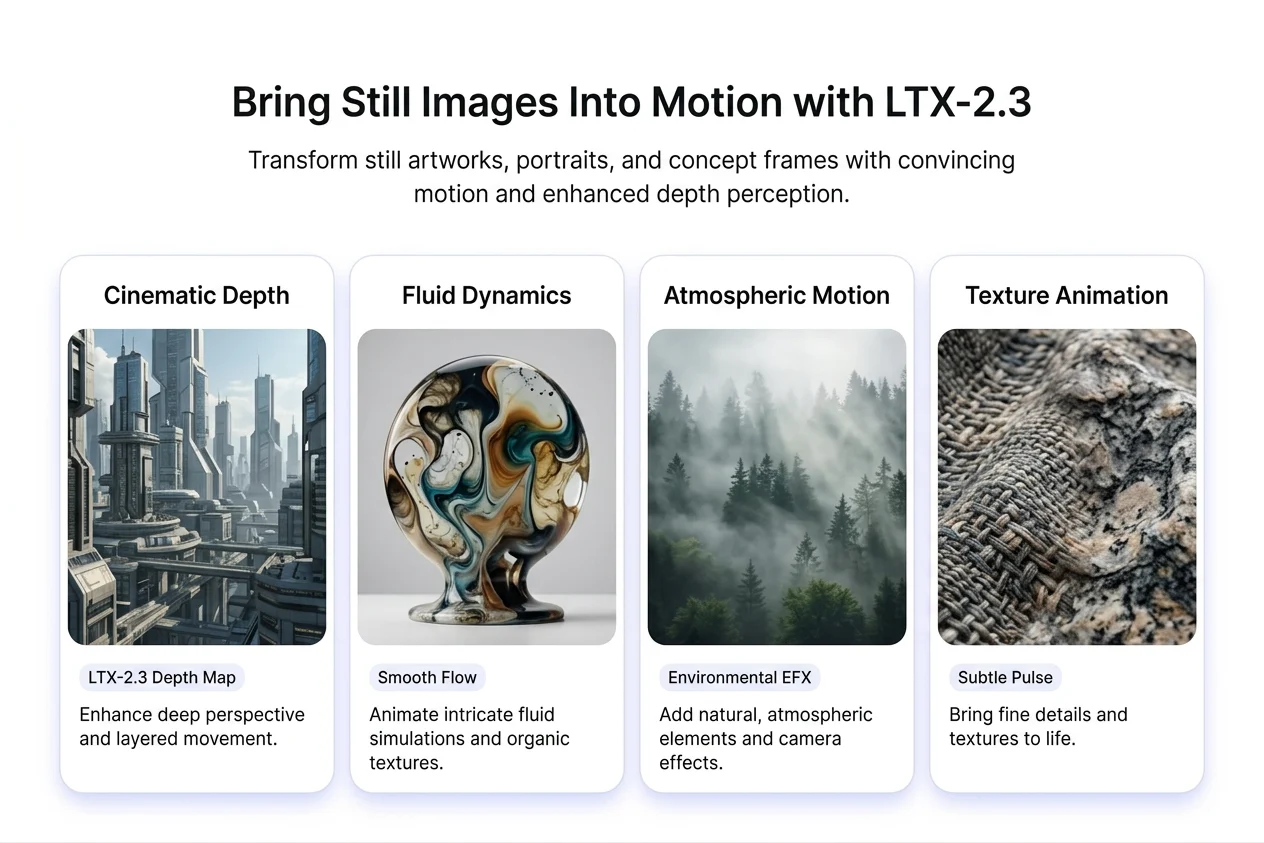
Bring Still Images Into Motion
If you already use image to video workflows, LTX-2.3 feels like a clear step forward. It gives still artworks, portraits, and concept frames more convincing motion, less stiffness, and a stronger sense of depth without making the scene feel artificially pushed around.
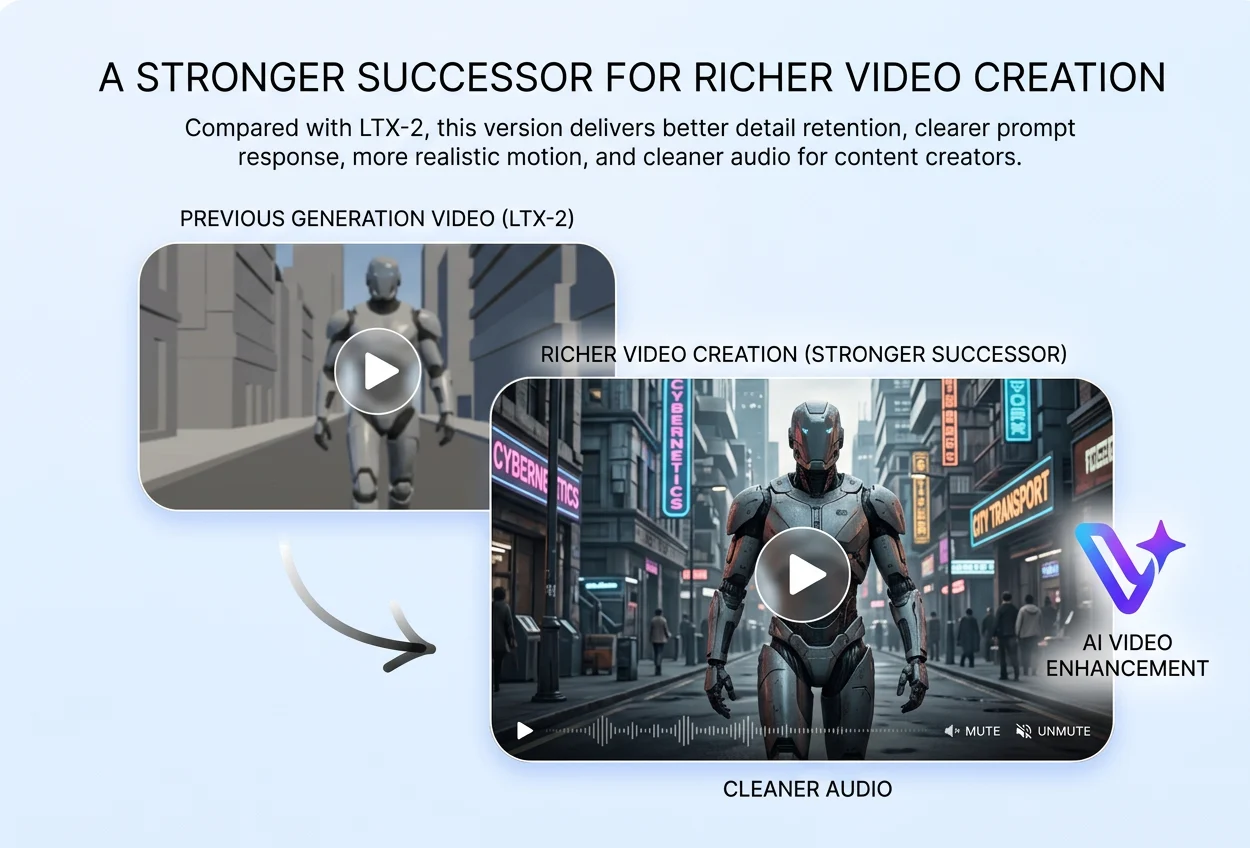
A Stronger Successor for Richer Video Creation
Compared with LTX-2, this version delivers better detail retention, clearer prompt response, more realistic motion, and cleaner audio. For creators looking for a more dependable AI video generator, LTX-2.3 is better suited for clips that need both visual polish and stronger scene control.
Discover More Video Models
Frequently Asked Questions of LTX-2.3
You may want to know
What is LTX-2.3 best used for?
How is LTX-2.3 different from LTX-2?
Does LTX-2.3 support image to video generation?
Can LTX-2.3 handle complex prompts with multiple elements?
Is LTX-2.3 good for vertical video content?
Does LTX-2.3 generate audio together with video?
What kind of visual improvement should I expect?
Will LTX-2.3 replace every other AI video generator?
What kind of prompts tend to work best?
Is LTX-2.3 suitable for beginners?
How should I evaluate whether LTX-2.3 fits my workflow?
Create With LTX-2.3 Today
Explore sharper motion, cleaner detail, and more controllable AI video creation
Start Creating