Kling AI vs Midjourney: Which One Actually Fits Your Workflow in 2026?
- 1. The Real Answer Before You Even Start Reading
- 2. They Look Like Competitors. In Practice, They Sit Next to Each Other.
- 3. What Happens When You Actually Need Video
- 4. Why Midjourney Still Deserves a Serious Place in the Decision
- 5. Pricing Only Tells Half the Story
- 6. Which One Should You Actually Pick?
- 7. FAQ
1. The Real Answer Before You Even Start Reading
Most articles comparing Kling AI and Midjourney start from the wrong assumption.
They frame this as a straight fight. One winner. One loser. One tool you should subscribe to and one you should skip.
That is not really how these two products work.
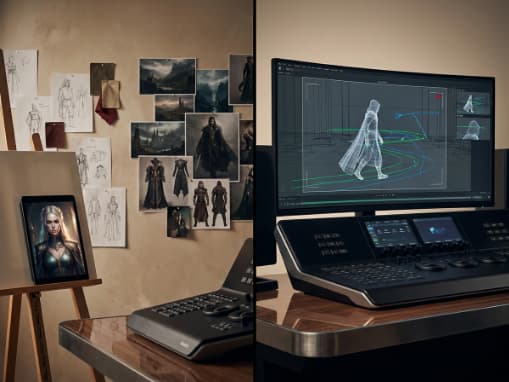
Midjourney is still strongest when the job starts with visual direction. You use it to discover the look: the mood, the lighting, the frame, the character style, the visual identity. Kling AI makes more sense when the job becomes motion execution. It is better suited to taking a prompt or a still image and turning it into a shot with movement, timing, and more controllable output.
That is the real split.
So the useful question is not “Which one is better?” It is: Which one fits the stage of the workflow I actually care about?
If you are building a visual world from scratch, Midjourney usually has the stronger starting point. If you already know what the world should look like and need to make it move, Kling usually has the stronger case.
| Dimension | Kling AI | Midjourney |
|---|---|---|
| Core identity | AI video generation with motion-first tools | AI image generation with expanding video features |
| Best place in workflow | Production end: turning a concept into moving shots | Front end: finding the visual language first |
| Control style | More direct motion control and sequence thinking | Faster visual exploration, lighter motion control |
| Video strength | Better for repeatable, directed output | Better for striking, image-led motion moments |
| Image strength | Useful, but not the main reason to use it | Still one of the strongest tools for aesthetic image generation |
| Prompt behavior | Usually easier to steer toward a defined target | Often visually strong, but sometimes less exact |
| Multi-shot potential | More practical for campaigns and ongoing content | Less dependable across multiple related shots |
| Cost logic | Membership plus credits | Lower entry point, but heavier video use changes the math |
| Best for | Teams making video content regularly | Creators and brands where visual taste comes first |
The cleanest summary is this:
Midjourney helps you decide what the piece should look like. Kling helps you make that piece move.
Once that clicks, the rest of the comparison becomes much easier to read.
2. They Look Like Competitors. In Practice, They Sit Next to Each Other.
People search “Kling AI vs Midjourney” because both now touch video in some way. That part is understandable.
But once you look at how creators actually use them, the overlap starts to shrink.
Midjourney built its reputation on still images people wanted to save immediately. Concept art. Mood boards. stylized portraits. campaign visuals. strong key frames that already feel finished. Even when people talk about Midjourney now, the reaction usually starts with the image itself. The motion comes second.
Kling feels different from the start. The product logic is closer to: how do I turn this visual into a usable shot? That changes the entire experience. Motion brush, image-to-video, frame control, sequence-minded generation — the product feels shaped around movement, not just appearance.
A more honest breakdown looks like this:
- Midjourney is closer to look development
- Kling is closer to shot execution
That is also why treating them as total substitutes usually leads to bad decisions.
If your process starts with “What should this campaign, scene, or character look like?” a model page like Midjourney on GoEnhance fits the front half of the workflow naturally.
If your process starts with “How do I animate this frame into something I can actually publish?” the center of gravity shifts.
And this is the part many comparison posts skip: a lot of serious creators do not fully choose one over the other. They use Midjourney to find the visual identity, then move the strongest frame into Kling when it is time to build motion around it.
That is not a workaround. It is a pretty sensible pipeline.
3. What Happens When You Actually Need Video
3.1 A Beautiful Clip Is Not the Same as a Usable One
This is where surface-level comparisons start to fall apart.
It is easy to show one Midjourney clip and one Kling clip and declare a winner. It is harder — and more useful — to ask whether the tool keeps working once the project needs revisions, consistency, or a second and third shot that still feel connected.
Midjourney can produce video outputs that look great quickly. The appeal is obvious. The motion often inherits the same visual taste that made the image model famous in the first place. You can get atmosphere fast. Sometimes very fast.
But good-looking motion and controllable motion are not the same thing.
Kling does not always win in the first three seconds of a side-by-side. Where it starts to make more sense is when you need to direct movement toward a target instead of hoping the model lands somewhere close enough.
That difference matters more than people expect. Especially once a project moves beyond experimentation.
3.2 Control Is the Real Divider
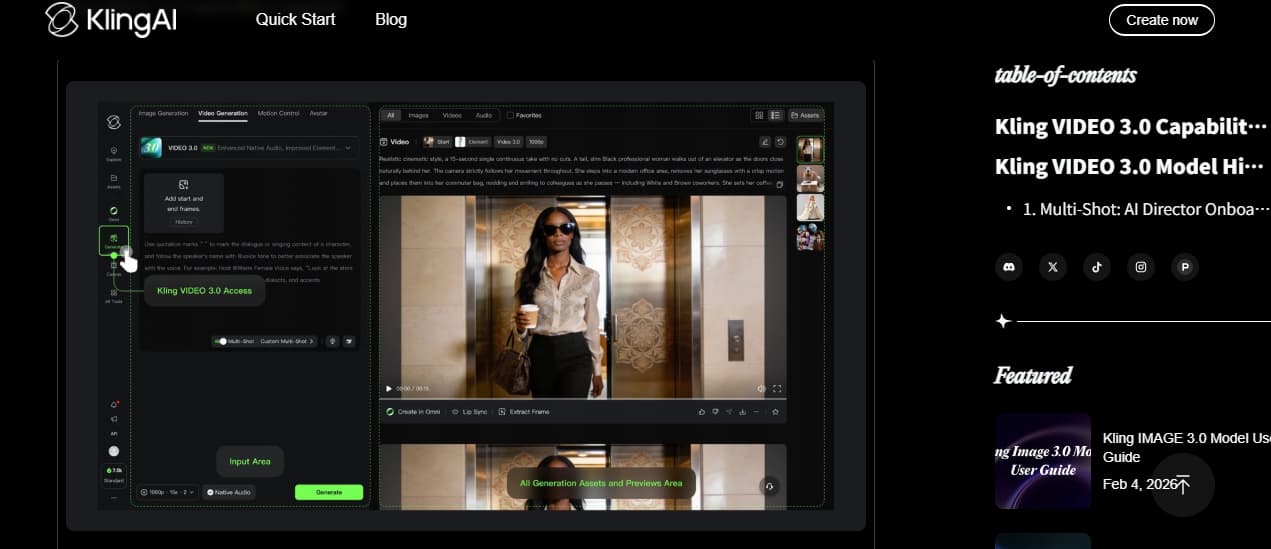
If you already know what should move and what should stay stable, Kling tends to feel more like a production tool than a visual toy.
That is the real appeal.
A model page like Kling AI on GoEnhance points in that direction clearly: the value is not just that it makes video, but that it fits a more controlled video workflow. Motion brush is the obvious example. It gives the user a way to push the output toward a defined shot instead of treating motion like a surprise.
That does not mean Kling is perfect. It does mean the tool is easier to work with when the target is already in your head.
Midjourney feels looser. Sometimes that looseness is part of the charm. If you are animating a strong still and want a fast, stylish extension, that lighter feel can be enough. But if you need more control over what happens inside the frame, the difference becomes hard to ignore.
3.3 Single-Shot Wow vs Multi-Shot Reliability
This is the angle more comparison posts should spend time on.
A single beautiful shot is nice. Plenty of tools can produce one nice result with enough tries.
But that is not how real content pipelines work.
Brand teams need multiple clips that belong to the same world. Creators need recurring formats. Product marketers need variations. Agencies need outputs that hold together across more than one generation.
That is where Kling starts to look more practical. Not glamorous. Practical.
Sequence work, more stable element handling, easier repeatability across related outputs — these things do not sound exciting in a feature list, but they are often what separate a fun generation tool from something you can keep using next month.
So the video conclusion is not hard:
- If you want cinematic feel fast, Midjourney can be compelling
- If you want control, repeatability, and better workflow discipline, Kling usually makes more sense
That is a more useful distinction than calling one “better” in the abstract.
4. Why Midjourney Still Deserves a Serious Place in the Decision
It would be easy to read the last section and come away thinking Midjourney is losing. That would be too simplistic.
Midjourney still matters a lot because plenty of strong video work begins before motion ever enters the picture.
It begins with a frame.
A lot of creators do not need movement first. They need aesthetic certainty first. They need to know what the world looks like, what the product should feel like, what the campaign tone is, what kind of character they are building, what kind of image makes people stop scrolling.
Midjourney is still extremely strong in that part of the process.
It makes sense for:
- concept exploration
- mood development
- character and scene ideation
- campaign key visuals
- branded image systems before motion begins
That role is not secondary. In many teams, it is the foundation.
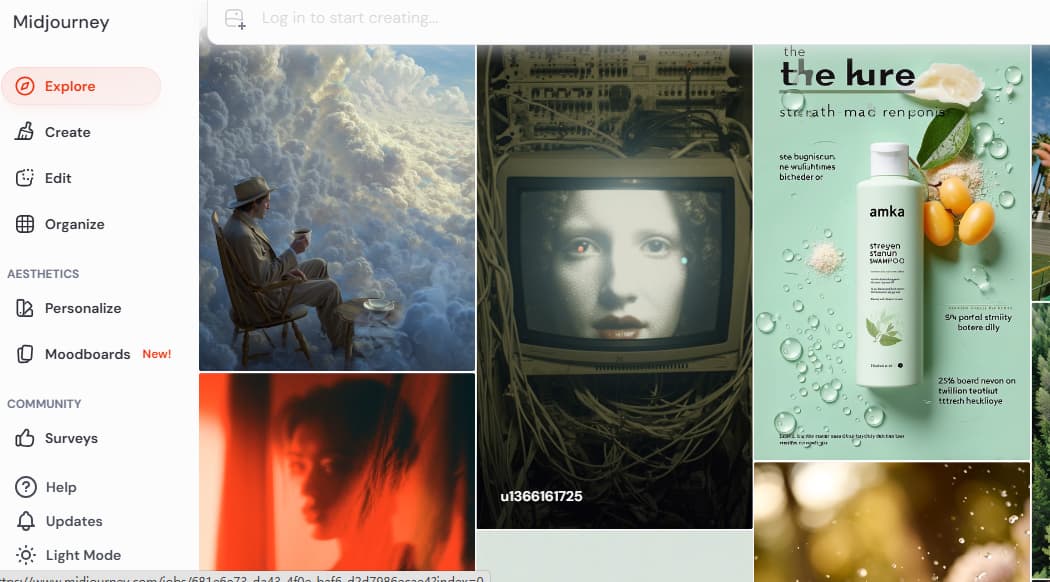
This is why I would not frame the comparison as “Kling replaced Midjourney for creators.” It did not.
A better read is this:
- If the main problem is how should this look, Midjourney is still the stronger anchor
- If the main problem is how do I turn this into motion without losing control, Kling is the stronger anchor
That is the line that matters. Not every creator will draw it in the same place, but most frustration with these tools comes from crossing it by accident.
5. Pricing Only Tells Half the Story
The weakest pricing sections are always the ones that stop at plan names.
That is not how cost feels in practice.
Cost shows up when you start generating seriously and notice how many attempts it takes to get something usable. It shows up when revisions stack up. It shows up when the “cheap” plan technically works, but does not really match the way you produce.
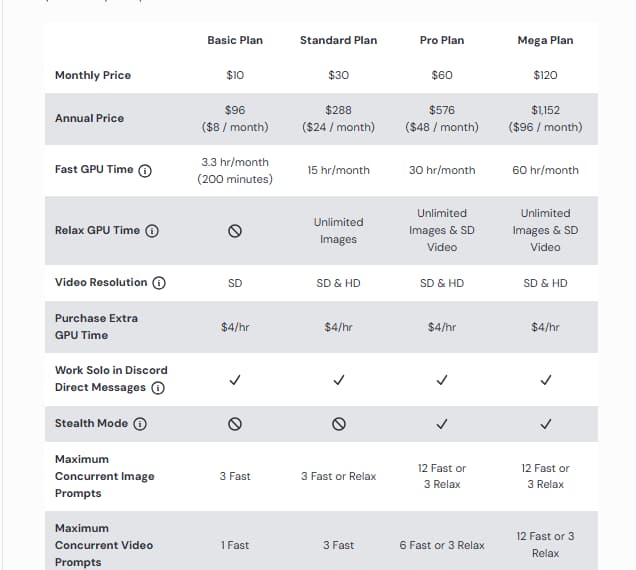
5.1 Midjourney's Cost Curve
Midjourney usually feels approachable at the entry level. That is part of the appeal.
But once video becomes more than a side experiment, the real question changes. It is no longer just “What does the plan cost?” It becomes “How much waste sits between idea and usable output?”
That is where the equation gets less friendly.
If you are mostly creating still images and adding motion occasionally, Midjourney can still be a pretty reasonable value. If you start leaning on it for heavier video use, the cost logic gets harder to ignore.
5.2 Kling's Cost Curve
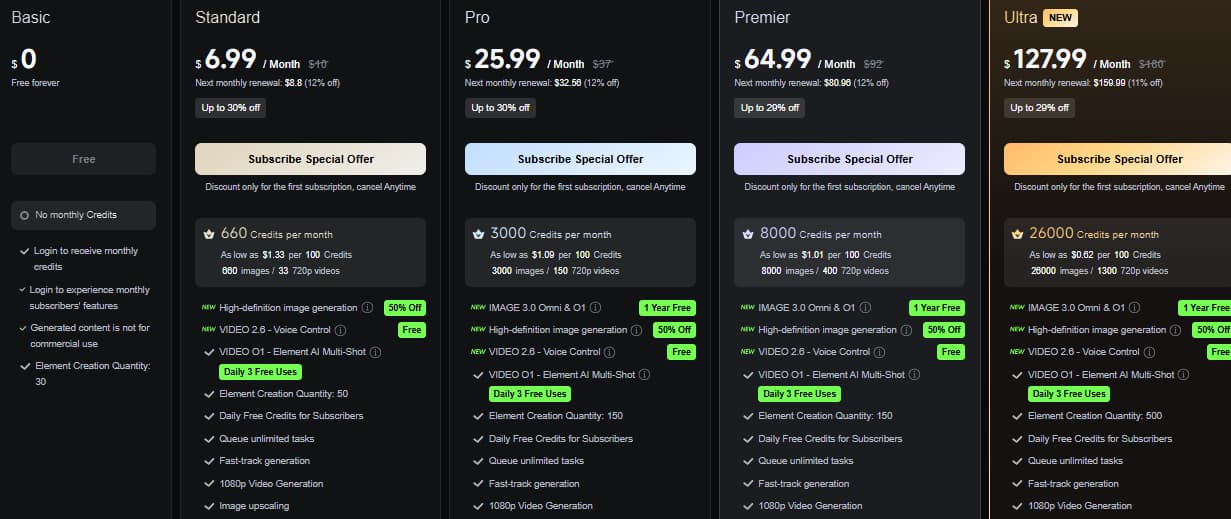
Kling tends to feel more operational from the beginning.
Membership plus credits is not always emotionally appealing. It can feel more complicated. But it also makes the production logic more visible. You start to see how output settings, generation choices, and usage volume actually affect what you spend.
For some creators, that feels annoying.
For teams producing video regularly, it often feels more honest.
5.3 The Better Cost Question
The smarter question is not “Which tool has the lower monthly entry point?”
It is this:
Which tool gets me to a publishable result with less waste?
If your work is image-led and motion is occasional, Midjourney may still be the better value.
If your work is video-led and you care about control, Kling often becomes easier to justify.
That is a much better way to think about cost than staring at pricing cards in isolation.
6. Which One Should You Actually Pick?
This is the section that matters most.
6.1 Choose Kling If the Job Is Video
If your real output is short-form video, ad creatives, product storytelling, social content, recurring campaign assets, or anything else where motion is the main deliverable, Kling is usually the more natural fit.
Not because it is always prettier.
Because it is usually more aligned with the work.
If your workflow is built around turning strong stills into motion, the image-to-video tool is also the most direct kind of entry point to keep in mind. That matters when the goal is not just a cool demo, but a repeatable process.
6.2 Choose Midjourney If the Job Starts With Taste
If the real value of your work is aesthetic direction — visual ideation, brand world-building, image systems, concept art, campaign references — Midjourney still makes more sense as the center of the workflow.
That is especially true if video is only an extension of a strong image-led process.
Trying to turn Midjourney into your main production video system usually creates more friction than it solves. Not because it is bad. Because that is not the job it does best.
6.3 Use Both If You Care About Polish
For serious output, this is probably the most honest answer.
A clean workflow often looks like this:
- Midjourney for visual development
- Kling for motion execution
- Editing software for final assembly
That is not overcomplicating things. It is just using specialized tools for specialized jobs.
For teams that still begin with look development, the Midjourney model page on GoEnhance fits naturally at the visual development stage. Kling then makes more sense once the visual direction is already settled and the work shifts toward movement, timing, and shot building.
6.4 The Common Mistake
A lot of wasted time comes from asking one tool to do the other tool's job.
People try to use Kling like an image-first ideation board. Or they try to use Midjourney like a controllable multi-shot video system. Both approaches usually end the same way: too many generations, not enough confidence, and a feeling that the tool is underperforming.
Usually the tool is fine.
The mismatch is earlier than that.
7. FAQ
Q: Kling AI vs Midjourney — which one is better overall?
Neither wins in a universal sense. Kling is stronger when the real task is controllable video output. Midjourney is stronger when the real task is visual direction, concept development, and strong still-image quality.
Q: Can Midjourney replace Kling for video work?
For occasional image-led motion, sometimes. For repeatable, controlled video production, not comfortably. Midjourney can create striking animated results, but it is not usually the stronger choice once motion control becomes the main requirement.
Q: Can Kling replace Midjourney for still images?
Not really, if image quality and style depth are the main deliverables. Kling can support image generation inside a motion-focused workflow, but Midjourney is still the stronger tool when the image itself is the core value.
Q: What is the best workflow if I want to use both?
Start with Midjourney to explore the look. Pick the strongest frame or visual direction. Move that into Kling to animate it and shape the shot. Then finish the piece in editing software. That handoff tends to work better than forcing one platform to cover the whole process.
Q: Which one makes more sense for marketing teams?
If the team is building visual identity, campaign direction, and branded references, Midjourney usually makes more sense first. If the team needs repeatable product videos, social clips, or motion-heavy campaign assets, Kling usually has the stronger practical case.
Q: Which one is easier for beginners?
Midjourney often feels easier for inspiration and visual discovery. Kling can feel more structured at first, but that same structure is often what makes it more useful once the work becomes more production-oriented.