SeaArt AI Review: I Tested Its AI Art Tools, and the Creator Trust Issue Is Hard to Ignore
- Quick Verdict
- What Is SeaArt AI?
- What SeaArt AI Does Well
- The Biggest Problem: SeaArt AI Feels Less Predictable Now
- Community Feedback: What Users Are Complaining About
- SeaArt AI and Privacy: A Real Concern for Creators
- SeaArt AI Pricing and Credit Frustration
- Why GoEnhance AI Is a Good SeaArt AI Alternative
- SeaArt AI vs GoEnhance AI
- Who Should Still Use SeaArt AI?
- Who Should Look for a SeaArt AI Alternative?
- Final Verdict
SeaArt AI is one of those AI image platforms that became popular because it puts a lot of creative tools in one place: text-to-image generation, image-to-image workflows, model browsing, templates, community discovery, AI characters, and newer video-related features. Its official homepage presents SeaArt as an AI creativity community for art, video, chat, and tools. (SeaArt AI)
That is still the reason many people try it.
But after reading recent user discussions around SeaArt AI, my take is more mixed: SeaArt AI can still be useful if you want a broad AI art community with lots of models and image tools, but it feels much less predictable than it used to for users who care about moderation clarity, paid-plan value, private content handling, and stable creative workflows.
This review breaks down what SeaArt AI does well, where users are getting frustrated, and why GoEnhance AI can be a better alternative for creators who want a more focused image-and-video workflow.
Quick Verdict
SeaArt AI is best for users who want a large AI art platform with model discovery, community content, image generation, image-to-image tools, and creative experimentation.
It is weaker for users who need a stable production workflow, predictable content rules, clear privacy expectations, and confidence that paid credits or subscriptions will behave consistently.
If your goal is casual AI art exploration, SeaArt AI is still worth testing. If your goal is to create polished visual content, turn images into videos, stylize clips, or build a repeatable creative workflow, GoEnhance AI is the stronger fit.
What Is SeaArt AI?
SeaArt AI describes itself as an AI creativity community for art, video, chat, and tools. Its image generator page positions the product around generating images from text and images. (SeaArt AI Image Generator)
The platform also promotes a large model gallery for image creation and style exploration. (SeaArt AI Model Gallery)
That variety is the good part. SeaArt AI does not feel like a narrow single-purpose tool. It feels like a creative marketplace, generator, and community feed rolled together.
What SeaArt AI Does Well
SeaArt AI’s biggest strength is breadth. You can use it for quick image generation, style exploration, character concepts, anime-style visuals, image-to-image experiments, and browsing models created or shared across the platform.
For many creators, that makes SeaArt feel more flexible than a basic prompt box.
The main strengths are:
- Large model discovery: SeaArt promotes a large AI model gallery, which is useful if you want to test many visual styles.
- Image generation from text and images: SeaArt’s official image generator page supports the basic positioning around text-and-image creation.
- Image-to-image workflows: SeaArt has a dedicated image-to-image generator page for transforming photos or source images. (SeaArt AI Image to Image Generator)
- Community-driven inspiration: The platform is built around public discovery, trending tools, templates, and shared outputs.
- Anime and character creation appeal: Based on community discussion, many users come to SeaArt for anime, character, and stylized generation workflows.
When everything works, SeaArt AI can be fun and productive. The issue is that “when everything works” has become the problem for some users.
The Biggest Problem: SeaArt AI Feels Less Predictable Now
The strongest pattern in recent Reddit discussions is not just anger about censorship. It is uncertainty.
Users are not only saying, “SeaArt blocks too much.” They are saying:
- The same type of content works for one account but not another.
- Mature mode appears for some users but not others.
- A prompt that seems harmless can still get flagged.
- VPN, region, or account age may affect access.
- Video generation appears to trigger stricter filtering than image generation.
- Some paid users feel the rules changed after they subscribed.
- Some users say failed or censored generations still cost credits.
- Search and LoRA discovery feel reduced or inconsistent for certain terms.
That creates a trust problem.
Strict moderation is one thing. Unclear moderation is worse. If a creator understands the rules, they can adapt. If the rules feel random, every prompt becomes a gamble.
Community Feedback: What Users Are Complaining About
The Reddit threads around SeaArt AI show several recurring complaints.
One thread focuses on prompts involving ordinary human subjects being blocked or partially censored, with users discussing cases where women, fitness outfits, bare legs, or close-up face videos appeared to trigger moderation. (Reddit)
Another thread asks what to use now that “SeaArt is dead,” which shows a clear alternative-seeking intent. The specific replacement suggestions vary, but the broader signal is more important: people are actively shopping around because they no longer trust SeaArt’s creative freedom or reliability. (Reddit)
A PixAI comparison thread shows that anime and character creators are specifically asking whether SeaArt still supports the kind of generation they used to expect. Several commenters suggest staying with PixAI if that is the main use case. (Reddit)
A paid-user complaint thread is probably the most commercially important. The frustration is not only “SeaArt changed.” It is “I paid for this, then the experience changed.” That is much more damaging because it connects moderation problems with refund expectations, subscription value, and credit fairness. (Reddit)
There is also a separate cybersecurity thread where a user says deleted SeaArt-generated media was still accessible through a direct CDN URL. Commenters discuss caching and deletion timing, but from a user-trust perspective, the concern is obvious: creators want to understand what “private,” “deleted,” and “public” actually mean. (Reddit)
SeaArt AI and Privacy: A Real Concern for Creators
The privacy discussion matters because AI image platforms often blur the line between private creation, community sharing, CDN storage, and public visibility.
SeaArt’s privacy policy explains that the platform collects, stores, and uses information provided by users. (SeaArt AI Privacy Policy) Its terms also include rules around content and platform usage. (SeaArt AI Terms of Service)
But the user concern from Reddit is practical: if someone generates an image, deletes it, and the direct file URL still works, they may feel like deletion did not really delete it.
Technically, HTTP caching can explain part of that behavior. Cached resources can remain available depending on cache headers, expiration rules, and intermediary storage behavior. (MDN Web Docs)
But creators do not think in CDN architecture. They think in simple promises:
- Is this image private?
- Can other people access it?
- If I delete it, when does it disappear?
- Can platform staff or systems still access it?
- Does “public” mean it can be reused for promotion?
- Does “private” mean the direct asset URL is protected?
For any serious creator, especially anyone working with personal images, client assets, character IP, or sensitive drafts, those questions matter.
SeaArt AI would benefit from clearer, more visible explanations around privacy modes, deletion timing, cache behavior, and public content licensing.
SeaArt AI Pricing and Credit Frustration
The strongest paid-user complaint is not just the price. It is the feeling that paid value became unstable.
Some users say they bought long-term plans or higher-tier subscriptions before realizing that content filters, model training, or mature settings did not behave as expected. Others complain that censored or failed generations may still consume credits.
That is where SeaArt’s broad creative platform becomes a double-edged sword. If users pay because they expect a certain type of workflow, then lose access to that workflow, the product feels worse than a free tool with obvious limits.
For paid AI tools, predictability is part of the product.
Users need to know:
- what content is allowed,
- which models have stricter rules,
- whether video generation is moderated differently,
- whether failed generations cost credits,
- whether account region affects features,
- whether mature settings are available to their account,
- and what refund options exist if the product changes materially.
Without that clarity, even a powerful AI generator can feel risky to pay for.
Why GoEnhance AI Is a Good SeaArt AI Alternative
GoEnhance AI makes more sense if your priority is not browsing a massive community feed, but building a cleaner visual creation workflow.
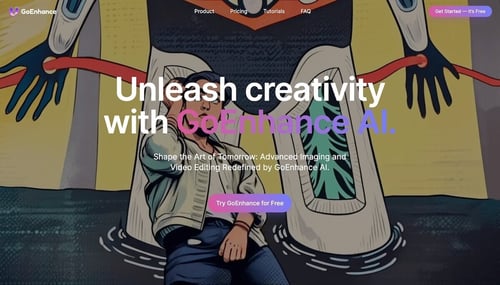
SeaArt AI is broad. GoEnhance AI is more focused around practical creative production, with AI video generation, video-to-anime conversion, text/image-to-video, video face swap, text-to-image, and image enhancement tools.
That difference matters.
If you are using AI tools to make publishable creative assets, the workflow usually looks like this:
- Generate or prepare an image.
- Turn that image into a short video.
- Stylize or enhance the video.
- Refine the result for social, ads, storytelling, or creative testing.
GoEnhance AI fits that path better than a community-first image platform. Its AI video generator workflow is especially useful when you want to move from a still image or prompt into a short, usable video.
The best reason to consider GoEnhance AI as a SeaArt alternative is not “it does everything SeaArt does.” It does not need to. The better argument is:
GoEnhance AI is a better fit when you want a more direct image-and-video creation workflow instead of a crowded AI art community with inconsistent access rules.
For creators, marketers, anime video makers, short-form content teams, and anyone experimenting with AI video, GoEnhance AI gives you a more production-oriented path:
- Use text-to-video for quick concepts.
- Use image-to-video when you want more control.
- Use video-to-anime for stylized transformations.
- Use enhancement tools to improve final output quality.
- Use image tools when you need supporting visuals.
That is a more natural workflow for publishing content than endlessly testing prompts inside a platform where moderation, search, mature settings, or model access may vary by account.
SeaArt AI vs GoEnhance AI
SeaArt AI and GoEnhance AI are not identical products, so the comparison depends on what you want.
SeaArt AI is stronger if you want:
- a large AI art community,
- model browsing,
- anime and character inspiration,
- public discovery,
- lots of image-generation experimentation,
- and a more social creative platform.
GoEnhance AI is stronger if you want:
- AI video generation,
- image-to-video workflows,
- video-to-anime conversion,
- visual enhancement tools,
- practical content production,
- and a more focused path from idea to output.
My take: SeaArt AI is better for exploration. GoEnhance AI is better for turning visual ideas into usable creative assets.
If you are mainly browsing models and testing image styles, SeaArt may still be useful. If you are trying to create short videos, stylized clips, anime transformations, social content, or repeatable visual workflows, I would start with GoEnhance AI.
Who Should Still Use SeaArt AI?
SeaArt AI still makes sense for users who enjoy community-driven AI art platforms.
You may still like SeaArt AI if:
- you want to browse many models,
- you like community inspiration,
- you mainly generate still images,
- your prompts fit comfortably within its current rules,
- you do not depend on mature-mode access,
- and you are okay with some platform inconsistency.
It is also still useful for casual experimentation. If you are not paying much, not using sensitive source images, and not relying on SeaArt for client work or production output, the risks are lower.
Who Should Look for a SeaArt AI Alternative?
You should consider an alternative if you care about predictable workflow more than platform breadth.
That includes creators who:
- need image-to-video or video transformation tools,
- want a clearer production pipeline,
- dislike inconsistent moderation behavior,
- are frustrated by account-based or region-based feature differences,
- do not want failed generations to feel like wasted credits,
- care about privacy and deletion expectations,
- or need a tool that feels less like a social feed and more like a creation suite.
That is exactly where GoEnhance AI becomes relevant.
Final Verdict
SeaArt AI is still a powerful AI art platform, especially for users who want model variety, image generation, and community discovery. But recent user feedback shows a serious trust problem around moderation, mature mode availability, paid-plan expectations, search visibility, LoRA access, and privacy clarity.
My final take is simple:
SeaArt AI is worth trying for broad AI art exploration, but it is harder to recommend as a dependable production workflow right now.
If you want a focused way to create AI videos, animate images, stylize clips, and build visual content from idea to output, GoEnhance AI is the better alternative to test first. It is not trying to be the same kind of community-heavy AI art platform. That is the point. It gives creators a more direct path toward usable image and video content.