
Nano Banana 2 vs Nano Banana Pro: My Honest Take After Running Real-World Tests
- 1. The Short Answer: Nano Banana 2 Wins More Often Than You’d Think
- 2. My Five Real-World Tests Tell the Real Story
- 3. The Real Structural Difference Is About Priorities, Not Raw Power
- 4. Who Should Use Which Model?
- 5. Conclusion: Nano Banana 2 vs Nano Banana Pro Comes Down to What You’re Really Paying For
Nano Banana 2 is already good enough to replace Nano Banana Pro in most everyday production work, and that surprised me more than I expected. I did not come to that view from reading a spec sheet. I came to it after comparing them across the kinds of jobs that actually matter when I am making things under pressure: landing-page mockups, continuous character scenes, stylized game art, e-commerce product images, and old photo restoration.
When I first started testing, I assumed Pro would stay comfortably ahead because that is usually how these model families work. The “Pro” version tends to keep the crown on detail, consistency, and polish. But once I pushed both models through batch-heavy workflows, longer visual tasks, and commercial-style outputs, the gap looked very different. In several cases, the cheaper model did not just hold up. It won.
That does not mean the two models are the same. It means they are optimized for different priorities. Nano Banana 2 feels like a fast, practical, high-output creative engine. Nano Banana Pro feels more like a slower, more careful finisher that still matters when precision is everything.
This article is my direct review based on that hands-on comparison. I am not trying to force a dramatic winner. I am trying to answer the question I would care about if I were paying for both: which one actually makes more sense for real work?
1. The Short Answer: Nano Banana 2 Wins More Often Than You’d Think
My simplest answer is this: Nano Banana 2 is the better default choice for most creators, while Nano Banana Pro is still the safer choice for a smaller set of high-precision jobs.
That is the core judgment, and the rest of the article just explains why.
Across the five test groups I ran, my result looked like this:
- Nano Banana 2: 3 wins
- Draw: 1
- Nano Banana Pro: 1 win
That score matters because the tradeoff is not minor. Nano Banana 2 is much faster, significantly cheaper, and still lands very close to Pro in many outputs where people assume they would see a huge visual downgrade. In some cases, especially where mood, style, and commercial appeal matter more than pixel-level restraint, it actually comes out ahead.
Here is the cleanest way I would frame the difference:
| Area | Nano Banana 2 | Nano Banana Pro |
|---|---|---|
| Speed | Faster | Slower |
| Cost efficiency | Stronger | Weaker |
| Batch generation | Better | Less practical |
| Stylized outputs | Better | Good, but flatter |
| Product visuals | Better | Less consistent |
| Long small-text rendering | Weaker | Better |
| Ultra-fine realism | Good | Better |
| Restoration restraint | More aggressive | More controlled |
If I were recommending one model to the average creator using an AI image generator for day-to-day production, I would point them to Nano Banana 2 first. If I were preparing a final luxury-brand visual, a high-stakes portrait, or a restoration task where restraint matters, I would still keep Pro in the toolkit.
2. My Five Real-World Tests Tell the Real Story
The real difference between these models becomes obvious only when you stop asking “which is stronger?” and start asking “stronger at what?” That’s why I ran them through five real-world scenarios instead of judging them on a single pretty image.
2.1 Sketch to SaaS Landing Page
Both models are excellent at understanding rough layout structure, but Pro is still safer with dense text.
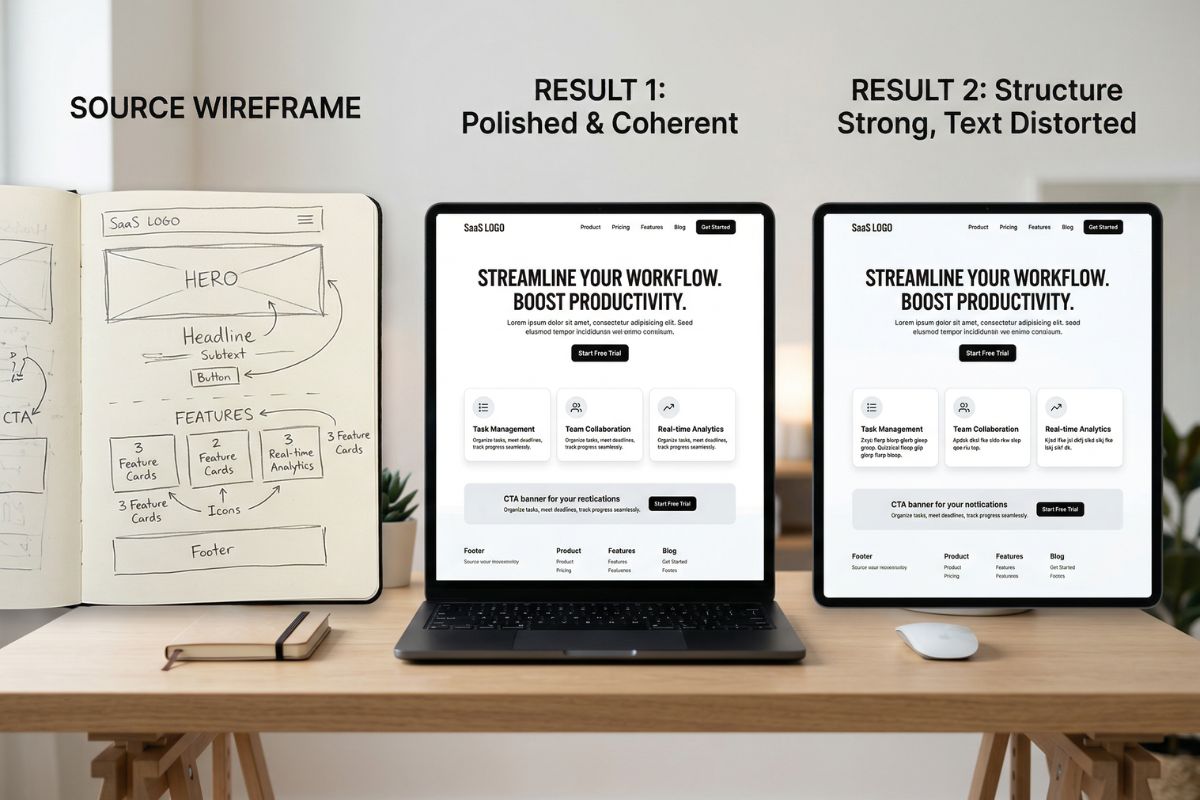 I started with a hand-drawn wireframe that looked intentionally rough, almost like a notebook sketch. Then I fed the same layout to both models and asked them to turn it into a polished SaaS-style landing page.
The first surprise was how close they were. Both models captured the hierarchy well. Main blocks, cards, headline areas, spacing logic, and overall page flow all came through better than I expected. If I only cared about whether the sketch became a believable product page, both passed.
The difference appeared when the text got smaller. Large headline text was mostly fine in both. But once the models had to render small descriptive copy under feature cards, Nano Banana 2 started slipping into nonsense text. It looked plausible from a distance, but up close it was clearly fake filler.
That sounds bad, but in practice it was manageable. In a real workflow, I would not throw away the image because of that. I would patch the text after the fact. If the base composition is right, the job is still largely solved.
So my takeaway from this test was simple:
- Nano Banana 2 understands layout structure very well.
- Nano Banana Pro handles paragraph-like text more reliably.
- If your workflow includes editing after generation, Banana 2 is still highly usable.
I scored this one as a draw, slightly leaning toward Nano Banana 2, because the structural result matters more than the cleanup burden in most design workflows.
2.2 Continuous Character-Based Scene Set (10 Images)
Nano Banana 2 is the more practical model for character sequences because its speed and cost change the whole workflow.
This was one of the most useful tests I ran. I locked in one female lead as a reference and asked both models to generate ten scenes across a day, from morning to night, while keeping the same character identity.
Both models did better than many people would guess. Identity consistency held up on both sides. Facial structure, general styling, and scene progression stayed coherent enough that I could use either output set as a visual sequence.
Where the difference showed up was less dramatic and more practical. Nano Banana 2 gave me warmer tones and a stronger cinematic atmosphere. Nano Banana Pro gave me slightly finer skin rendering and more natural depth-of-field transitions. But if I looked at the sets at normal size rather than zooming in, the gap was small.
And that matters. When the visible difference is small, the operational difference becomes huge.
Nano Banana 2:
- Generates faster
- Costs less
- Makes long sequence work more realistic
- Feels better for high-volume scene iteration
Nano Banana Pro:
- Still has cleaner micro-detail
- Makes more sense for hero-frame polishing
If I am building a story sequence, short drama visuals, or repeatable social content, Nano Banana 2 is the model I would actually use. It won this round by a narrow but meaningful margin.
2.3 Pixel-Style Game Art
Nano Banana 2 is clearly better at stylized atmosphere, and this was the test where that became impossible to ignore.
I used a dark pixel-dungeon prompt: stone arches, torches, moss, treasure, monster silhouettes, and layered depth. On paper, you might expect the “Pro” version to keep the edge. In practice, Nano Banana 2 looked far more alive.
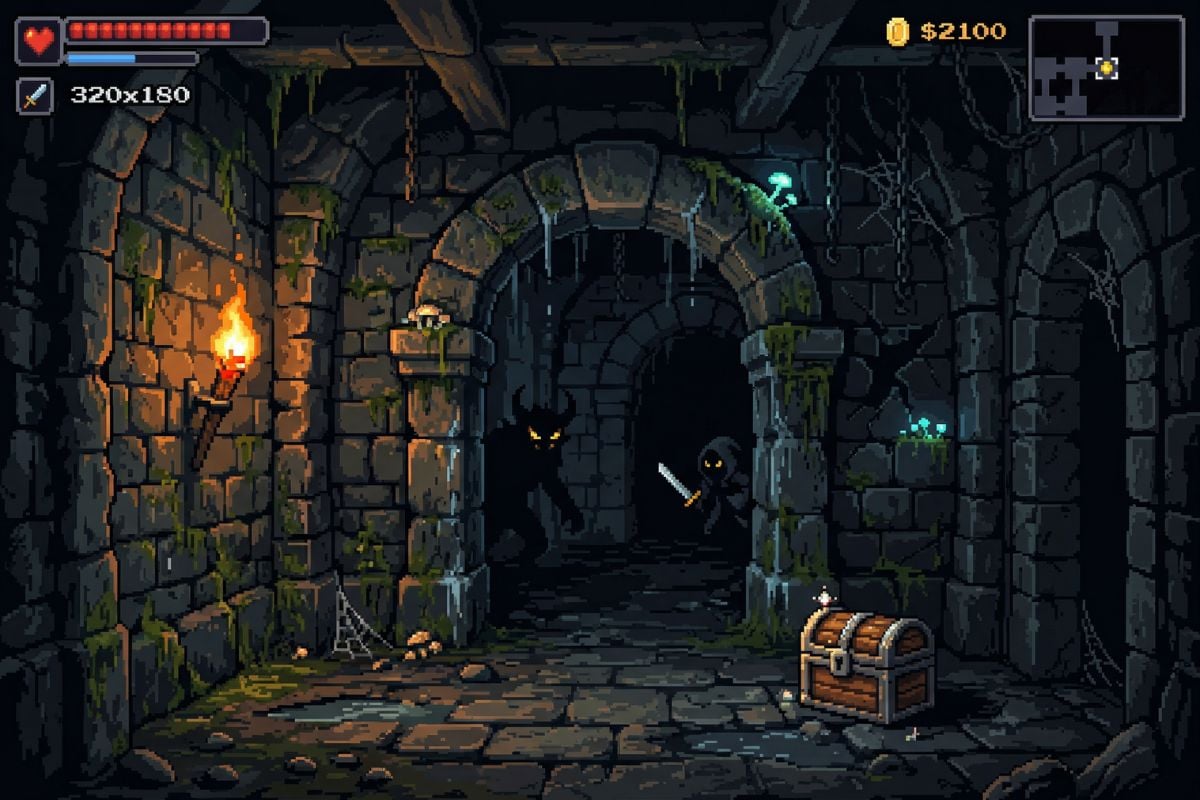
Its outputs had:
- Better depth
- Stronger spatial layering
- More believable dungeon mood
- Better decorative details
- A stronger sense that I was looking at a game scene, not just a themed illustration
Nano Banana Pro was not bad. It just looked flatter. The perspective did not pull me in the same way. The scene read more as “clean output” than “playable world.”
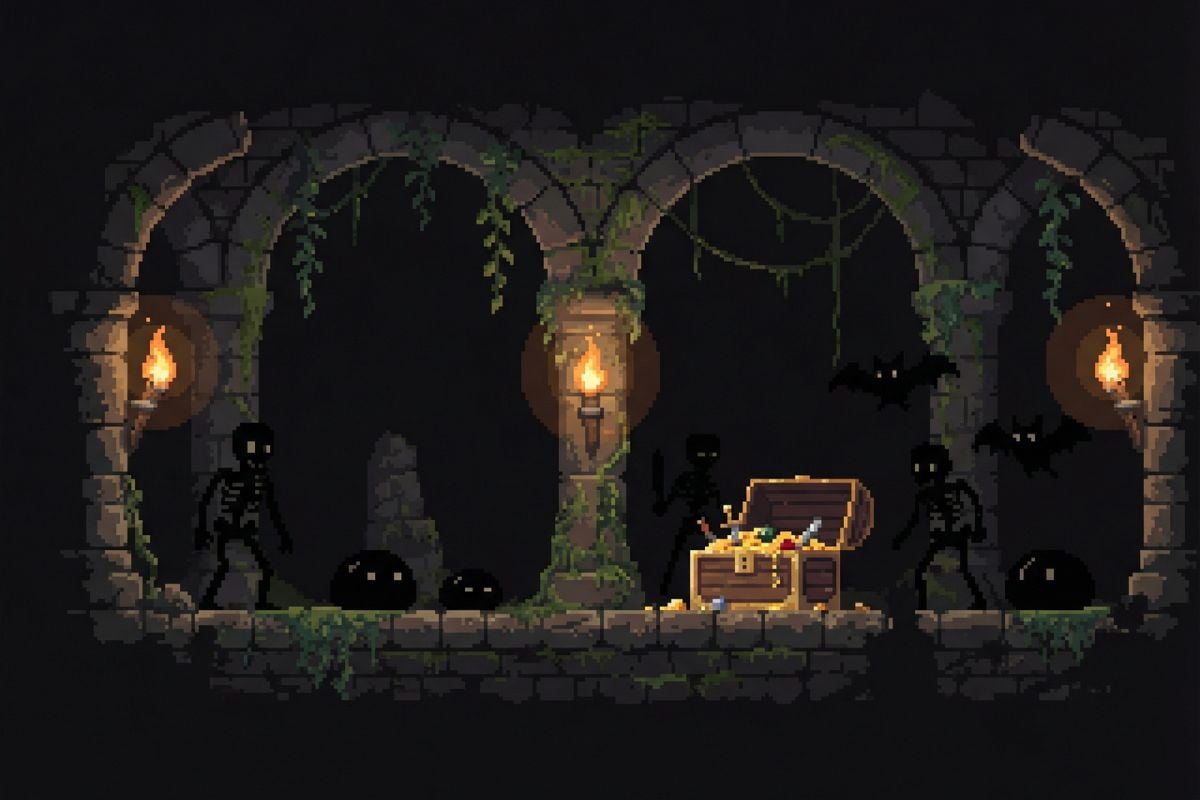 That gap stayed visible when I extended the idea into multiple frames. Both models could maintain stylistic consistency across several scenes, which is important. But Nano Banana 2 kept the stronger worldbuilding feel.
This was the easiest win to call. If I were generating stylized assets for concept boards, game mood references, or visual storytelling, I would pick Banana 2 first.
For creators doing heavy image to image iteration based on reference art and style direction, this matters a lot. Strong atmosphere survives revision better than sterile correctness.
2.4 E-Commerce Product Images
Nano Banana 2 was noticeably better at making products look sellable, and that is a bigger advantage than people realize.
This was the most one-sided result in my test set.
I used a skincare product and asked both models to generate commercial product shots from multiple angles. I was looking for more than “pretty.” I was looking for sale-ready image logic: believable materials, readable product identity, elegant reflections, visible liquid content, and that hard-to-define sense of premium product photography.
Nano Banana 2 nailed that feeling better. The bottle looked like a real item someone might buy. The glass felt clearer, the amber liquid had presence, the metal highlights behaved more naturally, and the overall scene had stronger ad-like appeal.
Nano Banana Pro still looked polished, but in several outputs the product itself became less convincing. One image weakened the liquid presence so much it barely felt like the same category of item. Another looked oddly empty.
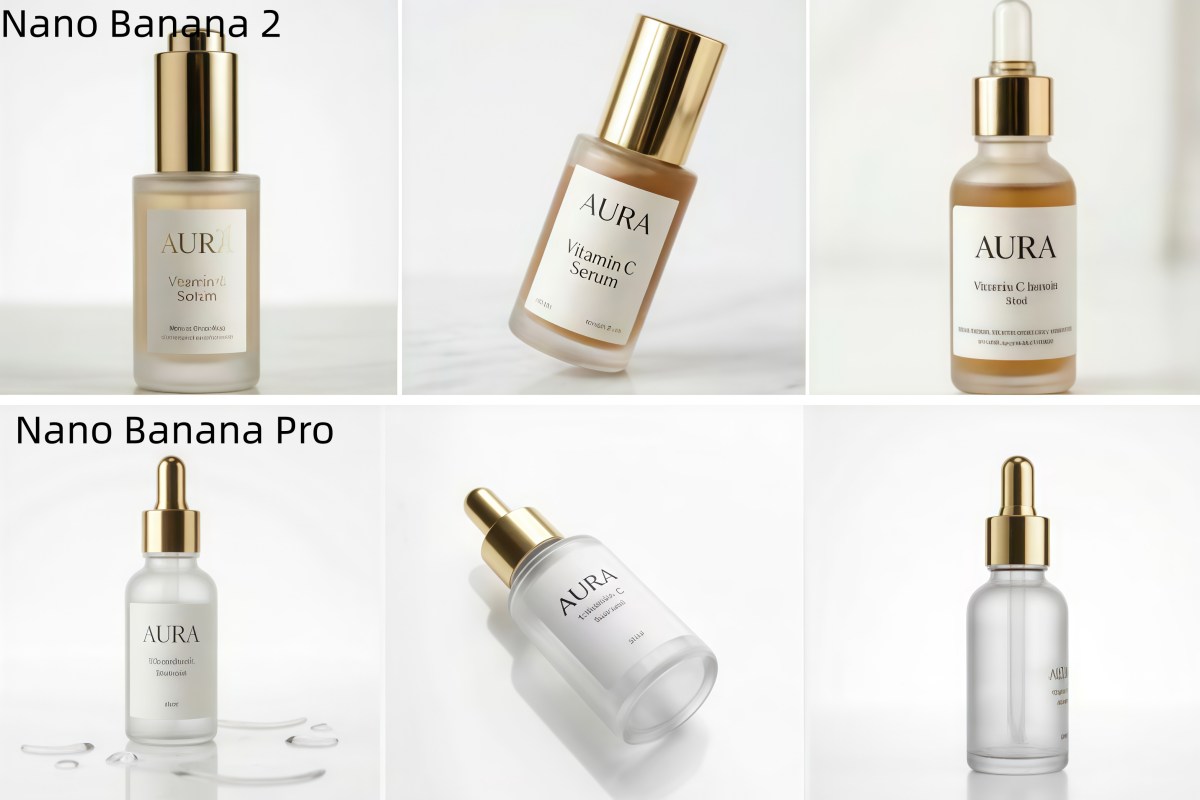
That is not a minor flaw. In e-commerce, “beautiful” is not enough. The product must still read as the product.
So the practical lesson here is straightforward:
- If your goal is commercial product imagery at scale, Nano Banana 2 is the better production tool.
- If your goal is a small number of carefully refined visual treatments, Pro may still be worth considering.
For product teams, sellers, and marketers, this test alone would push me toward Banana 2.
2.5 Old Photo 4K Restoration
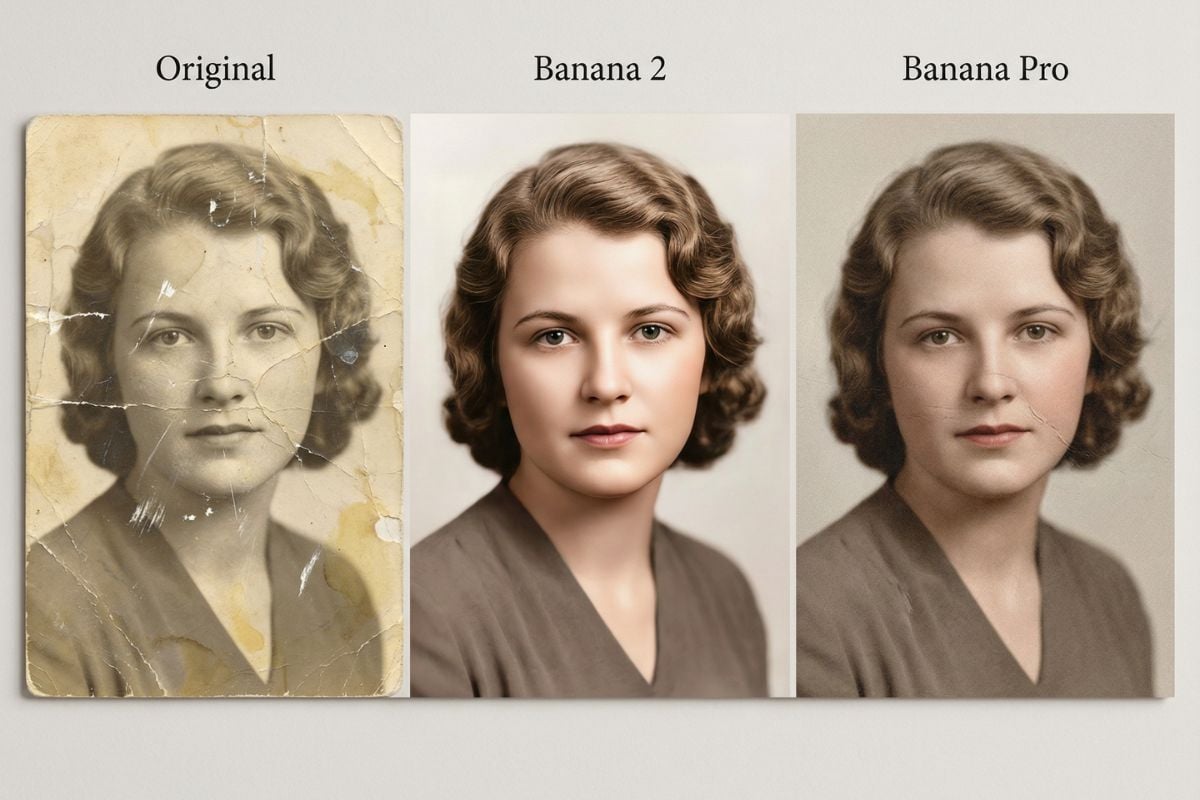 Nano Banana Pro still wins when restoration requires discipline instead of creativity.
This was the one category where I clearly preferred Pro.
I used an old damaged portrait with visible fading, cracks, scratches, and discoloration. Both models were asked to restore it to a modern, high-quality result while preserving the person’s real facial identity.
Technically, both handled the obvious damage well enough. Major flaws disappeared. The real difference was in their attitude toward the source.
Nano Banana 2 made the image feel fresher, brighter, and more reimagined. Colors became stronger. The image leaned toward an upgraded modern portrait.
Nano Banana Pro was more restrained. It still repaired the photo, but it felt more respectful to the original image’s period and mood. The colors stayed more believable, the tone felt more measured, and the result looked less like “creative improvement” and more like “careful restoration.”
That distinction matters if you are restoring family photos, heritage images, or portraits where emotional authenticity matters more than visual punch.
In that kind of work, Pro still earns its name.
3. The Real Structural Difference Is About Priorities, Not Raw Power
The biggest mistake is assuming these models are separated by simple quality tiers when they are really separated by different design priorities.
Once I stepped back from the individual tests, the broader pattern became easy to see.
3.1 Nano Banana 2 Produces Richer, More Expressive Output
It handles:
- Stylized mood
- Dramatic lighting
- Story energy
- Batch-friendly generation
- Commercial visual punch
In plain English, it is very good at making images feel exciting fast.
3.2 Nano Banana Pro Is Better at Controlled Precision
It handles:
- Smaller text more reliably
- Skin and hair detail more delicately
- Light transitions more subtly
- High-realism restraint more carefully
- Restoration with better judgment
In plain English, it is better at knowing when not to overdo things.
3.3 The Winning Model Depends on the Use Case
If I am doing:
- concept exploration
- content at scale
- product shots
- stylized art
- sequential visuals
I want Nano Banana 2.
If I am doing:
- fine portrait work
- sensitive restoration
- text-heavy layouts
- premium brand finishing
I still want Nano Banana Pro.
This is why I do not see Banana 2 as a downgrade. I see it as a more production-friendly model that happens to beat Pro in several high-frequency use cases.
For broader evaluation frameworks, I still like checking external benchmark sources such as Artificial Analysis and testing visual output expectations against real-world platform standards documented by places like MDN when workflow or rendering constraints matter. But the final judgment always comes back to one thing: how the output behaves in actual use.
4. Who Should Use Which Model?
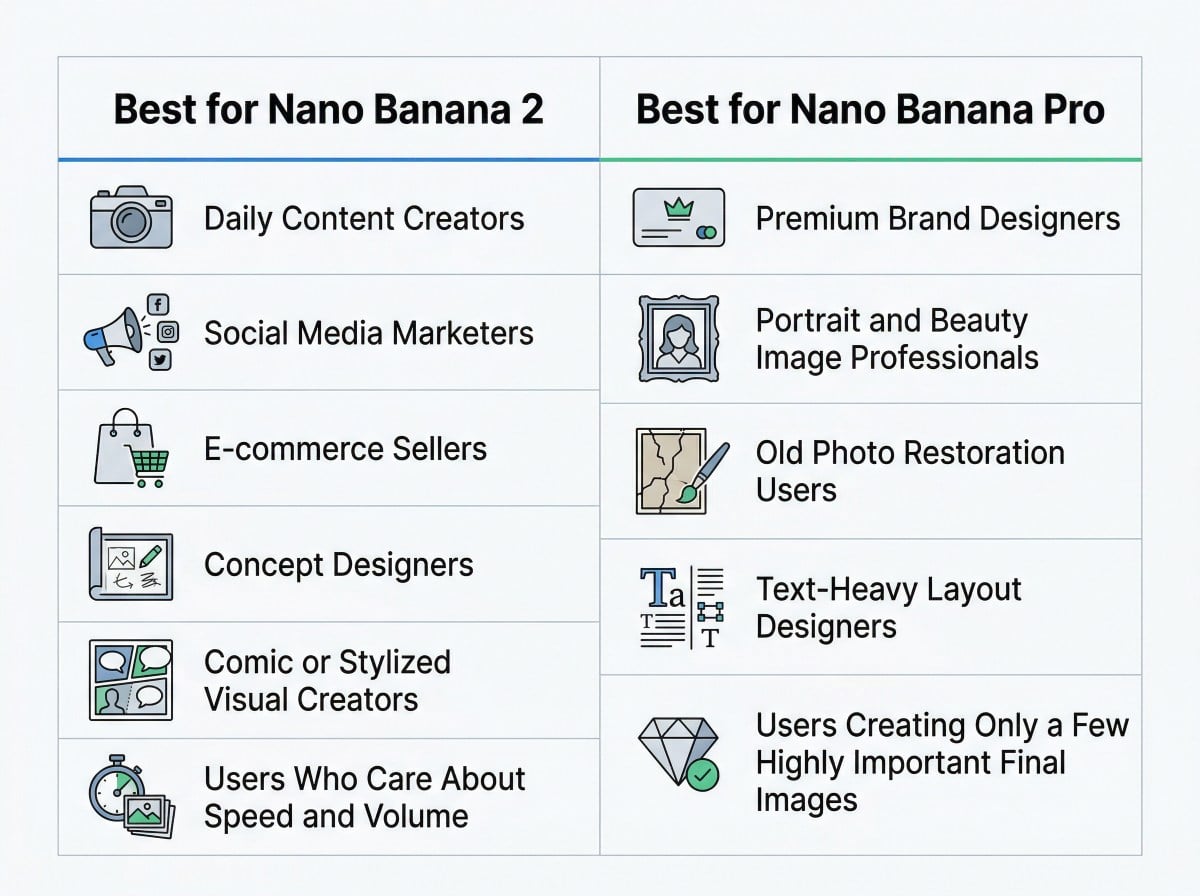 Most people should start with Nano Banana 2, and only move to Pro when the job clearly demands it.
That is my practical recommendation after testing both.
Choose Nano Banana 2 if you are:
- A content creator making visuals every day
- A marketer producing social or product assets
- A seller who needs many commercial images
- A designer doing concept exploration
- A creator building scenes, comics, or stylized image sets
- Someone who values speed and volume
Nano Banana Pro makes the most sense if you:
- Working on high-end brand visuals
- Delivering premium portrait or beauty work
- Restoring old photos where authenticity matters
- Creating text-heavy layouts that need fewer touch-ups
- Finalizing a small number of mission-critical images
My favorite real-world setup
This is the exact workflow I’d run in practice:
- Use Nano Banana 2 for ideation, testing, and bulk output.
- Select the few frames that matter most.
- Use Nano Banana Pro only where the last layer of refinement justifies the cost.
That hybrid approach is usually smarter than treating this as a winner-takes-all decision.
5. Conclusion: Nano Banana 2 vs Nano Banana Pro Comes Down to What You’re Really Paying For
My final view is simple: Nano Banana 2 gives better value for most real production work, while Nano Banana Pro still deserves a place when restraint, detail, and precision matter more than speed.
After running these tests myself, I no longer think of Nano Banana 2 as the “budget option.” I think of it as the model that better fits how many people actually work now: faster cycles, more drafts, more content, more experimentation, and tighter budgets.
Nano Banana Pro has not become irrelevant. It still wins where the image needs discipline. It still looks better in certain fine-detail and restoration tasks. But those cases are narrower than many people assume.
So if someone asked me today which one to start with, my answer would be clear:
- Start with Nano Banana 2 for most creative and commercial workflows.
- Keep Nano Banana Pro for the smaller set of jobs where polish and control outweigh everything else.
That is the real answer to Nano Banana 2 vs Nano Banana Pro after hands-on testing: one is the better general production engine, and the other is the better specialist. If you want to try it yourself, you can also experience Nano Banana 2 for free on GoEnhance.