11 HeyGen Alternatives Worth Considering in 2026
- 1. The best HeyGen alternatives at a glance
- 2. Why HeyGen stops fitting some workflows
- 3. What GoEnhance gets right from the start
- 4. Synthesia is still one of the strongest business-video alternatives
- 5. Colossyan, AI Studios, and Elai are better understood as different flavors of structured avatar video
- 6. D-ID and Creatify solve more specific problems — and that is exactly why they matter
- 7. VEED, Canva, InVideo, Descript, and Vidnoz are worth considering for very different reasons
- 8. So which tool should you actually pick?
- 9. A few limits worth being honest about
- 10. FAQ
- 11. Final thoughts
If you're comparing HeyGen alternatives, the useful question usually isn't “Which tool is most like HeyGen?”
It's closer to this:
What kind of video work are you actually trying to make easier?
HeyGen still makes plenty of sense for presenter-led videos. If your workflow starts with a script, an avatar, and a talking-head format, it's easy to see why teams keep it on the shortlist. But that isn't every video workflow anymore. Some teams need internal training. Some need product demos. Some care more about dubbing, editing, or repeat production. And some are starting with images, product visuals, or campaign assets rather than a spokesperson video.
That's why this guide doesn't treat every alternative like a clone.
Some of the tools below are direct avatar-video competitors. Others make the shortlist because they solve the same production bottleneck from a different starting point.
1. The best HeyGen alternatives at a glance
| Tool | Best for | Starting workflow | What it does best | Main tradeoff |
|---|---|---|---|---|
| GoEnhance | Visual-first AI video creation | Image / mixed assets | Turns still images and creative assets into motion inside a broader AI video workflow | Less ideal if you only want rigid presenter-led talking-head videos |
| Synthesia | Corporate training and internal business videos | Script + presenter | Strong business-video workflow for internal comms, onboarding, and training | Still mainly presenter-led |
| Colossyan | Learning and development teams | Script + training flow | Works well for structured learning content and course-style video workflows | Narrower outside L&D-heavy use cases |
| AI Studios | Business avatar videos | Script + avatar | Flexible AI avatar workflow with strong business-video orientation | Still close to the same presenter-first model |
| Elai | Quick business explainers | Script + avatar | Fast avatar-led explainers and localization-friendly output | Less compelling for broader creative workflows |
| D-ID | Support and conversational avatar use cases | Avatar / service content | Good fit for multilingual support videos and customer-facing AI avatar experiences | Less of a full creative video workspace |
| Creatify | AI ads and performance marketing | Product URL / ad assets | Turns product pages and assets into ad-style videos quickly | More ad-focused than general business video |
| VEED | Editing-first teams | Existing footage / clip editing | Strong all-in-one workflow for editing, subtitles, dubbing, and publishing | Not mainly an avatar replacement |
| Canva | Design-led marketing teams | Design asset / presentation workflow | Useful when video lives inside a broader brand and design process | Stronger for design workflows than dedicated avatar platforms |
| InVideo | Template-driven marketing videos | Prompt / template workflow | Fast output for quick promos and marketing content | Output can feel templated depending on the use case |
| Descript | Voice-heavy editing workflows | Existing audio/video | Great for text-based editing, cleanup, dubbing, and post-production | More adjacent than direct competitor |
| Vidnoz | Budget-conscious teams and experimentation | Template + avatar | Easy entry point for teams testing avatar videos without a heavy setup | Lighter-weight than more enterprise-focused tools |
These role summaries are based on current official product pages and positioning: Synthesia emphasizes business AI video and broad language support; Colossyan focuses on structured video learning and interactive elements; VEED combines AI creation, dubbing, subtitles, and editing; AI Studios, Elai, and D-ID all lean into avatar-led creation but with different use-case strengths; Creatify is clearly ad-first; Canva and InVideo sit closer to design and fast content production; Descript is editing-first; Vidnoz is positioned around easy, template-heavy avatar video creation.
Bottom line: There isn't one clean HeyGen-alternative category. Some tools compete directly on avatars, while others win because they solve the same production problem in a more useful way.
2. Why HeyGen stops fitting some workflows
HeyGen is easy to recommend at first. The setup is clean, the output looks polished, and for straightforward avatar videos, it does the job.
But the fit starts to change when your workflow gets messier.
Maybe you're producing multiple versions of the same video across languages. Maybe you need more than one kind of output in the same week. Maybe the project starts with product visuals, screen recordings, or campaign assets instead of a script for a presenter. Or maybe the real bottleneck isn't avatar generation at all — it's editing, repurposing, localization, or getting more content out of the same source material.
That is where a flat “best HeyGen alternative” answer usually falls apart.
The more useful way to compare the category is to separate it into a few real buying paths:
- direct avatar-video replacements
- training and internal communication tools
- ad and campaign-focused generators
- editing and localization tools
- visual-first AI video workflows
Once you do that, the shortlist gets clearer fast.
Bottom line: Teams rarely outgrow HeyGen because avatars stopped working. They outgrow it because the workflow changed.
3. What GoEnhance gets right from the start
GoEnhance becomes more interesting when the project does not naturally begin with a presenter.
That is the difference that makes it worth including here.
A lot of HeyGen alternatives still assume the same starting point: write the script, choose the avatar, generate the video. That still works for onboarding, internal explainers, or fairly standard business content. But it starts to feel less natural when the work begins with visuals instead — product shots, campaign stills, concept art, or mixed creative assets that need motion.
That is where GoEnhance feels like a different type of answer.
Instead of forcing everything through a spokesperson format, it fits better when the workflow starts with the asset itself. I started with a single product visual in the image-to-video workflow, then expanded it into a broader sequence using the text-to-video tool. That jump felt smoother than it usually does when moving between separate tools.
That does not make it the best choice for every team. If your whole workflow is rigid presenter-led training videos, other tools on this list are a cleaner fit. But if your projects live somewhere between creative production and repeatable AI video generation, GoEnhance belongs on a more relevant shortlist than a lot of standard avatar tools.
Bottom line: GoEnhance makes the strongest case for itself when the workflow starts with visuals or mixed assets, not just a presenter script.

4. Synthesia is still one of the strongest business-video alternatives
If the goal is internal communication, onboarding, policy updates, enablement, or corporate training, Synthesia is still one of the clearest HeyGen alternatives to look at.
The reason is pretty simple. It is built around that exact kind of work.
Synthesia's current positioning is still very business-heavy: AI avatars, internal and training-style videos, and broad language support for teams creating videos at scale. That makes it more practical than HeyGen for some enterprise teams, especially when the question is less about “better avatar output” and more about “which platform fits structured business video creation best.”
The tradeoff is also clear. It is still fundamentally a presenter-led workflow. So if your frustration with HeyGen is not polish or business features, but the format itself, Synthesia may feel like a better version of the same lane rather than a completely different answer.
Bottom line: Synthesia is one of the most credible alternatives when your team still wants presenter-led business videos — just in a more enterprise-ready environment.
5. Colossyan, AI Studios, and Elai are better understood as different flavors of structured avatar video
This is the cluster that often gets flattened too much in listicles.
Yes, all three are alternatives. No, they are not interchangeable.
Colossyan makes the most sense when the work is strongly tied to training. Its own product positioning leans into structured courses, interactive video, and learning workflows rather than just basic avatar generation. That makes it more relevant for L&D teams than for creative or campaign-driven teams.
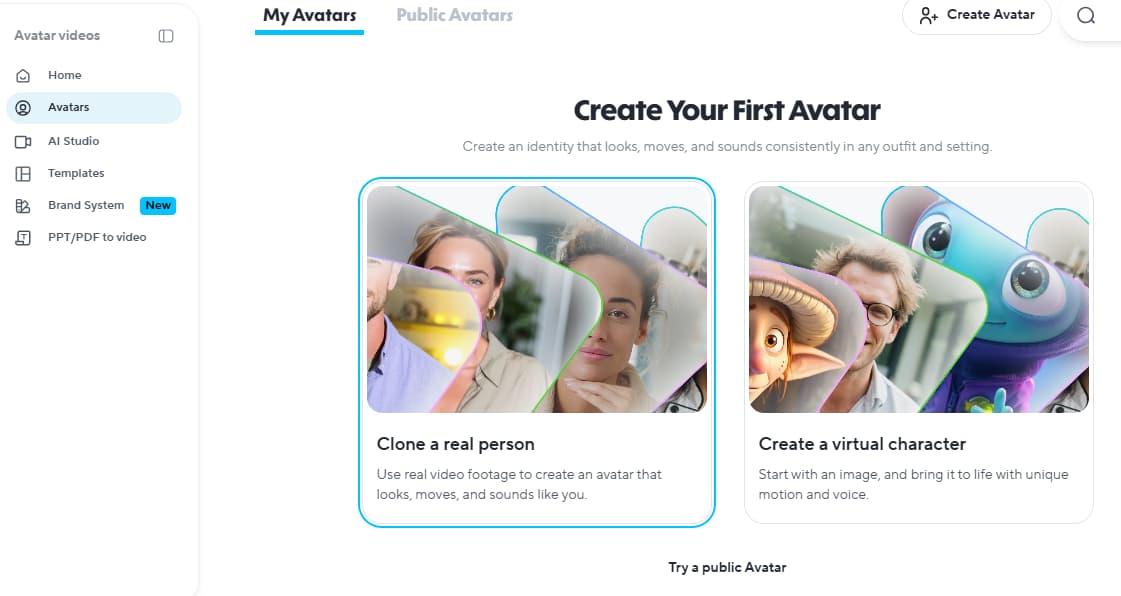
AI Studios fits a more general business-avatar lane. It is still very much a script-plus-avatar workflow, but it gives teams another enterprise-style option if HeyGen is not the right fit. Its current product pages lean heavily into realistic avatars, custom avatar creation, and polished business content.
Elai sits slightly differently. It still belongs in the avatar-led group, but it feels more useful for lighter explainers, fast internal communication, and straightforward localization than for more complex video workflows. Its official positioning around translations, multilingual voice cloning, and talking avatars fits that role well.
Bottom line: These are not “the same tool in different clothes.” Colossyan is more training-heavy, AI Studios is more business-avatar focused, and Elai is easier to picture in lighter explainer workflows.
6. D-ID and Creatify solve more specific problems — and that is exactly why they matter
Some HeyGen alternatives only make sense once you stop asking for a general winner.
D-ID is a good example. Its positioning is stronger around multilingual support videos, customer experience, and AI-avatar-based service interactions than broad business-video production. That makes it easier to justify if the use case is support, customer-facing help content, or conversational AI experiences. It is less compelling if what you really need is a flexible all-around video workspace.
Creatify is another strong example of a tool that belongs on the shortlist for some teams, but not for the usual reasons. It is much more ad- and ecommerce-oriented than most of the other platforms here. Its official product direction is very clearly about turning product pages or URLs into ad-style videos quickly. That is useful if your team is producing performance creatives. It is not a clean replacement for internal business video.
This is also why 10+ alternatives lists often become useless: they pretend every tool is competing on the same axis.
They are not.
Bottom line: D-ID and Creatify are worth comparing when your workflow is specialized enough that a narrower tool can actually be the better fit.
7. VEED, Canva, InVideo, Descript, and Vidnoz are worth considering for very different reasons
This group is where the category gets messy — but also more realistic.
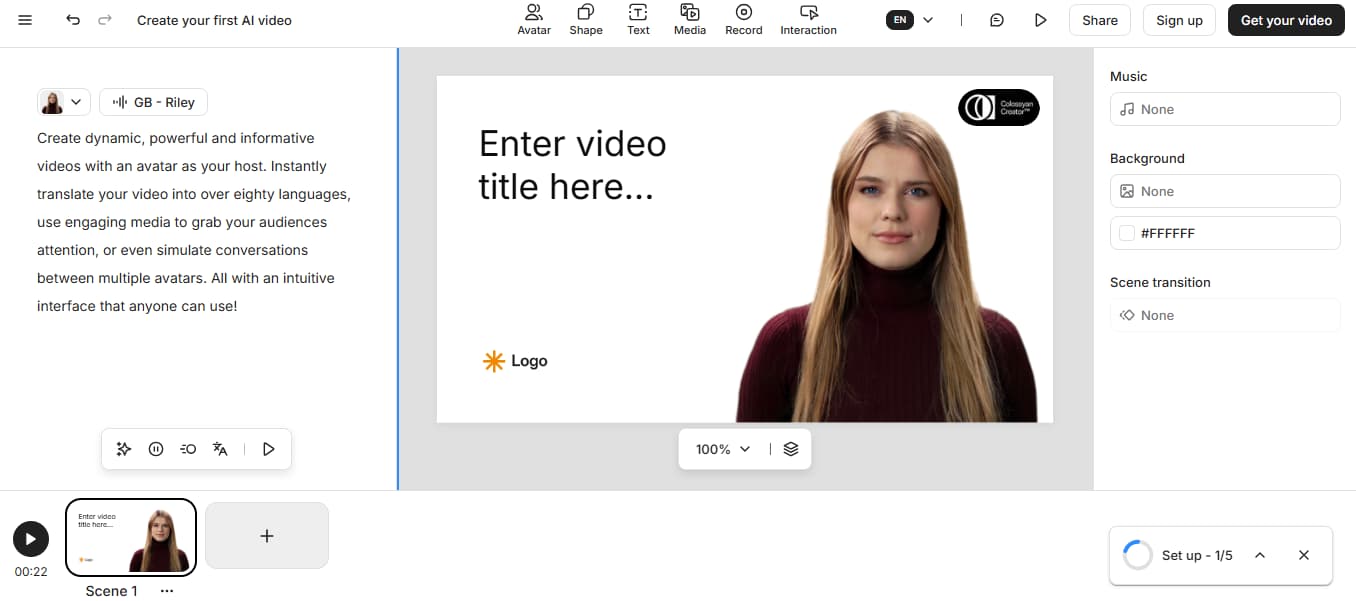
VEED deserves to be here because it now spans more than editing. Its official product stack includes AI video generation, avatars, dubbing, subtitles, and editing in one workflow, which makes it relevant for teams whose bottleneck is not just generation, but finishing and shipping videos quickly.
Canva is not the first tool people think of in this category, but it belongs on the shortlist for design-led teams. Canva now includes AI video generation, AI avatars, and AI video translation, and that matters when video is part of a bigger design and brand workflow rather than a standalone AI-avatar purchase.
InVideo remains useful when speed and template-driven output matter more than nuance. It is easier to recommend for quick promos, social content, and fast content production than for teams trying to build polished internal training at scale.
Descript is more adjacent than direct, but still worth including because many teams looking at HeyGen alternatives are really trying to solve editing, dubbing, cleanup, and repurposing problems. In those cases, an editing-first platform can matter more than another avatar generator.
Vidnoz fits the budget and experimentation end of the market. It is easier to picture for teams testing avatar workflows without wanting a heavy buy-in, especially given how heavily it leans on templates and easy entry.
Bottom line: These tools matter because the real buying question is often bigger than “Which avatar platform should I switch to?”
8. So which tool should you actually pick?
That part gets simpler once you stop comparing everything as if it belongs in one bucket.
| If your main need is... | Best tools to start with |
|---|---|
| Corporate training and internal business videos | Synthesia, AI Studios |
| Structured learning content | Colossyan |
| Visual-first AI video creation | GoEnhance |
| Product or ecommerce ad creatives | Creatify, InVideo |
| Editing, dubbing, and repurposing | VEED, Descript |
| Design-led brand workflows | Canva |
| Customer-facing avatar or support experiences | D-ID |
| Budget-friendly avatar experimentation | Vidnoz |
| Fast explainer-style avatar videos | Elai |
This table is more useful than trying to crown one universal winner, because most teams are not buying “an AI video tool” in the abstract. They are trying to make one recurring kind of work easier.
That is what should drive the choice.
Bottom line: Pick the tool that matches the workflow you repeat every week, not the one that looks best in a demo.
9. A few limits worth being honest about
This part matters, because otherwise the article starts sounding like a pitch.
GoEnhance is not the best fit for every project. If your workflow is entirely built around presenter-led business videos, then tools like Synthesia, AI Studios, or Colossyan may feel more natural. If your work is heavy on precise drag-and-drop layout, branded design systems, or presentation-style content, Canva may be the easier fit. If the real bottleneck is editing and repurposing, VEED or Descript may solve the actual problem more directly.
The same logic applies across the list.
A lot of “best alternatives” posts quietly assume one winner should cover everything. Real teams do not buy tools that way. Different bottlenecks lead to different shortlists.
Bottom line: The right alternative depends less on who wins a generic feature race and more on where your actual production friction shows up.
10. FAQ
Q1: What is the best HeyGen alternative in 2026?
A: There is no single best option for every team. Synthesia is a strong business-video choice, Colossyan makes more sense for training, VEED is stronger for editing-heavy workflows, and GoEnhance is more relevant when the workflow starts with visual assets rather than a presenter.
Q2: Which HeyGen alternative is best for multilingual business videos?
A: Synthesia, AI Studios, Elai, D-ID, and GoEnhance are all worth checking, but the best fit depends on whether your work is presenter-led, support-focused, or mixed-asset video creation. Official product pages for these tools all emphasize multilingual or localization-related workflows in different ways.
Q3: Which alternative is best for training and learning content?
A: Colossyan stands out most clearly for structured learning workflows, while Synthesia also makes sense for internal training and enablement.
Q4: Which HeyGen alternatives are better for ads and marketing creatives?
A: Creatify, InVideo, Canva, and VEED are often more useful to compare when the work is ad-led, design-led, or repurposing-heavy rather than purely presenter-led.
Q5: Is GoEnhance a direct HeyGen replacement?
A: Not exactly. It overlaps with the broader AI video space, but it is a better fit when the workflow starts with visuals, creative assets, or mixed inputs instead of a straightforward talking-avatar format.
11. Final thoughts
The best HeyGen alternatives are not all trying to do the same thing.
That is exactly why so many comparison posts feel thin. They flatten a bunch of very different tools into one list and act as if the buying logic is identical for every team.
It isn't.
If you still want presenter-led business videos, Synthesia, AI Studios, Elai, and Colossyan are the clearest places to look. If your team is more focused on ads, ecommerce, or quick campaign production, Creatify and InVideo make more sense. If editing, dubbing, and publishing speed matter most, VEED and Descript are more relevant. And if the workflow starts with visuals, mixed assets, or a need for motion beyond talking-head videos, GoEnhance deserves a place on the shortlist.
That is the cleaner way to compare the category.
Bottom line: The right HeyGen alternative is the one that fits your actual workflow — not the one that just looks most familiar.