Fliki AI Review: Fast to Start, Harder to Perfect
- Quick verdict
- What Fliki is really good at
- Why it feels easier than many video tools
- The part Fliki does not solve for you
- Pricing is only half the story
- Is the free plan enough to test Fliki properly?
- Can Fliki work for faceless YouTube in 2026?
- The voice issue is bigger than pronunciation
- Copyright is still a moving target
- Who should use Fliki
- Who should probably skip it
- Final verdict
If you already know what Fliki does, the real question is not whether it can make a video. It can.
The better question is this: how much work does it actually remove, and how much fixing still comes back to you before the video feels ready to publish?
That is where most Fliki reviews become too soft. They stop at “easy to use” and “good AI voices.” But that is only half the story. Across public creator discussions, one pattern shows up again and again: Fliki is good at getting you from script to draft quickly. It is much less reliable at deciding whether the final pacing, visuals, and tone are specific enough for a real channel, brand, or content series.
For some people, that is still a great trade.
For others, it becomes the whole problem.
Quick verdict
| Category | Verdict |
|---|---|
| Best for | Faceless videos, blog-to-video workflows, simple explainers, quick draft production |
| Less ideal for | High-control visual storytelling, brand-heavy edits, scene-specific videos |
| Strongest part | Fast script-to-video workflow with voice-led production |
| Main friction | Generic visuals, uneven scene relevance, and extra cleanup work |
| Should you try it? | Yes, if speed matters more than fine control |
| Should you rely on it as your only workflow? | Not unless your content format is very simple |
What Fliki is really good at
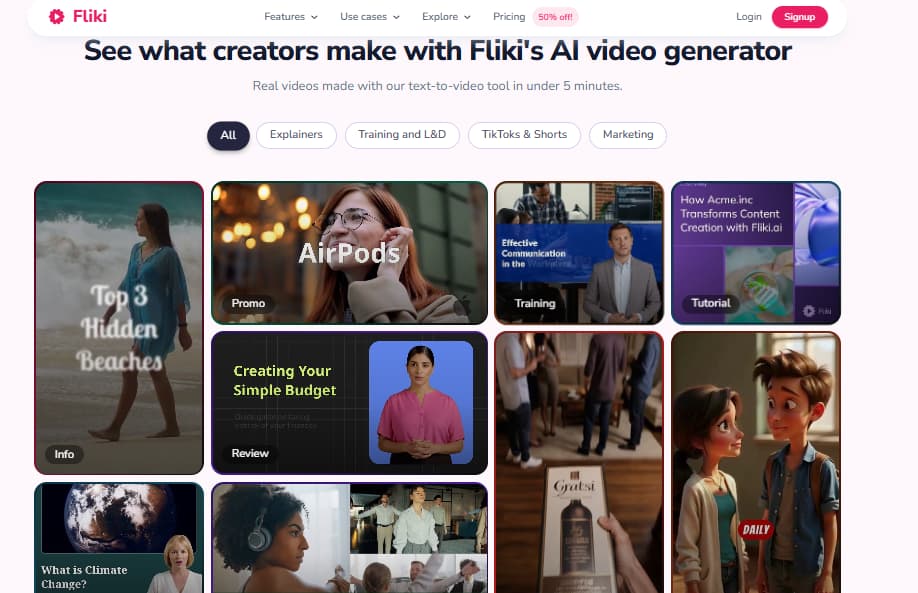
Fliki makes the most sense when your workflow starts with words.
A script. A blog post. A short explainer outline. A repurposed article. A voice-led idea that needs to become a video without dragging you into a full editing timeline too early.
That is why it clicks with so many beginners and small teams. You do not need to think like an editor first. You think like a writer first.
That matters.
A lot of video tools still expect you to arrive with clips, references, structure, and timing already figured out. Fliki moves earlier than that. It helps when the problem is not “how do I polish this shot,” but “how do I turn this idea into something watchable without losing my afternoon.”
That also explains why it is different from a broader text-to-video workflow. Fliki is not really trying to be a wide-open creative playground. It is trying to reduce the friction between written content and usable video output.
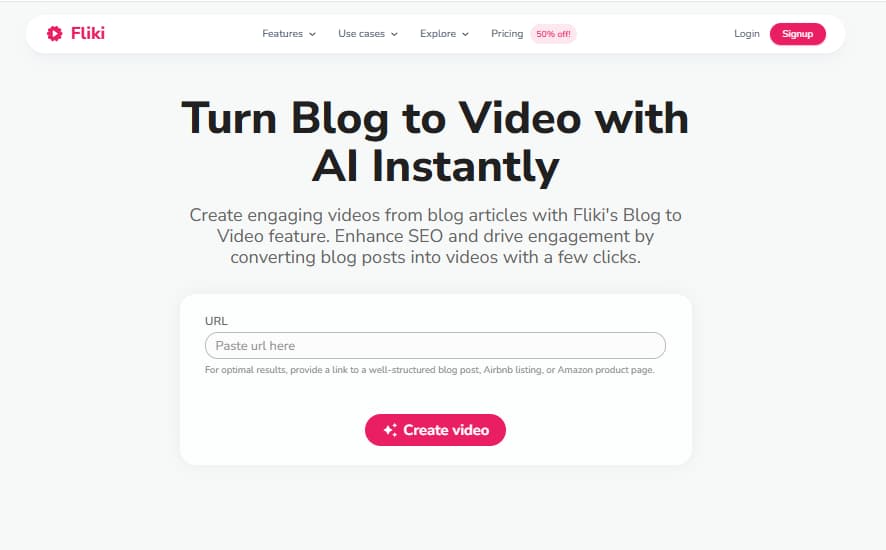
In practical terms, that makes Fliki a better fit for:
- blog-to-video content repurposing
- faceless YouTube channels
- quick social explainers
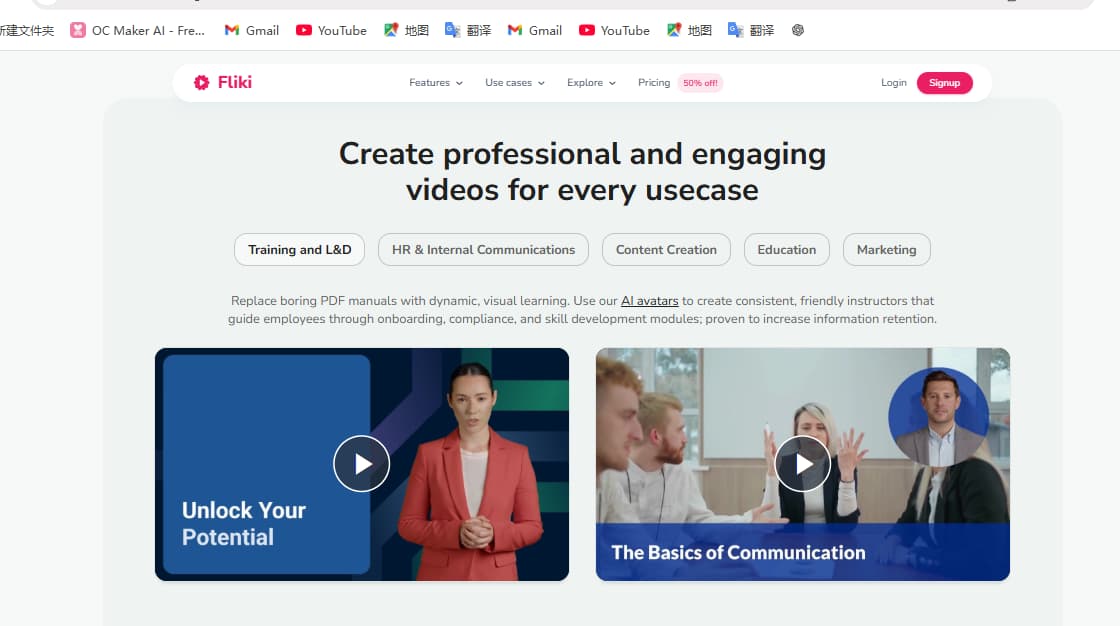
- training and education content
- simple voiceover-led content where speed matters more than shot design
If that is your lane, Fliki starts to look pretty smart.
Why it feels easier than many video tools
A lot of people describe Fliki as easy. That word gets thrown around too casually, but here it mostly makes sense.
It feels easier because it removes several decisions early. You are not building from scratch in the same way you would inside a traditional editor. You are moving through a narrower path: input the idea, choose the voice, shape the draft, make a few changes, export.
That kind of structure is helpful. Especially if you are producing volume.
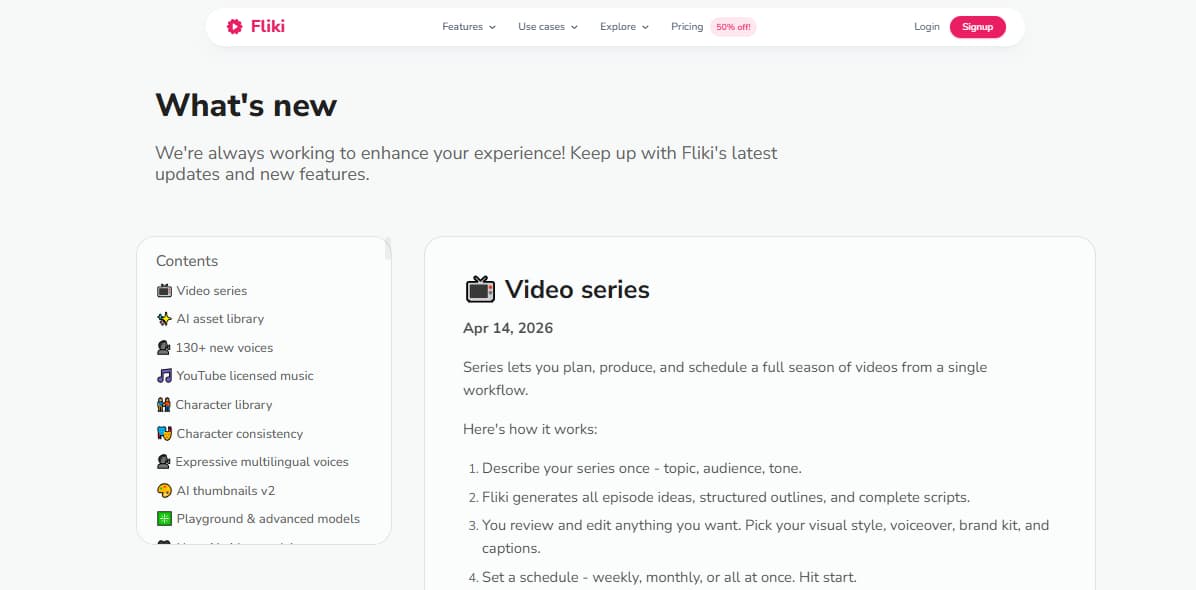
This is also where Fliki gets more credit than some older reviews give it. The product category changes fast, and public impressions often lag behind the current version. If your last mental model of Fliki came from an older “AI slideshow with voiceover” era, that picture is probably incomplete now.
Still, ease is not the same thing as precision. That is the line people miss.
Fliki makes drafting easier. It does not automatically make your decisions better.
The part Fliki does not solve for you
Here is the real tension.
Fliki can save production time while still giving you a video that feels a little off.
Not broken. Not useless. Just off.
Maybe the narration is fine, but the scene choice feels too generic. Maybe the timing works on paper, but the video does not breathe in the right places. Maybe the visuals technically match the topic, yet still look like interchangeable stock footage instead of something your audience will remember.
This is where the hidden cleanup starts.
If your topic is broad, Fliki can be efficient. If your topic is specific, emotional, or style-sensitive, the weak spots show up faster. The draft may be usable, but it often still needs human judgment to become publishable.
That is why script-first automation has limits. When you need tighter scene control, starting from your own reference often works better than hoping a tool guesses correctly. In that kind of workflow, something like image-to-video can make more sense because you decide the visual starting point instead of inheriting one.
The same logic applies to continuity. If your content depends on recurring identity, recurring look, or recurring character presence, a workflow built around consistent character video is usually a better fit than a tool that is mainly optimized for fast assembly.
That does not make Fliki bad.
It just means you should judge it for what it is. A fast draft machine. Not a final-decision machine.
Pricing is only half the story
People often ask whether Fliki is worth the price.
That is fair. It is also slightly the wrong question.
The more useful question is: how many times do you need to redo the output before it feels right?
Because that is what changes the economics.
A tool can look affordable when you imagine a clean first pass. It feels different when you keep adjusting voice, pacing, phrasing, or visuals because the first version was close but not close enough. That is where “cheap” tools become more expensive in practice. Not always in headline price. In time. In repetition. In friction.
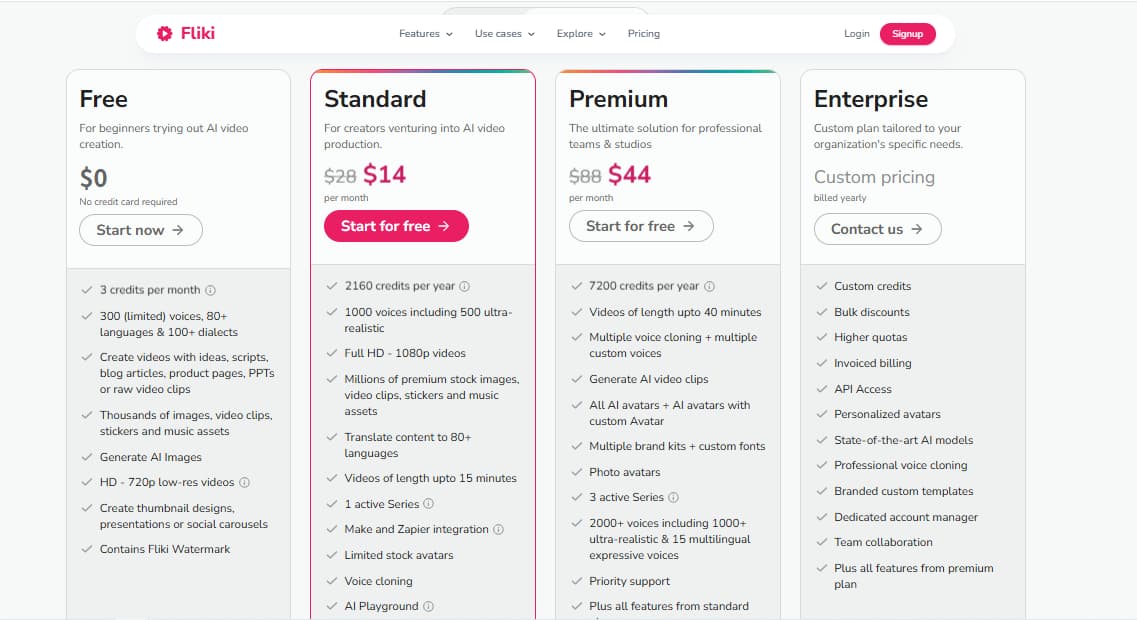
So yes, look at the plans. But do not stop there.
Think about your editing tolerance.
If you are happy with “good enough, fast,” Fliki can be a strong value. If your standard is “I need this to feel specific, branded, and clean,” the price calculation changes because the draft is not the finished product anymore.
Is the free plan enough to test Fliki properly?
For a first impression, yes.
For a real workflow decision, not really.
A free plan can show you whether you like the interface, the general speed, and the core idea. It can answer basic questions like: “Do I enjoy working this way?” or “Does this output direction make sense for my channel?”
What it usually cannot answer is the more important one:
Will this still feel efficient after the third rewrite, the fifth narration tweak, or the tenth video in a series?
That is why free plans are useful for testing promise, not for testing endurance.
And endurance is what matters if you are building an actual content system.
Can Fliki work for faceless YouTube in 2026?
Yes. But not on autopilot.
Fliki is obviously attractive for faceless YouTube. The workflow is fast, voice-led, repeatable, and accessible. That part is easy to understand.
The harder part is whether the output feels original enough, intentional enough, and human enough to stand up over time.
That is not just a content quality issue. It is also a platform issue.
YouTube’s own creator policy framework makes it clear that creators need to think seriously about what they publish and how they publish it, and YouTube’s public AI guidance makes the platform’s direction pretty clear too: AI can help creators move faster, but the responsibility around originality, safety, and trust does not disappear. YouTube’s creator policies and its public page on how YouTube approaches AI are worth reading if your plan is to build a repeatable faceless channel with synthetic narration or altered content.
That is the real risk with low-effort AI video workflows. Not that they are AI. That part alone is not the issue.
The risk is that the content starts to feel thin. Repetitive. Replaceable.
And once your content feels replaceable, your audience usually notices before the platform does.
The voice issue is bigger than pronunciation
A lot of Fliki conversations stay stuck on one question: “Do the voices sound natural?”
That matters. But it is not the only thing that matters.
The deeper issue is trust.
If the voice sounds smooth but still lacks the right emphasis, the right emotional turn, or the right sense of intention, the result can feel strangely hollow. Viewers do not always know how to explain that feeling, but they can hear it. Especially in videos that depend on authority, storytelling, or persuasion.
Then there is the voice cloning angle. Not just as a feature category, but as a responsibility problem. The broader AI ecosystem is already dealing with that. The FTC has publicly discussed the harms linked to AI-enabled voice cloning and why misuse matters beyond simple product experimentation. FTC guidance on AI-enabled voice cloning is useful here because it shifts the conversation away from “cool feature” and back toward trust, consent, and misuse.
That does not mean voice tools are off-limits.
It means creators should stop treating synthetic voices as purely aesthetic choices. They are also credibility choices.
Copyright is still a moving target
This part gets ignored until it becomes inconvenient.
If your workflow depends on AI-generated visuals, synthetic narration, reused material, or heavily automated transformation, copyright questions do not go away just because the export button worked.
The legal picture is still moving. Fast enough that smart creators should be cautious, even if they are not trying to be lawyers about it.
The U.S. Copyright Office has already made AI a dedicated policy area and continues to publish material on copyrightability, digital replicas, and related authorship questions. The Copyright Office’s AI hub is a better source than random social posts if you want a clearer sense of where this is heading.
That matters even for simple content businesses. Because the more automated your pipeline becomes, the more important it is to know what you actually own, what you can reuse, and what might become messy later.
Who should use Fliki
Fliki makes the most sense for people who care more about throughput than shot-by-shot control.
That includes:
Creators repurposing written content
If you already publish blogs, newsletters, tutorials, or explainers, Fliki fits the way you already think.
Faceless channel builders with simple formats
If your videos follow a repeatable structure and your audience is there for information more than visual originality, Fliki can save real time.
Teams making internal or educational videos
When the goal is clarity, speed, and decent narration, not cinematic distinction, Fliki is easier to justify.
Who should probably skip it
Some users will feel the limits faster than others.
Visual-first creators
If you care deeply about shot choice, style consistency, motion feel, and scene-specific intent, Fliki can start to feel like the wrong starting point.
Brand-heavy marketers
If your content cannot look generic, speed alone is not enough.
People trying to avoid cleanup work entirely
Bad fit. Fliki can reduce work. It does not remove judgment.
If your bottleneck is visual quality rather than script assembly, a workflow built around video-to-video or reference-led generation will usually give you more control from the start.
Final verdict
Fliki is good at getting you moving.
That is not a small thing. For a lot of creators, getting moving is the hardest part.
But the value of Fliki depends on what kind of friction you are trying to remove. If your biggest problem is turning written ideas into watchable drafts quickly, Fliki is a sensible tool. If your biggest problem is making videos feel visually specific, branded, or stylistically consistent, Fliki is probably only the first step, not the full answer.
That is the cleanest way to think about it.
Fliki saves production time. It does not save you from taste, judgment, or revision.
And for many creators, that is exactly where the real work begins.